Recipe Details
"Discover how to save your bake when you run out of essential leaveners. This guide explains the science behind chemical leavening and provides reliable ratios for emergency substitutions."
Ingredients
| Qty | Item |
|---|---|
| Ingredient list coming soon. | |
How to Make Emergency Baking Swaps: What to Use When You Are Out of Baking Powder or Soda
Understanding the Chemical Difference
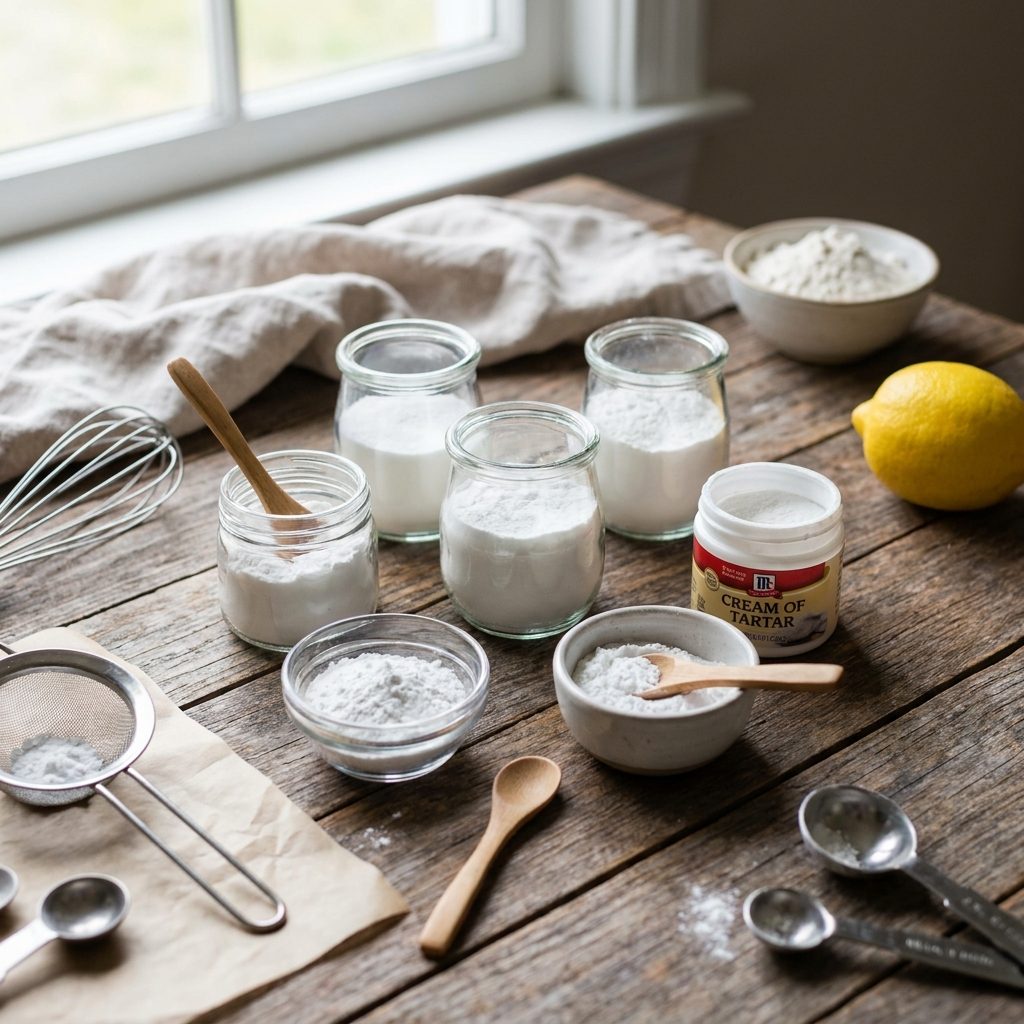
Before swapping, it is vital to know that baking soda is pure sodium bicarbonate, which requires an acid to react. Baking powder is a combination of baking soda and a dry acid (usually cream of tartar). Knowing this helps you balance the pH level of your batter to ensure a proper rise without a soapy or metallic aftertaste. For more detail, see our guide to choose a butter substitute. For more detail, see our guide to substitute sugar.
The Best Substitutes for Baking Powder
If your recipe calls for 1 teaspoon of baking powder, the most reliable swap is mixing 1/4 teaspoon of baking soda with 1/2 teaspoon of cream of tartar. If you do not have cream of tartar, you can use 1/4 teaspoon of baking soda plus 1/2 teaspoon of lemon juice or white vinegar. When using liquid acids, reduce other liquids in the recipe slightly to maintain the correct consistency.
How to Replace Baking Soda
Baking soda is about three to four times stronger than baking powder. If you are out of soda, you can use triple the amount of baking powder requested. For example, replace 1 teaspoon of baking soda with 3 teaspoons of baking powder. Note that this may slightly alter the saltiness or tanginess of the final product due to the extra minerals in the powder.
Mechanical Leavening: The Air Method
In cases where you have neither powder nor soda, you can rely on mechanical leavening. Whip egg whites to soft peaks and gently fold them into your batter. This incorporates air bubbles that expand in the oven, providing lift. This works best for sponges, pancakes, and waffles, though it may result in a lighter, more airy texture than originally intended.
Using Self-Rising Flour
If you have self-rising flour on hand, it already contains baking powder and salt. You can swap your all-purpose flour for self-rising flour and omit the baking powder and salt called for in the recipe. This is one of the most seamless dietary and ingredient adaptations for biscuits and quick breads.
Tips for Best Results
-
·
<html><ul><li>Always test the freshness of your leaveners by dropping a bit of soda in vinegar or powder in hot water; if it bubbles, it is still active.</li><li>When using acidic swaps like vinegar or lemon juice, bake the batter immediately as the reaction starts the moment the wet and dry ingredients meet.</li><li>Be cautious with 'triple-strength' baking powder swaps in cookies, as it may cause them to puff up more than the traditional chewy texture allows.</li><li>For vegan baking, use aquafaba (chickpea liquid) whipped to a foam as a supplemental leavening agent alongside your chemical swaps.</li></ul></html>
Frequently Asked Questions
Can I use just baking soda if the recipe calls for baking powder?
How does using vinegar affect the flavor of my cake?
Can I use club soda as a leavener?
Why did my cookies come out flat even with a substitute?
What to Cook Next





Next Recipe
How To Melt Chocolate
Melting chocolate is a fundamental culinary skill that requires precision and a gentle touch to avoid graininess or burning. This guide explores the science of tempering and provides step-by-step instructions for the most reliable melting methods used by professional pastry chefs.
Similar Recipes to Try
Korean Seasoned Sesame Oil Dipping Sauce
5 min
Coriander: How to Choose, Use and Store It

How to Slice Garlic

Apple Cider Vinegar: Uses, Substitutes, and How to Store It

Mushrooms: How to Choose, Use and Store It

Dairy-Free Milk Substitutes: Which Plant-Based Milk is Best for Cooking?

How to Calibrate an Instant-Read Meat Thermometer
Active Dry Yeast Guide: How to Choose, Use and Store It

How To Bake Salmon

How to Make a Roux: The Essential Guide to Thickening Sauces
Comments
(0)Sign in to leave a comment.
You Might Like


Ad Space Available
Be the first to leave a comment.