The Chemistry of Baking Soda
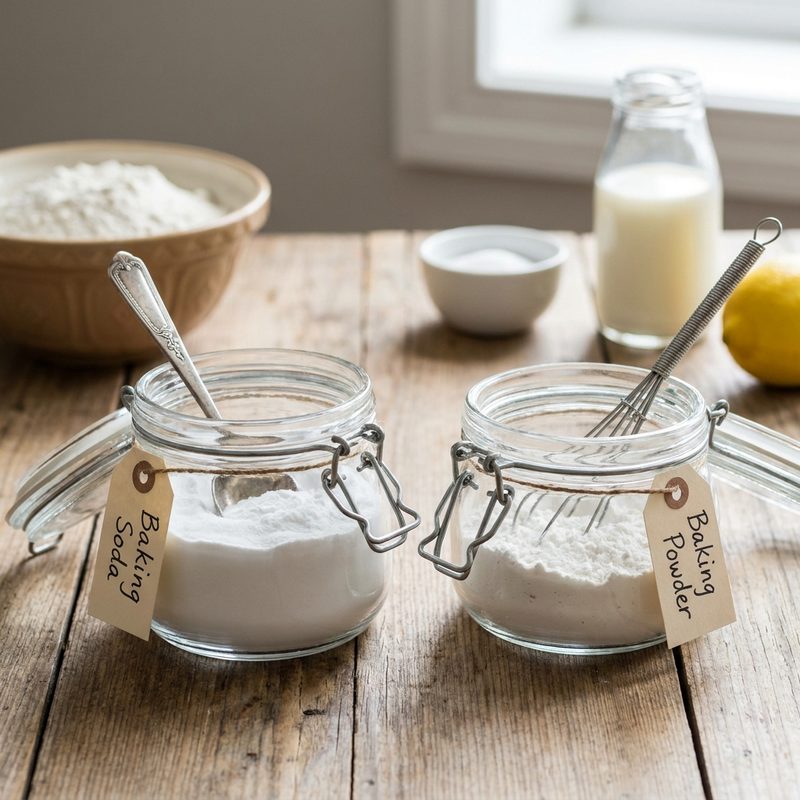
Baking soda, or sodium bicarbonate, is a base that requires an acidic ingredient and liquid to activate. When combined with an acid—such as buttermilk, lemon juice, yogurt, or natural cocoa powder—a chemical reaction occurs, producing carbon dioxide (CO2) bubbles. These bubbles expand in the oven's heat, causing the dough or batter to rise. Because the reaction begins immediately upon mixing, recipes using only baking soda must be baked promptly before the gas dissipates.
The Composition of Baking Powder
Baking powder is essentially baking soda that has been pre-packaged with a dry acid, such as cream of tartar, and an anti-clumping agent like cornstarch. Most modern baking powders are 'double-acting,' meaning they react twice: first when they come into contact with moisture (during mixing), and second when they are exposed to heat (during baking). This provides a more reliable and sustained lift compared to baking soda alone.
Strength and Browning
Baking soda is approximately three to four times stronger than baking powder. Beyond providing lift, baking soda also influences the Maillard reaction—the browning process. By increasing the pH level of the batter to be more alkaline, baking soda allows crusts to brown more deeply and quickly. This is why it is often found in cookie recipes where a golden-brown finish and a specific spread are desired.
Why Recipes Call for Both
Many recipes utilize both agents to achieve a balance of flavor, texture, and color. A recipe might use baking soda to neutralize a specific amount of acid (like buttermilk) and promote browning, but may require additional baking powder to provide the necessary volume without making the final product taste soapy or metallic from an excess of unreacted soda.
Testing for Potency
Leavening agents lose their potency over time. To test baking soda, drop a spoonful into a small bowl of vinegar; it should bubble vigorously. To test baking powder, drop a spoonful into hot water; the presence of immediate bubbling indicates that it is still active and effective for baking.
Key Takeaways
- ✓ <html><ul><li>Always sift leavening agents with dry ingredients to ensure even distribution and avoid bitter clumps.</li><li>Store both agents in a cool, dry place; moisture is the primary enemy of baking powder's shelf life.</li><li>If substituting baking powder for baking soda, use three times the amount of powder, but be aware this may affect the final flavor.</li><li>Never substitute baking soda for baking powder 1:1, as the result will likely be a dense, metallic-tasting failure.</li></ul></html>