Understanding Salt: The Flavor Enhancer
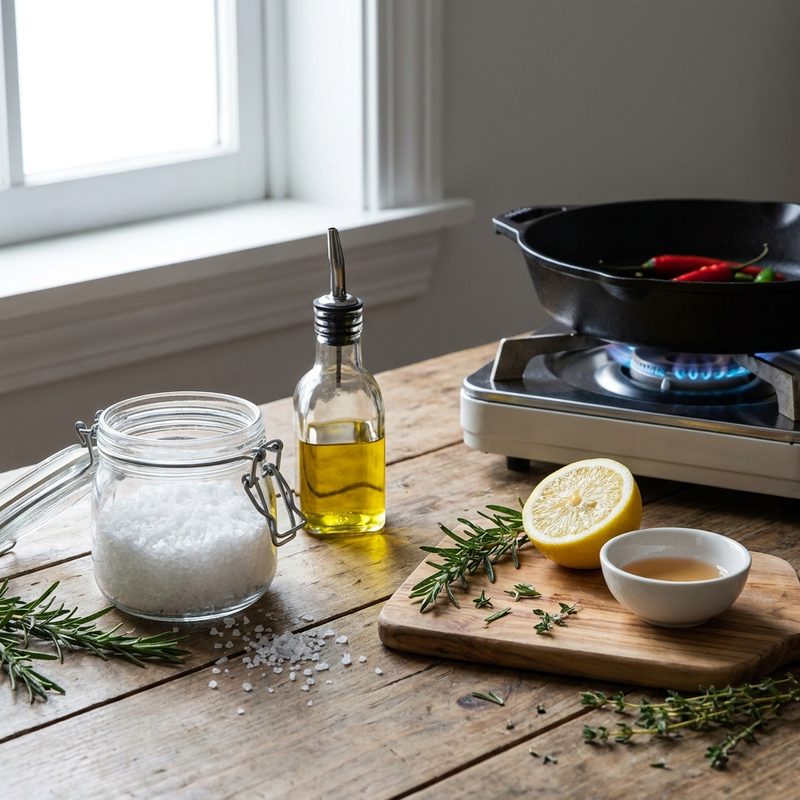
Salt is the most important ingredient in your kitchen because it acts as a magnifying glass for flavor. It doesn't just make things salty; it suppresses bitterness and unlocks the aromatic compounds in food. To use it correctly, season in layers. Add a pinch of salt at every stage of the cooking process—when sautéing onions, when adding protein, and when finishing the dish. This ensures the salt penetrates the ingredients rather than just sitting on the surface.
The Power of Fat: Texture and Depth
Fat provides the 'mouthfeel' and richness that makes food satisfying. It acts as a carrier for flavor, allowing aromatic compounds to coat the palate. When a dish feels thin or lacking in depth, it often needs a touch of fat. You can incorporate fat through oils, butter, cream, or animal fats. Remember that different fats have different smoke points; use neutral oils for high-heat searing and flavorful fats like butter or extra-virgin olive oil for finishing.
Brightness Through Acid
Acid is the element most often missing in home cooking. It provides a sharp contrast to fat and salt, 'lifting' the dish and making it taste fresh. If a dish tastes heavy, dull, or 'flat'—even after you've added salt—it likely needs acid. Common sources include citrus juices (lemon, lime), vinegars, wine, or fermented products like yogurt and pickles. Add acid toward the end of cooking to preserve its bright, volatile flavors.
Applying Heat: Transformation and Spice
Heat refers to both the physical temperature applied to food and the 'spice' or pungency of ingredients like chili peppers. Physical heat triggers the Maillard reaction (browning), which creates complex savory flavors. Culinary 'heat' from spices adds vibration and excitement to a dish. To balance spice, use fat (like dairy) or sweetness (like honey) to mellow the burn. When using physical heat, ensure your pan is preheated to achieve a proper sear, which locks in moisture and adds textural contrast.
The Process: Taste, Analyze, and Adjust
To balance a dish, you must taste it constantly. Take a spoonful and ask yourself: Is it flat (needs salt)? Is it heavy (needs acid)? Is it boring (needs heat)? Is it harsh (needs fat)? Adjust in small increments, stirring well and tasting again after each addition. Remember that flavors change as food cools, so do your final seasoning check at the temperature the dish will be served.
Key Takeaways
- ✓ <html><ul><li>Always season with salt from a height to ensure even distribution across the food.</li><li>If you accidentally over-salt a soup, add a peeled potato or a splash of vinegar to help mask the intensity.</li><li>Keep a 'flavor kit' of lemons and a few types of vinegar (apple cider, red wine, balsamic) to quickly fix dull dishes.</li><li>When a dish is too spicy, serve it with a dollop of sour cream or a splash of coconut milk to neutralize the capsaicin.</li><li>Use 'finishing salts' like Maldon sea salt at the very end for a localized burst of flavor and crunch.</li></ul></html>