What Turmeric Is
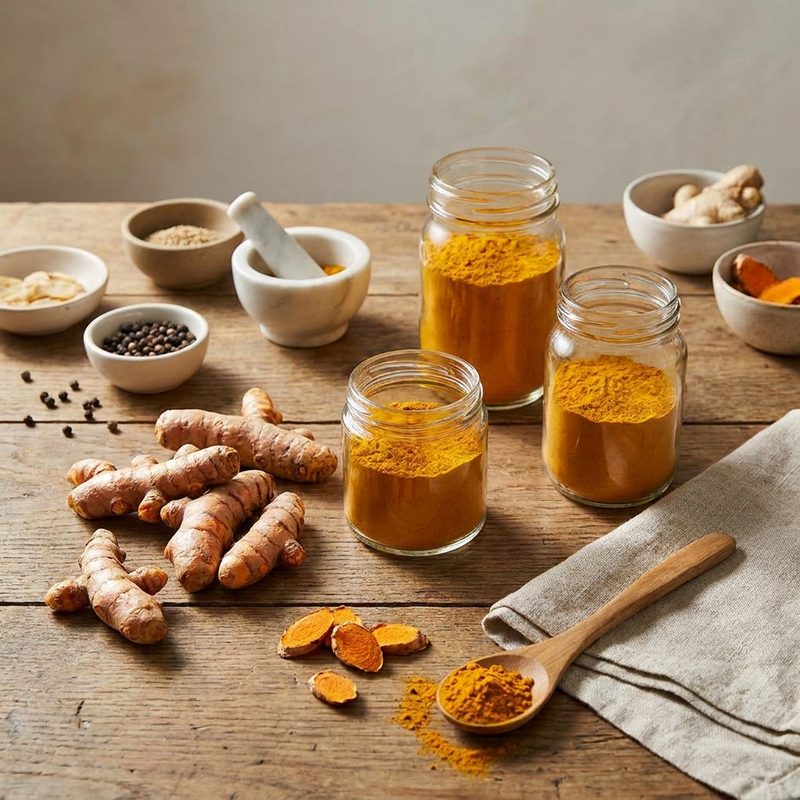
Turmeric is the rhizome of Curcuma longa, a plant in the ginger family native to South Asia. The root has tough brown skin and bright orange flesh. When dried and ground, it becomes the familiar yellow powder used in curries, rice dishes, and marinades. Fresh turmeric has a peppery, slightly bitter flavour with a hint of ginger, while ground turmeric is more earthy and mild. The key compound, curcumin, makes up about 2-5% of the powder by weight and is responsible for the vibrant colour. For a simple turmeric tea, simmer 1 teaspoon of grated fresh turmeric in 2 cups of water for 10 minutes, then strain and add lemon and honey.
How to Choose Turmeric
For fresh turmeric, look for firm, unwrinkled rhizomes with smooth skin, similar to fresh ginger. Avoid pieces that feel soft or have mold. Smaller, younger roots tend to be less fibrous and more flavourful. For ground turmeric, buy from a reputable source with a recent harvest date; the powder should be bright orange-yellow and smell pungent, not musty. If possible, choose organic to avoid additives. A simple test: sprinkle a pinch of ground turmeric into a glass of water; if it sinks and colours the water evenly, it is fresh. If it floats or clumps, it may be old or adulterated.
How to Use Turmeric in Cooking
Fresh turmeric should be peeled with a spoon or vegetable peeler, then grated or thinly sliced. Use about 1 tablespoon of grated fresh turmeric to replace 1 teaspoon of ground. Add turmeric early in cooking to allow its flavour to mellow and its colour to develop. It pairs well with black pepper, which enhances absorption of its compounds. Use in rice (1/2 teaspoon ground per cup of dry rice, cooked for 18 minutes), lentil soups (1 teaspoon per litre, simmered for 30 minutes), or scrambled eggs (1/4 teaspoon per 2 eggs, cooked over medium heat for 3 minutes). For golden milk, simmer 1 teaspoon ground turmeric with 2 cups milk (dairy or coconut), a pinch of black pepper, 1/2 teaspoon cinnamon, and honey to taste for 10 minutes, stirring occasionally. For a marinade, mix 1 tablespoon ground turmeric with 1/2 cup yogurt, 1 teaspoon salt, and 1 tablespoon lemon juice; coat 500g of chicken and refrigerate for 2 hours before grilling.
Substitutes for Turmeric
1. Saffron and paprika mix: Use 1/4 teaspoon saffron threads (soaked in 2 tablespoons hot water for 10 minutes) plus 1 teaspoon paprika per 1 teaspoon turmeric. This gives colour but not the earthy flavour. 2. Curry powder: Use 1.5 teaspoons curry powder per 1 teaspoon turmeric. Adds extra spices like cumin and coriander, so adjust other seasonings. 3. Ground ginger and annatto: Use 1/2 teaspoon ground ginger plus 1/2 teaspoon annatto powder per 1 teaspoon turmeric. Mimics colour but lacks the earthy depth. For a closer match in savoury dishes, combine 1/2 teaspoon ground cumin, 1/2 teaspoon ground coriander, and 1/4 teaspoon paprika per 1 teaspoon turmeric.
How to Store Turmeric
Fresh turmeric keeps in the refrigerator in a paper bag or wrapped in a paper towel for 2-3 weeks. For longer storage, freeze the whole unpeeled root in a sealed bag for up to 6 months; grate it straight from frozen without thawing. Ground turmeric should be stored in an airtight container in a cool, dark cupboard for up to 1 year. Check aroma: if it smells weak or like dust, replace it. Do not store ground turmeric in the refrigerator, as moisture can cause clumping and caking. For maximum shelf life, keep ground turmeric away from direct sunlight and heat sources like the stove.
Common Mistakes
1. Using too much raw turmeric: Raw turmeric can be harsh and bitter. Always cook it for at least 5 minutes to mellow the flavour. If you add raw turmeric to a smoothie, use no more than 1/2 teaspoon grated per serving and balance with sweet fruit like banana or mango. 2. Storing fresh turmeric in a sealed plastic bag: This traps moisture and causes mold within a week. Use a paper bag or wrap in a paper towel. 3. Substituting turmeric with saffron in savoury dishes: Saffron adds a floral, delicate flavour, not the earthy punch. Use the saffron-paprika mix instead for a closer match. 4. Overcooking ground turmeric: If added too early to high-heat frying (above 180°C), it can turn bitter. Add ground turmeric after sautéing onions and garlic, then cook for 1 minute before adding liquid.
Key Takeaways
- ✓ <ul><li>Wear gloves when handling fresh turmeric to avoid staining your hands yellow.</li><li>Toast ground turmeric in a dry pan for 30 seconds before using to intensify its flavour.</li><li>Add a pinch of black pepper to any dish with turmeric to improve absorption of curcumin.</li><li>Freeze fresh turmeric in a whole piece; grate it directly into dishes without thawing.</li></ul>