What Blooming Gelatin Means
Blooming gelatin is the process of hydrating gelatin in cold water before dissolving it into a recipe. This step prevents lumps and ensures the gelatin dissolves evenly. Knox notes that hydrating the granules helps prevent lumps, and KitchenAid adds that blooming helps avoid a lumpy texture or noticeable gelatin clumps.
How to Bloom Powdered Gelatin
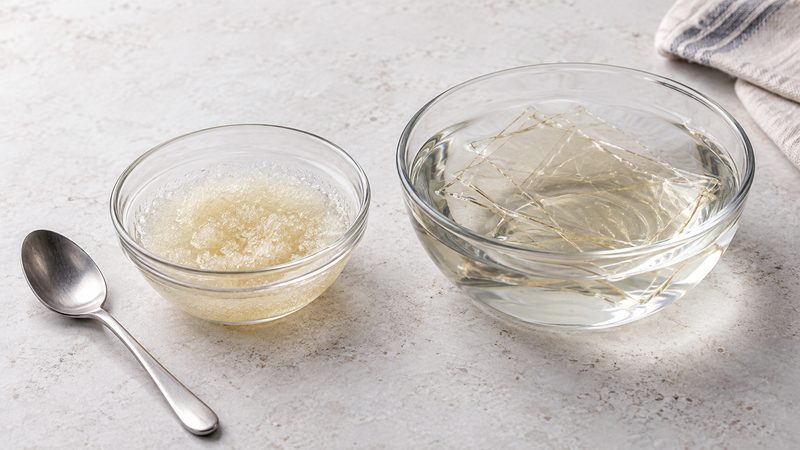
To bloom powdered gelatin, start with 1/4 cup of cold water per envelope of gelatin. Sprinkle the powder evenly over the water rather than dumping it in one place. Stir gently and let it sit for 5 to 10 minutes until the mixture becomes gelatinous. This step hydrates the granules so they dissolve without lumps.
How to Bloom Sheet Gelatin
For sheet gelatin, submerge the sheets fully in cold water and let them soak for 5 to 10 minutes. Once softened, remove the sheets and gently squeeze out the excess water. The bloomed sheets are then ready to be added to a warm base.
How to Dissolve and Add Gelatin
After blooming, dissolve the gelatin by adding it to a warm base and mixing thoroughly so the granules dissolve completely. KitchenAid recommends adding bloomed powdered gelatin to a warm base and mixing thoroughly. For sheet gelatin, add the softened sheets to a warm base; if using a cold base, first dissolve the sheet over low heat. Knox instructs readers not to boil the gelatin mixture.
Troubleshooting Gelatin Blooming
Prevent lumps by hydrating gelatin in cold water before it enters the recipe. Sprinkle powdered gelatin over the water instead of dumping it in one place, then give it the full 5 to 10 minutes to absorb the liquid. Add the bloomed gelatin to a warm base and mix thoroughly, but do not boil the gelatin mixture.
Recipes to Practice This Technique
Use the method in this guide when making Chilled Tofu Pudding with Palm Sugar Syrup.
Sources
- How to bloom gelatin powder and sheets (KitchenAid)
- About Knox Gelatine and usage guidance (Knox Gelatine)
Key Takeaways
- ✓ Use cold water when blooming powdered gelatin or soaking gelatin sheets.
- ✓ Sprinkle powdered gelatin evenly over the water instead of dumping it in one spot to ensure even hydration.
- ✓ Keep the dissolved gelatin mixture below a boil; Knox instructs cooks not to boil it.
- ✓ For sheet gelatin, gently squeeze out the excess water after soaking.