Origins and Varieties
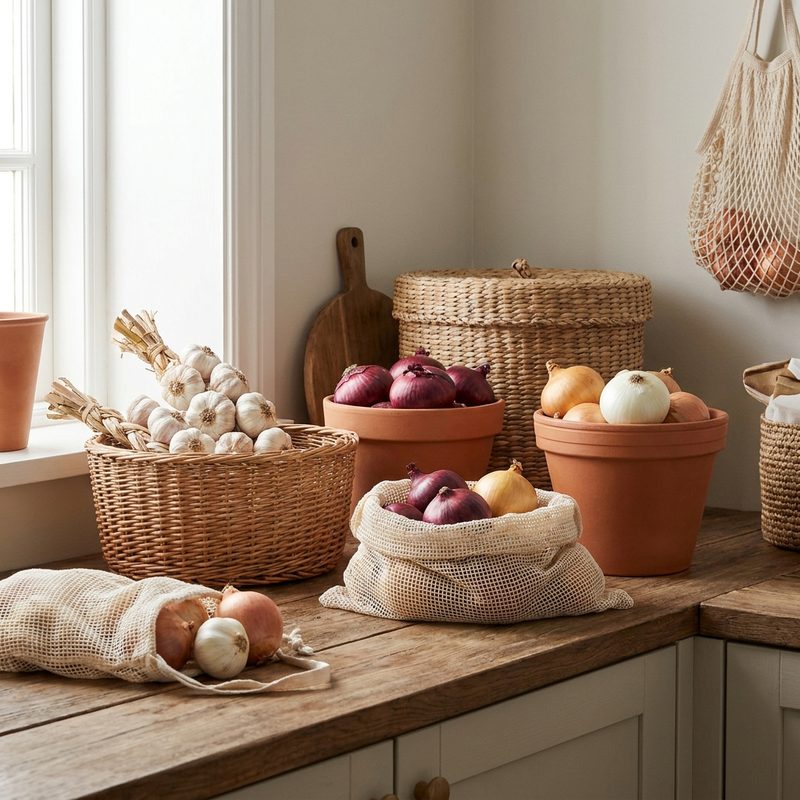
Both onions and garlic belong to the Allium genus and trace their origins back to Central Asia. While there are hundreds of varieties, most household cooks deal with storage onions (Yellow, Red, and White) and garlic (Hardneck and Softneck). Storage onions have a thicker skin and lower water content than sweet onions, making them ideal for long-term keeping. Hardneck garlic is known for its complex flavor and central woody stalk, while Softneck garlic is what you typically find in supermarkets due to its incredibly long shelf life.
How to Choose the Best Bulbs
Longevity starts at the market. When choosing onions, look for bulbs that are heavy for their size and feel firm with no soft spots or bruising. The outer papery skin should be dry and intact. For garlic, the bulb should be tight and firm. If the garlic feels light or hollow, it has likely dehydrated inside. Avoid any bulbs that have green sprouts emerging from the top, as this indicates the vegetable is already past its prime and may taste bitter.
The Gold Standard for Storage
The secret to keeping onions and garlic fresh is a cool, dry, dark, and well-ventilated space. Ideal temperatures range between 45°F and 55°F (7°C to 13°C). While a pantry is usually better than a countertop, a basement or garage can also work if they aren't damp. Air circulation is critical; avoid airtight plastic bags. Instead, use mesh bags, wire baskets, or even old pantyhose with knots tied between each bulb to allow air to flow freely around them.
Substitutes and Swaps
If you find yourself out of fresh aromatics, shallots are the closest relative and offer a sophisticated blend of both onion and garlic flavors. For onions, leeks or green onions (scallions) can work in a pinch, though they have higher moisture content. In terms of dry substitutes, one tablespoon of onion flakes equals one small onion, and 1/8 teaspoon of garlic powder replaces one fresh clove. Note that these dried versions lack the structural integrity provided by fresh ingredients in sautéed dishes.
Common Mistakes to Avoid
The most frequent error is storing onions and garlic in the refrigerator. The cold, humid environment of a fridge converts the starch in onions into sugar, making them soft and soggy. Furthermore, the lack of airflow leads to mold. Another major mistake is storing onions next to potatoes. Onions produce ethylene gas which causes potatoes to sprout, and the moisture from potatoes can cause onions to rot prematurely. Always keep these two pantry staples in separate bins.
Key Takeaways
- ✓ <html><ul><li>Keep onions and garlic in the dark to prevent photosynthesis, which triggers sprouting.</li><li>Once an onion is cut, it must be wrapped tightly and refrigerated, where it will last for 7-10 days.</li><li>Whole garlic bulbs last up to 6 months, but once you break the head, the individual cloves will only last about 10 days.</li><li>Never store whole raw onions in plastic bags; the lack of breathability is a recipe for rot.</li><li>If you have an abundance of onions, chop and freeze them in freezer bags for easy use in soups and stews later.</li></ul></html>