How to Choose the Best Berries
The journey to perfectly frozen fruit begins at the market. Look for berries that are vibrantly colored, plump, and firm to the touch. Avoid containers with juice stains at the bottom, as this usually indicates crushed or overripe fruit. Seasonality plays a huge role; locally harvested berries in the peak of summer have the highest sugar content and will maintain better flavor throughout the freezing process than those transported long distances out of season.
Preparing for the Freezer
Washing is essential, but moisture is the primary enemy of a clump-free freeze. Gently rinse berries in a colander under cool water. For delicate raspberries or blackberries, a quick dip in a bowl of water is safer than a direct spray. After washing, spread the berries out on a clean kitchen towel or several layers of paper towels. Let them air dry completely—usually for at least 30 to 60 minutes. Any residual water on the skin will turn into ice crystals that fuse the berries together into a solid block.
The Flash-Freeze Technique
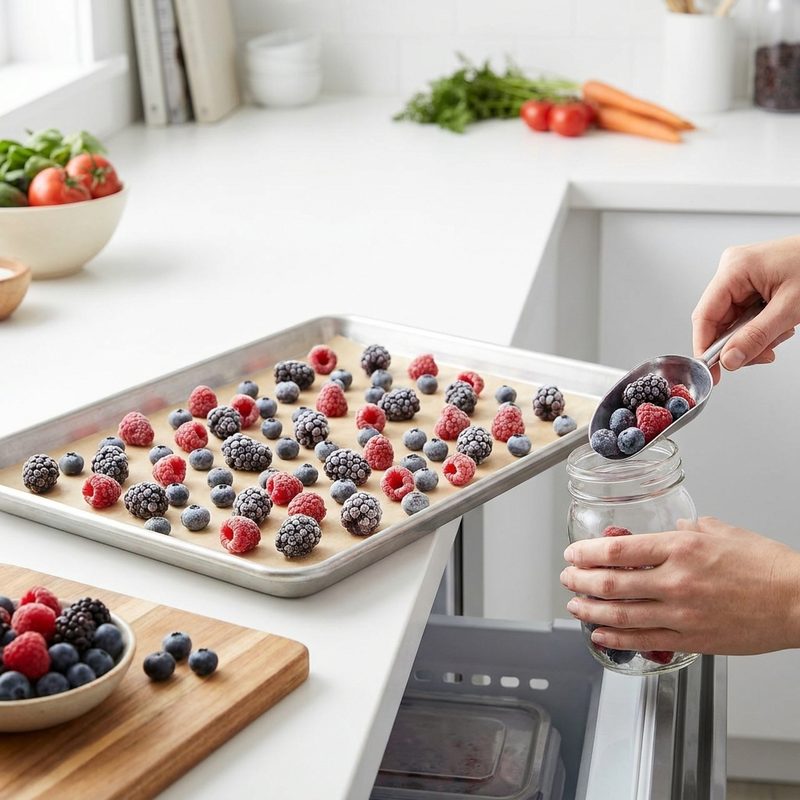
This is the secret to professional-grade storage. Line a rimmed baking sheet with parchment paper or a silicone mat. Arrange the dry berries in a single layer, ensuring they are not touching each other. Place the tray in the coldest part of your freezer for 2 to 4 hours, or until they are frozen solid. This 'flash-freeze' ensures that each berry forms its own individual icy shell before being packed together, which prevents them from sticking.
Long-Term Storage Solutions
Once the berries are individually frozen (hard like marbles), transfer them into heavy-duty freezer bags or airtight containers. Squeeze out as much air as possible to prevent freezer burn. If you have a vacuum sealer, use the 'pulse' setting to avoid crushing the fruit. Berries stored this way will maintain their quality for 8 to 12 months. While they won't have the same firm texture as fresh berries once thawed, they are perfect for smoothies, muffins, pancakes, and sauces.
Common Mistakes to Avoid
The most common error is skipping the single-layer freeze and putting wet berries directly into a storage bag. This creates a 'berry brick' that requires an ice pick to break apart. Another mistake is forgetting to hull strawberries; always remove the green tops before freezing to make them ready for immediate use. Finally, ensure your freezer is set to 0°F (-18°C) or lower to maintain the best cellular structure of the fruit.
Key Takeaways
- ✓ <html><ul><li>Always use parchment paper on your tray to prevent berries from sticking to the metal during the flash-freeze.</li><li>Label your bags with the date and the type of berry, as they can look surprisingly similar once frosted over.</li><li>For strawberries, slice them before freezing if you plan to use them for toppings or in cereal.</li><li>If you notice large ice crystals forming inside the bag over time, it’s a sign that the bag wasn't sealed properly or your freezer is defrosting too often.</li></ul></html>