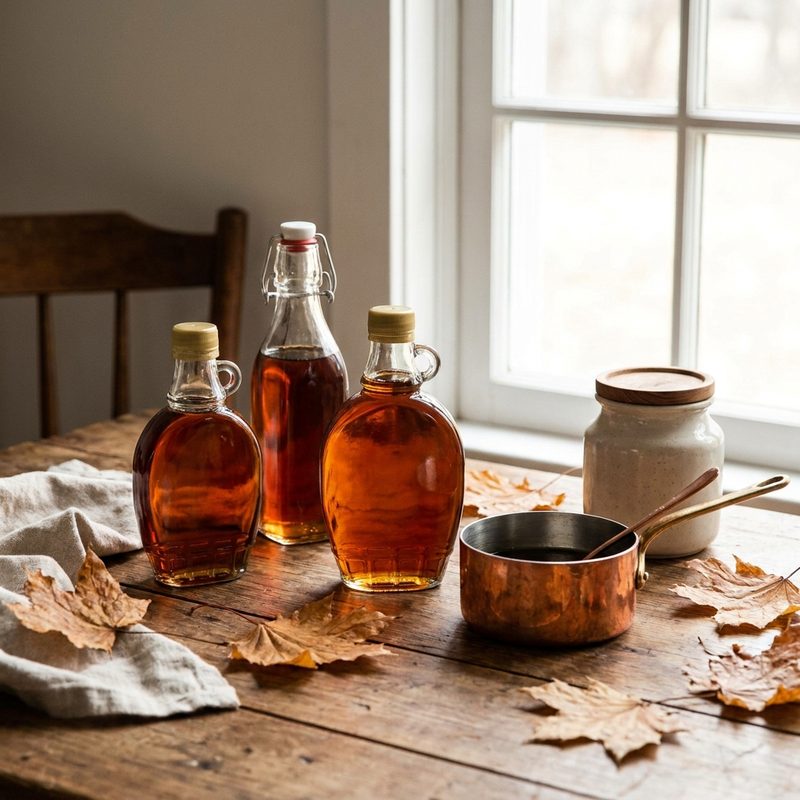
What Maple Syrup Is
Maple syrup is produced by tapping sugar maple (Acer saccharum), red maple, or black maple trees in late winter and early spring. The sap, which is about 98% water and 2% sugar, is collected and boiled down to evaporate the water, concentrating the sugars and developing its characteristic flavour. It takes roughly 40 litres of sap to produce 1 litre of pure maple syrup. The syrup is graded by colour and flavour: Grade A Golden (delicate), Amber (rich), Dark (robust), and Very Dark (strong). All grades are suitable for cooking, though darker grades have a more pronounced maple taste.
How to Choose Maple Syrup
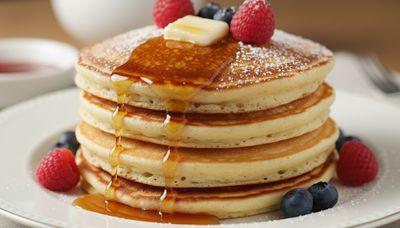
When buying maple syrup, always check the label for '100% pure maple syrup' — avoid 'pancake syrup' or 'maple-flavoured syrup', which are usually corn syrup with artificial flavouring. Look for the grade that matches your use: Golden or Amber for drizzling over pancakes or yogurt, Dark or Very Dark for baking and cooking where you want a deeper flavour. The syrup should be free of crystals or sediment (a little sediment is normal in unfiltered syrup). Glass bottles or tins are preferable to plastic, as plastic can sometimes impart a slight off-taste over time.
How to Use Maple Syrup in Cooking
Maple syrup can replace granulated sugar in most recipes at a ratio of 3/4 cup syrup for every 1 cup of sugar, but you must reduce the liquid in the recipe by about 3 tablespoons per cup of syrup used. It also adds moisture, so baked goods may brown faster — lower the oven temperature by 25°F (about 14°C) to prevent over-browning. Use it in marinades and glazes for meats: combine 1/4 cup maple syrup with 2 tablespoons soy sauce, 1 tablespoon Dijon mustard, and a minced garlic clove for a quick pork or chicken glaze. In salad dressings, whisk 2 tablespoons maple syrup with 3 tablespoons apple cider vinegar, 1/4 cup olive oil, and salt and pepper. For a simple dessert, drizzle warm maple syrup over vanilla ice cream or roasted pears.
Substitutes for Maple Syrup
If you run out of maple syrup, these three swaps work well. Honey: use an equal amount (1:1) in most recipes. Honey is sweeter and has a distinct floral flavour, so it will change the taste slightly. For baking, reduce the oven temperature by 25°F as honey also browns quickly. Brown sugar syrup: combine 1 cup packed brown sugar with 1/4 cup water, heat until dissolved. Use 1 cup of this mixture for every 1 cup of maple syrup. It adds a deeper molasses flavour and is less runny. Agave nectar: use 3/4 cup agave for 1 cup maple syrup. Agave is thinner and less flavourful, so you may need to add a few drops of maple extract (if available) to mimic the taste. Reduce liquid in the recipe by 2 tablespoons per cup of agave used.
How to Store Maple Syrup
Unopened pure maple syrup can be stored in a cool, dark pantry for up to 2 years. Once opened, it must be refrigerated to prevent mould growth — it will keep for 6 to 12 months in the fridge. For longer storage, freeze maple syrup in airtight containers or freezer-safe glass jars, leaving 1 inch of headspace for expansion; it will last indefinitely in the freezer. Thaw frozen syrup in the refrigerator overnight, then shake well before use. If you see mould on the surface, skim it off and bring the syrup to a boil for 2 minutes, then refrigerate — but if the syrup smells off or has a fermented taste, discard it.
Common Mistakes
Using imitation syrup for cooking: Imitation maple syrup is mostly corn syrup and water, which behaves differently in recipes — it can make baked goods overly sweet and sticky. Always use pure maple syrup for reliable results. Not adjusting liquid when substituting: Swapping maple syrup for sugar without reducing other liquids can make batters and doughs too wet, leading to dense or soggy results. Remember to cut back liquid by about 3 tablespoons per cup of syrup. Storing opened syrup at room temperature: Maple syrup is a high-sugar food but not shelf-stable after opening — it can develop mould within a few weeks if left in the pantry. Always refrigerate it after opening to maintain quality and safety.
Key Takeaways
- ✓ <ul><li>Warm maple syrup slightly before pouring over pancakes or waffles — it spreads more evenly and tastes more aromatic.</li><li>For a quick glaze, simmer 1/2 cup maple syrup with 1 tablespoon butter and a pinch of salt until slightly thickened.</li><li>Use a silicone brush to apply maple syrup to roasted vegetables like carrots or Brussels sprouts during the last 10 minutes of cooking.</li><li>If maple syrup crystallises in the jar, place the sealed jar in a bowl of hot water for 10 minutes and shake gently.</li></ul>