What is a Smoke Point?
The smoke point of an oil or fat is the temperature at which it stops shimmering and starts to produce a continuous bluish smoke. At this point, the fat begins to break down on a molecular level, a process known as 'denaturation.' This isn't just a kitchen nuisance; it signifies that the oil is undergoing chemical changes that affect the flavor, nutritional value, and safety of your food.
The Chemistry of Breakdown
When an oil reaches its smoke point, the triglycerides break apart into glycerol and free fatty acids. The glycerol further breaks down into acrolein, a chemical that creates an acrid, bitter smell and can irritate your eyes and throat. Beyond the bad taste, this process releases free radicals and polar compounds that can be harmful if consumed regularly. This is why a 'burnt' oil taste can ruin an entire dish, even if the food itself isn't charred.
Refined vs. Unrefined Oils
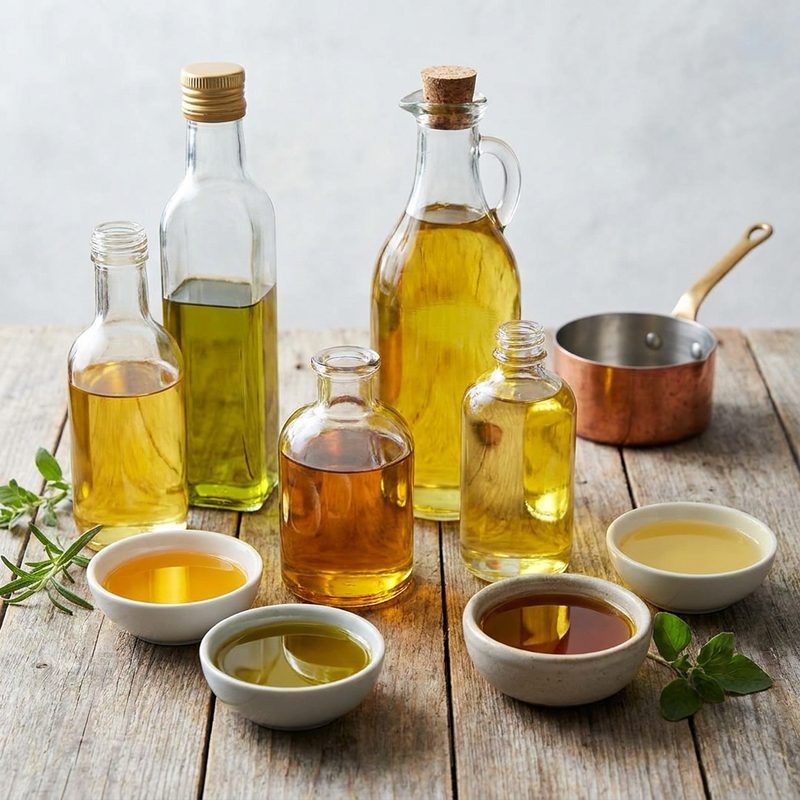
The biggest factor influencing a smoke point is the level of refinement. Unrefined oils, like extra virgin olive oil or toasted sesame oil, contain minerals, enzymes, and other compounds that have not been filtered out. While these provide great flavor, they also burn at lower temperatures. Refined oils (like 'light' olive oil, vegetable oil, or avocado oil) undergo processing to remove these impurities, resulting in a higher smoke point and a more neutral flavor profile suitable for high-heat tasks.
Choosing the Right Oil for Every Method
For high-heat cooking like searing a steak or deep-frying, you need an oil with a smoke point above 400°F (204°C). Avocado oil (520°F) and peanut oil (450°F) are gold standards here. For medium-heat sautéing, canola or grapeseed oils work well. Save your expensive, unrefined finishing oils for salad dressings, drizzling over soups, or dipping bread, where their complex flavors can shine without being destroyed by heat.
Key Takeaways
- ✓ <ul><li>Store your oils in a cool, dark place to prevent oxidation, which can prematurely lower an oil's smoke point.</li><li>Never mix oils with different smoke points for high-heat frying; the mixture will only be as stable as the oil with the lowest smoke point.</li><li>Look for 'shimmering' oil in the pan—this is the sweet spot just before the smoke point where the oil is hot enough to prevent food from sticking.</li><li>If your oil begins to smoke heavily, it's best to discard it, wipe the pan, and start over to avoid a bitter, acrid flavor in your meal.</li></ul>