1. Cool Your Food Thoroughly
The most common mistake in batch cooking is placing warm food directly into the freezer. When warm food is sealed, it creates steam, which turns into ice crystals on the surface of your food. To prevent this, let your meals reach room temperature on the counter for no more than two hours, or use an ice bath to chill soups and stews quickly before packaging.
2. Eliminate Air Exposure
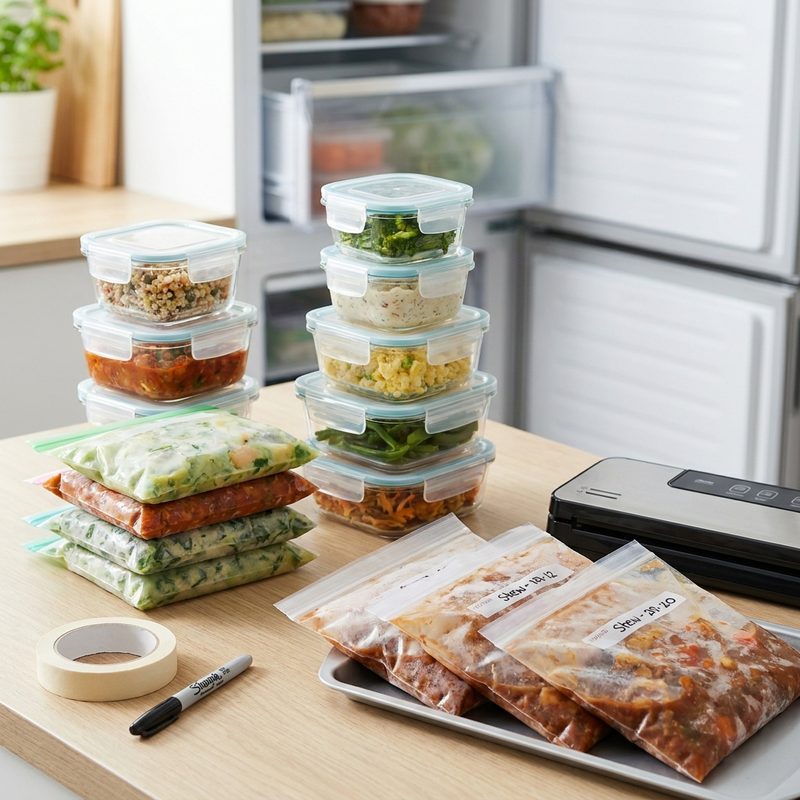
Air is the primary cause of freezer burn. Oxygen allows moisture to evaporate from the surface of the food, creating those tell-tale icy patches. When using freezer bags, use the 'straw method' or the water displacement method to suck out every bit of air. For rigid containers, choose a size that fits the portion perfectly to minimize 'headspace'—the gap between the food and the lid.
3. Utilize Multi-Layer Protection
For solid items like burritos, lasagna portions, or burger patties, a single layer of protection is rarely enough. Wrap individual portions tightly in plastic wrap or aluminum foil first, then place those wrapped portions into a heavy-duty freezer bag. This double barrier significantly reduces the chance of air reaching the food surface.
4. Use High-Quality Packaging Materials
Not all storage is created equal. Ensure you are using bags and containers specifically labeled for freezer use. These are thicker and designed to be less permeable to oxygen than standard sandwich bags or thin plastic containers. If you batch cook frequently, a vacuum sealer is the single best investment you can make to guarantee long-term freshness.
5. Organize for Quick Access
Temperature fluctuations occur every time you open the freezer door. Store your batch-cooked meals toward the back of the freezer rather than in the door, where the temperature is most stable. Label every container with the contents and the 'freeze date' to ensure you follow the First-In, First-Out (FIFO) method, consuming older meals before they have a chance to degrade.
Key Takeaways
- ✓ <html><ul><li><strong>The Water Displacement Method:</strong> Lower a partially sealed bag into a bowl of water to force air out before sealing completely.</li><li><strong>Leave Room for Expansion:</strong> While you want to minimize air, remember that liquids like soups expand when frozen; leave about half an inch of space in rigid containers.</li><li><strong>Flash Freeze First:</strong> Place individual items like meatballs or pancakes on a baking sheet to freeze solid before bagging them to prevent them from sticking together.</li><li><strong>Check Your Seals:</strong> Inspect silicone seals on lids regularly to ensure they haven't cracked, which could allow air to seep in.</li></ul></html>