Step 1: Preparation and Uniform Cutting
Start with the freshest vegetables possible. Rinse them thoroughly under cold water to remove dirt and debris. To ensure even freezing and cooking later, cut your vegetables into uniform pieces. Smaller, consistent shapes freeze faster, which prevents large ice crystals from forming and damaging the cell walls of the plant.
Step 2: The Essential Blanching Process
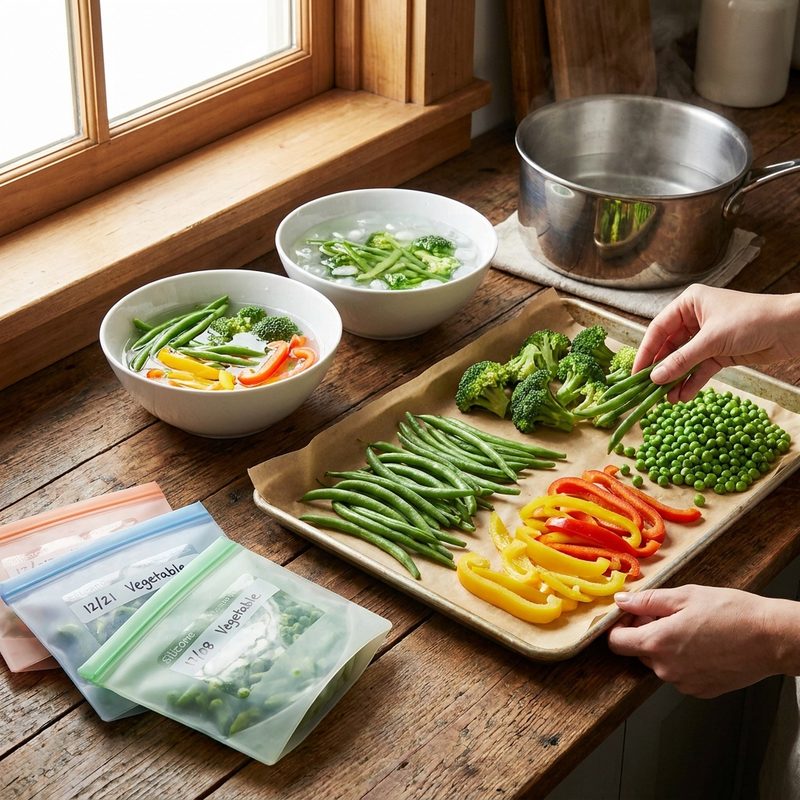
Blanching is the secret to maintaining texture. It involves briefly boiling the vegetables to deactivate enzymes that cause spoilage, loss of flavor, and softening. Bring a large pot of water to a rolling boil. Submerge the vegetables for a specific duration—typically 2 minutes for leafy greens, 3 minutes for broccoli or beans, and up to 5 minutes for carrots. Do not overcook; the goal is to set the color and kill enzymes, not to fully cook the vegetable.
Step 3: The Shocking Ice Bath
Immediately after the timer goes off, remove the vegetables from the boiling water and plunge them into a bowl filled with ice and cold water. This process, known as 'shocking,' stops the residual heat from cooking the vegetables further. Keep them in the ice bath for the same amount of time they were boiled.
Step 4: Thorough Drying
Moisture is the enemy of texture in the freezer. Excess water on the surface of the vegetables will turn into ice crystals, leading to freezer burn and mushiness. Drain the vegetables thoroughly and pat them dry with a clean kitchen towel or paper towels until they are completely moisture-free.
Step 5: Flash Freezing
To prevent your vegetables from freezing into one solid, inseparable block, use the flash-freeze method. Spread the dried vegetables in a single layer on a parchment-lined baking sheet. Place the sheet in the freezer for 1 to 2 hours until the individual pieces are frozen solid. This ensures they remain 'loose' and easy to portion out later.
Step 6: Vacuum Sealing or Final Storage
Transfer the flash-frozen vegetables into heavy-duty freezer bags or airtight containers. If using bags, squeeze out as much air as possible before sealing (a straw can help suck out the remaining air). Label the bags with the date and the type of vegetable. For the best texture, use the vegetables within 8 to 12 months.
Key Takeaways
- ✓ <html><ul><li>Avoid freezing vegetables with very high water content, such as cucumbers, lettuce, or radishes, as they will never retain their texture.</li><li>Use at least one gallon of water per pound of vegetables when blanching to ensure the water temperature doesn't drop too significantly.</li><li>Under-blanching is worse than not blanching at all, as it stimulates enzyme activity rather than stopping it.</li><li>Invest in a vacuum sealer if you plan to freeze large quantities; removing all oxygen is the best way to prevent texture degradation over long periods.</li></ul></html>