What dijon mustard Is
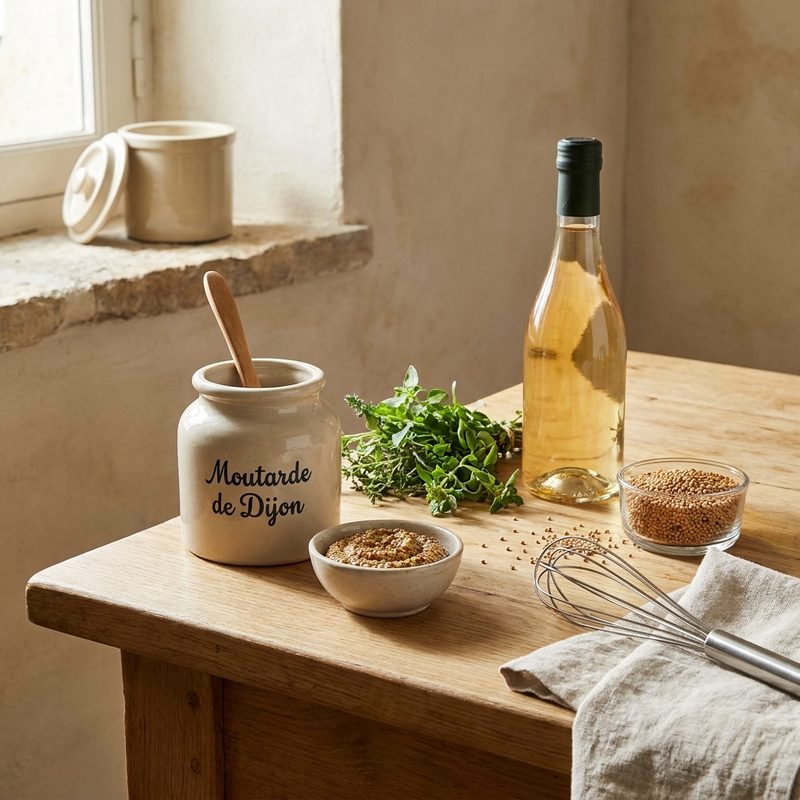
Dijon mustard originated in Dijon, France, in the 19th century. Unlike yellow mustard, which uses turmeric and white vinegar, authentic dijon mustard is made from brown or black mustard seeds, white wine (usually Bourgogne Aligoté), and verjuice—the juice of unripe grapes—or wine vinegar. The seeds are not ground but rather crushed and mixed with the liquid, then fermented for 24–36 hours. This process produces a sharp, clean heat that dissipates quickly, leaving a mild tang. The texture is smooth and creamy, with no visible seed fragments. Mass-produced versions often replace verjuice with white wine vinegar, citric acid, or tartaric acid, which alters the flavour slightly but still qualifies as dijon-style mustard.
How to Choose dijon mustard
When buying dijon mustard, check the ingredients list. Look for brown or black mustard seeds, white wine, and verjuice or wine vinegar as the first ingredients. Avoid jars with added sugar, honey, or excessive salt—these are not true dijon mustards. The colour should be a consistent pale yellow-beige, not bright yellow. The texture should be smooth and spreadable, not watery or grainy. If the mustard separates slightly in the jar, that's normal; just stir it before use. For the most authentic flavour, choose a jar labelled "Dijon mustard" imported from France, but many domestic versions work well for everyday cooking. Check the expiration date and aim for a jar at least six months from expiry.
How to Use dijon mustard in Cooking
Dijon mustard is a versatile emulsifier and flavour booster. For vinaigrettes, whisk 1 teaspoon dijon mustard with 2 tablespoons vinegar and 6 tablespoons olive oil—the mustard helps the oil and vinegar stay blended. In pan sauces, stir in 1 tablespoon dijon mustard per cup of stock or cream after deglazing; it thickens slightly and adds sharpness. For marinades, combine 2 tablespoons dijon with 3 tablespoons olive oil, 2 cloves minced garlic, and 1 tablespoon lemon juice; coat chicken or pork and marinate 30 minutes to 2 hours. Use it in potato salad: mix 2 tablespoons dijon with 3 tablespoons mayonnaise, 1 tablespoon chopped dill, and salt to dress 500g boiled potatoes. It also works in cheese sauces—add 1 teaspoon to 200ml béchamel for a tangy twist. Always add dijon near the end of cooking to preserve its pungency; prolonged heat dulls its kick.
Substitutes for dijon mustard
1. Yellow mustard: Use 1 tablespoon yellow mustard for every 1 tablespoon dijon. Yellow mustard is milder and less sharp, so add a pinch of white wine vinegar or lemon juice to mimic the acidity. The result will be less complex but acceptable in burgers, salad dressings, and simple sauces.
2. Whole-grain mustard: Use 1½ tablespoons whole-grain mustard for 1 tablespoon dijon. Whole-grain has visible seeds and a coarser texture, plus a milder heat. Crush the seeds slightly with a fork to release more flavour. Best in vinaigrettes and marinades where texture is welcome.
3. Prepared horseradish + white wine vinegar: Mix 1 teaspoon horseradish with 1 teaspoon white wine vinegar to replace 1 tablespoon dijon. This combo mimics the sharpness and acidity, though it lacks the mustard seed depth. Use in sauces and dressings, but avoid in recipes where mustard is a primary flavour (like a mustard-crusted roast).
How to Store dijon mustard
Unopened dijon mustard keeps in a cool, dark pantry for up to 2 years past its best-by date. Once opened, store it in the refrigerator at 4°C (40°F) or below. Refrigeration preserves the pungent flavour for 12–18 months. If you keep it in the pantry after opening, it will last about 6 months but may darken and lose its sharpness. Freezing is not recommended—mustard's texture becomes watery and grainy upon thawing. Always use a clean, dry spoon to scoop out mustard to prevent introducing bacteria or moisture. If the liquid separates on top, just stir it back in; this does not indicate spoilage. Discard if you see mould, an off smell, or a sour, fermented odour beyond the usual tang.
Common Mistakes
1. Cooking dijon mustard too long: Heating dijon for more than 2 minutes at a simmer destroys its volatile oils, leaving a flat, bitter taste. Fix: Add dijon mustard in the last minute of cooking, just before removing from heat.
2. Using dijon as a direct substitute for yellow mustard in baking: In recipes like mustard-laced biscuits or breads, dijon's acidity can affect yeast activity and the final rise. Fix: Reduce the liquid in the recipe by 1 tablespoon for every 2 tablespoons dijon used, or stick to yellow mustard for baking.
3. Storing dijon in the pantry after opening: Pantry storage at room temperature (above 21°C/70°F) causes dijon to darken, separate, and lose its sharp bite within 3–4 months. Fix: Always refrigerate opened dijon mustard to maintain its flavour for over a year.
Key Takeaways
- ✓ <ul><li>To revive a jar of dijon that has thickened, stir in 1–2 teaspoons of white wine vinegar or lemon juice until it reaches the desired consistency.</li><li>For a milder dijon, mix it with an equal part of mayonnaise or yogurt before adding to a dish.</li><li>Use dijon mustard as a base for a quick compound butter: blend 2 tablespoons softened butter with 1 teaspoon dijon and a pinch of dried herbs.</li><li>If your dijon tastes too sharp, balance it with a pinch of sugar or a drizzle of honey in the final dish.</li></ul>