The Simple Proofing Test
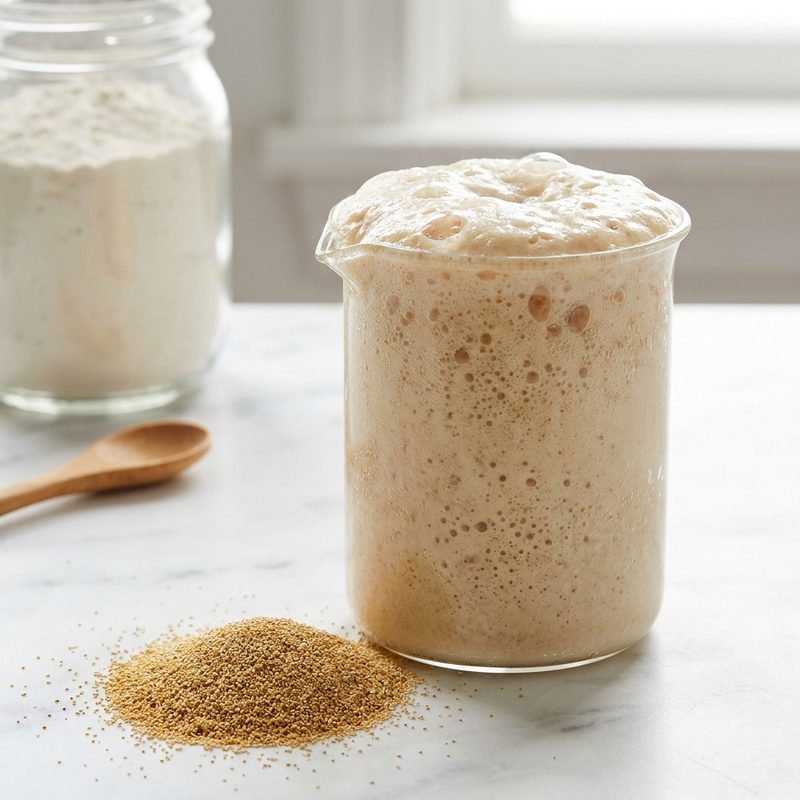
To verify if your dry yeast (active dry or instant) is still alive, perform a proofing test. Mix 1/2 cup of lukewarm water (105°F–110°F) with 1 teaspoon of granulated sugar in a small glass bowl. Stir in one packet (2 1/4 teaspoons) of yeast until no large dry clumps remain. Let the mixture sit for 5 to 10 minutes. If the yeast is active, it will swell, create a thick layer of foam on the surface, and emit a distinct yeasty aroma. If the water remains flat or only has a few tiny bubbles, the yeast is dead and should be discarded.
Why Yeast Fails to Activate
The most common reason yeast fails is the temperature of the liquid used to hydrate it. If the water is too cold, the yeast remains dormant; if it is over 120°F, the heat will kill the living cells instantly. Additionally, yeast has a shelf life. Even if the 'Best By' date hasn't passed, exposure to oxygen and humidity can degrade its strength. Always store opened yeast in an airtight container in the refrigerator or freezer to prolong its viability.
Troubleshooting Slow Fermentation
Sometimes yeast is still alive but 'weak.' This often happens with older yeast or when using heavily chlorinated tap water, which can inhibit fungal growth. If your proofing mixture takes longer than 10 minutes to foam, your dough will likely rise very slowly. You can try to 'fix' this by ensuring your kitchen is warm (75°F-80°F) during the bulk fermentation stage, or by adding a pinch more yeast than the recipe calls for to compensate for the lower potency.
The Difference Between Yeast Types
While both Active Dry and Instant yeast can be proofed, they behave differently in recipes. Active Dry yeast has a thicker protective coating and mandatory proofing in liquid is recommended to 'wake it up.' Instant yeast (or Rapid Rise) is processed into finer granules and can technically be mixed directly with dry ingredients. However, if you are unsure of the freshness of your Instant yeast, the water-and-sugar proofing method described above is still the safest way to prevent a failed bake.
Key Takeaways
- ✓ <html><ul><li>Always use a thermometer to check water temperature; 'lukewarm' is often cooler than people realize.</li><li>Store opened jars of yeast in the back of the freezer to keep them fresh for up to a year.</li><li>Avoid using distilled water, as yeast needs some minerals to thrive.</li><li>If your yeast doesn't foam, don't try to save the dough by adding more flour; start over with fresh yeast to avoid wasting expensive ingredients.</li></ul></html>