The Molecular Foundation of Gluten
Gluten doesn't actually exist in a bag of flour; instead, it is formed when two proteins—glutenin and gliadin—are hydrated with water. Glutenin provides elasticity (the ability to bounce back), while gliadin provides extensibility (the ability to stretch). When you mix flour and water, these proteins begin to bond, forming a chaotic, sticky web. Understanding this molecular marriage is the first step to controlling your dough's final texture.
The Power of Hydration and Autolyse
Before you even start kneading, time and water do the heavy lifting. The 'autolyse' method involves mixing flour and water and letting it rest for 20 to 60 minutes. During this time, enzymes called proteases begin to break down some of the protein bonds, making the dough more extensible and easier to handle, while the proteins fully hydrate to begin the gluten-building process naturally without any physical effort from the baker.
Mechanical Action: The Role of Kneading
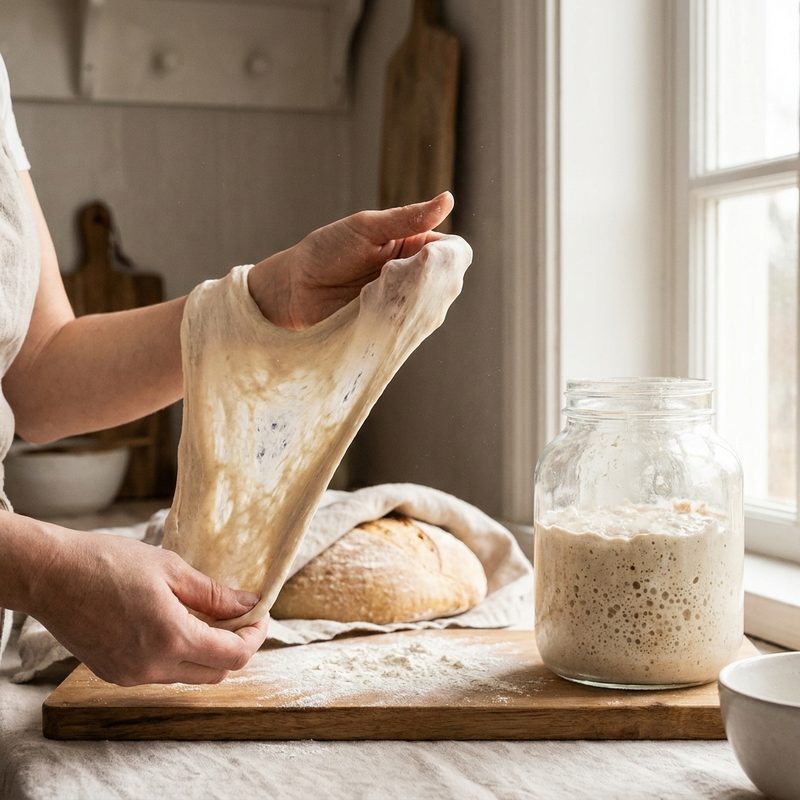
Kneading is the process of physically aligning the gluten proteins. Initially, the protein chains are tangled and disorganized. By stretching, folding, and pressing the dough, you force these chains into an orderly, cross-linked network. This structural mesh acts like a balloon, capable of trapping the carbon dioxide gases produced by yeast. Whether using the 'slap and fold' method or a stand mixer, the goal is to transform the dough from a shaggy mass into a smooth, elastic ball.
Biological Development: Fermentation and Time
Many bakers don't realize that fermentation is a form of 'chemical kneading.' As yeast consumes sugars and releases CO2, the gas bubbles expand, stretching the gluten fibers from the inside out. This slow, gentle expansion strengthens the dough over time, which is why 'no-knead' breads can still achieve excellent structure through long fermentation periods. Time is often the most effective tool in a baker's arsenal for developing strength and flavor simultaneously.
Temperature and Strength
Heat accelerates the movement of molecules. A warmer dough will develop gluten faster but can also become too slack if the fermentation proceeds too quickly. Conversely, cold fermentation (retarding) allows for a tighter, more controlled gluten structure and better flavor development. By controlling the temperature, you control the rate at which the protein network tightens and the enzymes work, giving you full command over the bread's final crumb and volume.
Key Takeaways
- ✓ <html><ul><li>Perform the Windowpane Test: Stretch a small piece of dough; if it becomes translucent without tearing, the gluten is fully developed.</li><li>Avoid Over-mixing: While difficult by hand, stand mixers can over-work dough, breaking the protein bonds and leading to a gummy, dense loaf.</li><li>Salt for Strength: Always add salt, as it tightens the gluten network and regulates yeast activity to prevent the dough from collapsing.</li><li>Use Room Temperature Water: For most home environments, water between 75-80°F (24-27°C) provides the optimal balance for gluten formation and yeast health.</li></ul></html>