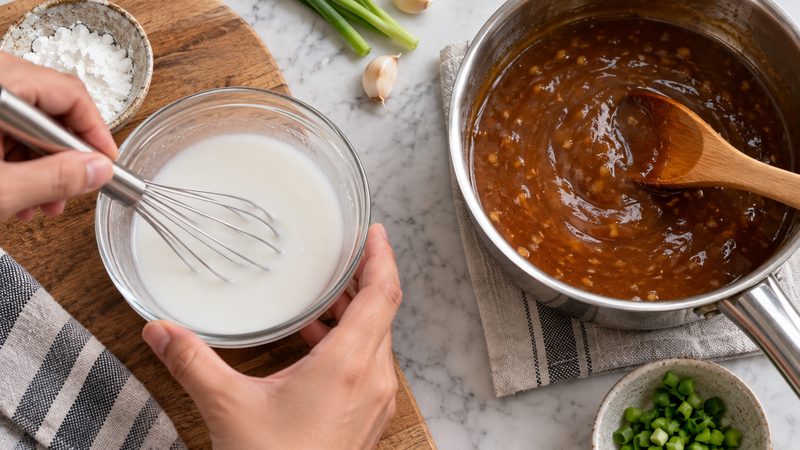
What a Cornstarch Slurry Is
A cornstarch slurry combines cornstarch with cold liquid before the starch enters a hot sauce, gravy, or similar dish. Argo directs cooks to make the cold mixture completely smooth first. That separate mixing step helps prevent lumps when the slurry is poured into the recipe.
The Lump-Free Slurry Method
Measure the amount of cornstarch and cold liquid specified by your recipe. Add the cold liquid gradually and stir until the mixture is completely smooth, with no pockets of dry cornstarch. Do not replace the recipe's quantity with a universal ratio: different applications need different amounts of thickener.
Adding the Slurry to Hot Liquid
Pour the smooth slurry into the recipe and continue stirring gently during cooking. Use medium-low to medium heat; Argo warns that high heat can cause lumping. Bring the mixture to a full boil while stirring constantly, then boil for 1 minute so the starch granules reach their full thickening capacity. In fruit pies, King Arthur likewise says the filling must visibly bubble for the cornstarch to work fully.
Judging the Final Thickness
Judge the result only after the mixture has completed the required boil. Follow the amount in the recipe rather than assuming one ratio suits every liquid. Cornstarch has about twice the thickening power of flour, so Argo recommends half as much when adapting a flour quantity. Fruit fillings vary further because different fruits release different amounts of moisture and contain different amounts of pectin.
Troubleshooting Common Slurry Problems
If the mixture lumps, check two stages of the method: the slurry should be smooth before it is poured, and the pan should stay at medium-low to medium heat rather than high heat. Keep stirring gently as it cooks.
If a thickened mixture later becomes thin, overcooking or rough, excessive stirring may have damaged the thickened structure. Stop after the 1-minute boil instead of continuing to cook it for an extended period.
For fruit filling, a cloudy or semi-transparent result can be normal with cornstarch. King Arthur also notes that cornstarch can taste starchy in some pie applications, which is a reason to follow a recipe tested for that particular fruit.
Recipes to Practice This Technique
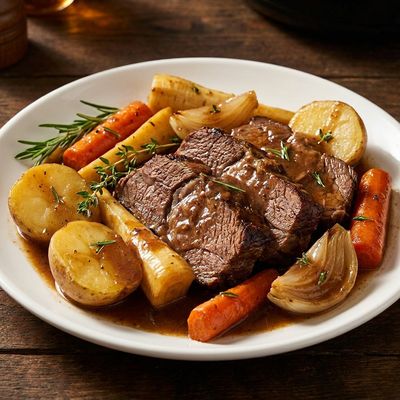
Use the method in this guide when making Instant Pot Pot Roast, Crock Pot Beef Stroganoff with Mushrooms, Crock Pot Teriyaki Chicken Thighs, Slow Cooker Honey Garlic Meatballs.
Sources
- Argo Corn Starch product and cooking guidance (Argo Corn Starch)
- Pie Thickener (King Arthur Baking Company)
Key Takeaways
- ✓ Always mix cornstarch with a cold liquid before adding it to a hot mixture to prevent lumps.
- ✓ Bring the cornstarch-thickened mixture to a full boil to achieve maximum thickening and clarity.
- ✓ Use medium-low to medium heat; Argo warns that high heat can cause a cornstarch mixture to lump.
- ✓ Follow the amount of cornstarch specified in your recipe, as the thickening power varies with the liquid and other ingredients.