1. Verify Your Yeast Activity
The most common culprit for dense bread is inactive or dead yeast. Yeast is a living organism; if it is expired or if you used water that was too hot (above 120°F), it won't produce the carbon dioxide needed to lift the dough. To avoid this, always bloom your yeast in lukewarm water with a pinch of sugar to see if it foams before adding it to your dry ingredients.
2. Avoid Over-Measuring Your Flour
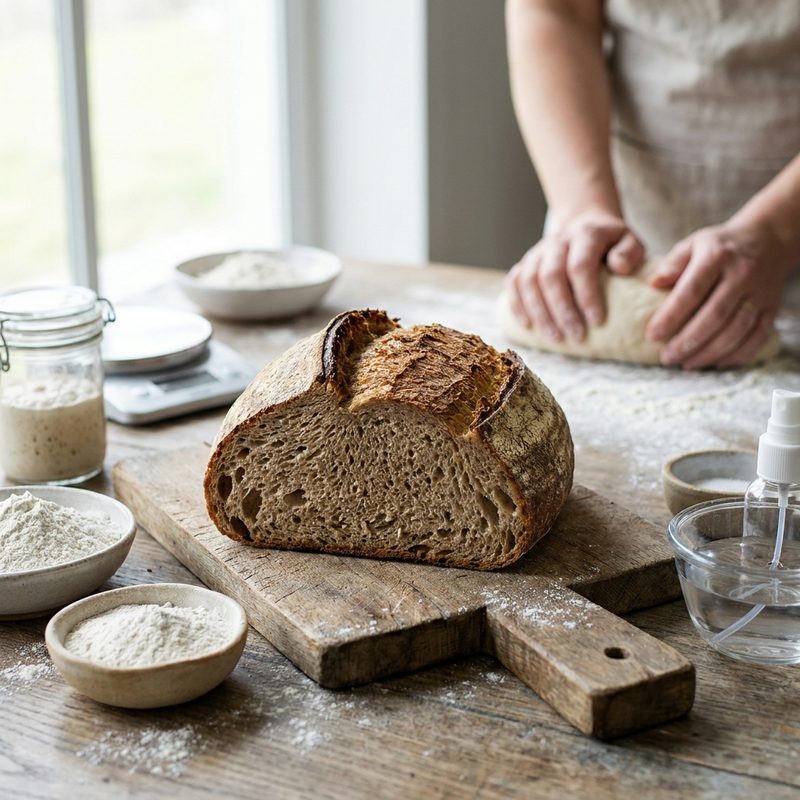
If you measure flour by volume (using a cup) rather than weight, you are likely using too much. Packing flour into a measuring cup can result in significantly more flour than the recipe intends, leading to a dry, heavy dough. For the best results, use a digital kitchen scale and measure in grams to maintain the correct hydration ratio.
3. Ensure Proper Gluten Development
Gluten is the 'web' that traps gas bubbles. If you under-knead your dough, the gluten structure will be too weak to hold air, causing the loaf to collapse into a dense mass. Conversely, over-kneading (especially with a stand mixer) can make the dough too tight. Use the 'windowpane test' to check: stretch a small piece of dough; if it becomes translucent without tearing, your gluten is ready.
4. Give Your Dough Enough Time to Rise
Rushing the proofing process is a frequent mistake. Bread needs time for the yeast to ferment and create air pockets. If the environment is too cold, the rise will take longer. Ensure your dough has truly doubled in size during the first rise, and don't skip the second rise (the proof) after shaping the loaf.
5. Check Your Oven Temperature
If your oven is too cool, the bread won't experience 'oven spring,' which is the final burst of expansion that happens in the first ten minutes of baking. If the oven is too hot, the crust might set before the bread has finished rising, trapping a dense interior. Using an oven thermometer ensures your appliance is actually reaching the temperature set on the dial.
Key Takeaways
- ✓ <html><ul><li>Always use room temperature ingredients unless the recipe specifically calls for cold ones, as cold temperatures slow down yeast activity.</li><li>Invest in a digital scale; it is the single most effective way to improve your baking consistency.</li><li>Steam your oven during the first 10 minutes of baking (by placing a pan of hot water on the bottom rack) to keep the crust soft and allow for maximum expansion.</li><li>Let your bread cool completely before slicing; cutting into hot bread releases steam and can make the interior feel gummy and dense.</li></ul></html>