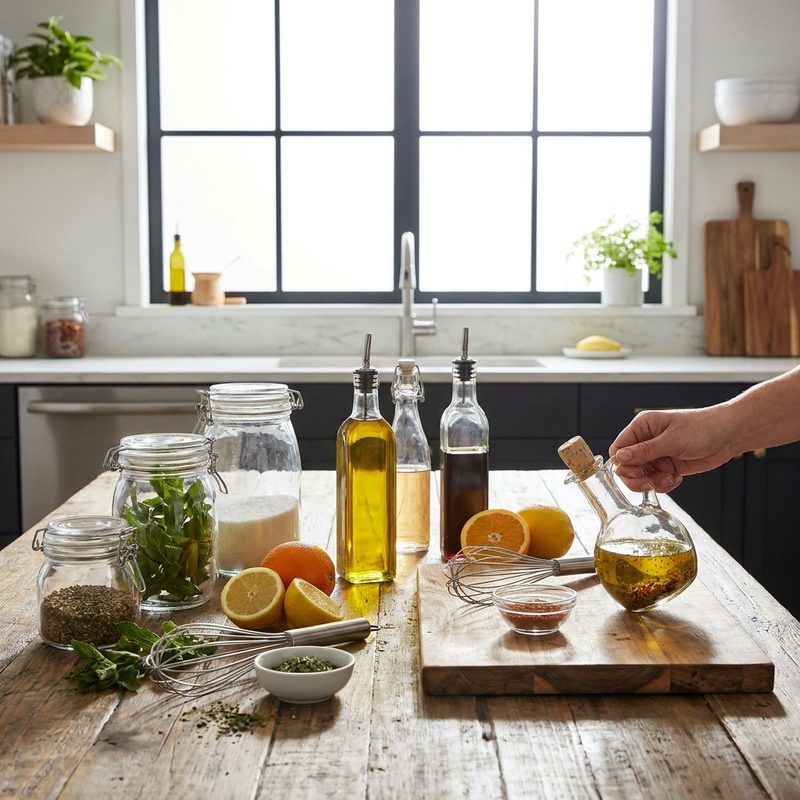
Understanding the Golden Ratio
The foundation of a classic vinaigrette is the 3:1 ratio—three parts oil to one part acid. This balance ensures the dressing is rich enough to coat the greens but acidic enough to provide a bright, clean finish. For a standard side salad, start with 3 tablespoons of extra virgin olive oil and 1 tablespoon of vinegar or citrus juice.
Selecting High-Quality Ingredients
Since dressing has very few ingredients, quality matters. Choose a neutral oil like avocado or grapeseed for a subtle taste, or a robust extra virgin olive oil for a peppery punch. For the acid, experiment with balsamic, apple cider, or red wine vinegar. Freshly squeezed lemon or lime juice can also act as a vibrant acidic base.
The Power of Emulsification
Oil and water (or vinegar) naturally repel each other. To create a smooth, creamy texture that won't separate, you must emulsify the mixture. You can do this by slowly drizzling the oil into the acid while whisking vigorously, or by placing all ingredients in a tightly sealed glass jar and shaking it for 30 seconds. Adding a 'stabilizer' like Dijon mustard or honey helps hold the emulsion together.
Seasoning and Balancing Flavors
Once your base is emulsified, add depth with aromatics. Finely minced shallots, garlic, or fresh herbs like chives and parsley add complexity. Always season with a generous pinch of kosher salt and freshly ground black pepper. If the dressing is too tart, add a tiny drop of honey or maple syrup to balance the acidity.
Testing the Final Product
Never taste your dressing directly from a spoon. Instead, dip a leaf of the salad green you intend to use into the dressing and taste that. This gives you a more accurate representation of how the flavors will interact with your food, allowing you to adjust salt or acid before serving.
Key Takeaways
- ✓ <html><ul><li>Use room temperature ingredients to help the emulsion form more easily.</li><li>Add a teaspoon of Dijon mustard as a natural emulsifier to keep your dressing from separating.</li><li>If using dried herbs, let the dressing sit for at least 15 minutes to allow the flavors to rehydrate and bloom.</li><li>Store homemade vinaigrettes in a glass jar in the refrigerator for up to two weeks.</li><li>If your olive oil solidifies in the fridge, let the jar sit at room temperature for 10 minutes or run it under warm water.</li></ul></html>