Choosing the Freshest Herbs
Success begins at the market. When selecting herbs, look for vibrant, uniform colors and a perky upright structure. Avoid any bunches with yellowing leaves, black spots, or slimy stems. If the herbs are sold in plastic clamshells, check for excessive condensation, which can lead to premature rot.
The Two Main Herb Classifications
To store herbs correctly, you must first distinguish between 'tender' and 'hardy' varieties. Tender herbs have soft, green stems and include cilantro, parsley, mint, dill, and basil. Hardy herbs have woody stems and thicker leaves, such as rosemary, thyme, sage, oregano, and marjoram. These two categories require fundamentally different storage environments.
The Bouquet Method for Tender Herbs
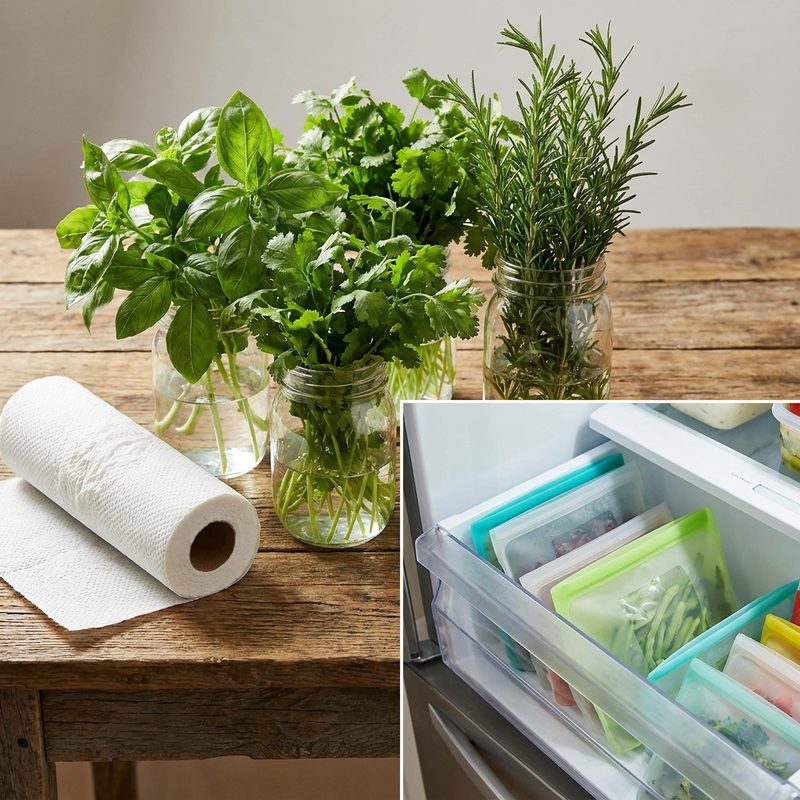
Tender herbs (excluding basil) thrive in a humid but breathable environment. Treat them like a bouquet of flowers: trim the bottoms of the stems and place them in a glass jar with about an inch of water. Cover the top loosely with a plastic bag to maintain humidity and store the jar in the refrigerator. Change the water every few days to prevent bacterial growth.
The Damp Paper Towel Method for Hardy Herbs
Hardy herbs are more resilient but can easily dry out. To keep them hydrated, wrap the unwashed stems and leaves loosely in a slightly damp paper towel. Place the bundle inside a resealable plastic bag or airtight container and store it in the crisper drawer of your refrigerator. This method provides just enough moisture to keep the leaves plump without causing decay.
The Special Case: Basil
Basil is the outlier of the herb world. It is highly sensitive to cold; temperatures below 40°F (4°C) will cause the leaves to turn black and slimy within hours. Always store basil at room temperature using the bouquet method. Keep the jar on your counter out of direct sunlight, and it will stay fresh for over a week.
Common Mistakes to Avoid
The most common mistake is washing herbs before storing them. Excess moisture is the primary cause of rot. It is best to wash your herbs immediately before use. Additionally, avoid overcrowding your herbs in a container, as air circulation is necessary to prevent mold.
Substitutes and Alternatives
If fresh herbs are unavailable, dried herbs can work in long-simmered dishes, though you should use only one-third of the amount called for. For finishing garnishes, consider herb pastes or even high-quality frozen herbs preserved in oil.
Key Takeaways
- ✓ <ul><li>Trim the stems at a 45-degree angle to increase surface area for water absorption.</li><li>If herbs start to wilt, revive them by submerging the leaves in an ice-water bath for 15 minutes.</li><li>For long-term storage, chop herbs and freeze them in ice cube trays covered with olive oil.</li><li>Remove any rubber bands or ties before storing to prevent bruising and localized rot.</li></ul>