Step 1: Strategic Meal Planning and Inventory
Begin by auditing your pantry, fridge, and freezer to see what you already have. Choose 5 to 7 versatile recipes that can be easily doubled or tripled, such as stews, casseroles, lasagnas, and marinated meats. Focus on 'freezer-friendly' ingredients that maintain their texture after thawing, such as hearty root vegetables, beans, and sturdy proteins.
Step 2: The Bulk Shopping Trip
Create a comprehensive shopping list categorized by grocery aisle to minimize time in the store. Buying in bulk is essential for monthly prep; look for larger packs of meat, grains, and frozen vegetables. Ensure you also stock up on high-quality freezer bags, aluminum trays, and parchment paper to facilitate proper storage.
Step 3: The Prep and Chop Session
Before you turn on the stove, dedicate time to processing all your produce and proteins. Chop all onions, garlic, and vegetables for the entire month's worth of recipes at once. Portion out meats into marinades or pre-cook large batches of base ingredients like ground beef or shredded chicken that can be used across multiple different dishes throughout the weeks.
Step 4: Controlled Cooking and Cooling
When batch cooking, slightly undercook vegetables and pasta, as they will soften further during the reheating process. Once cooked, it is vital to cool the food quickly to prevent bacterial growth and ice crystal formation. Spread food out on shallow baking sheets and place them in the refrigerator until they reach at least 40°F (4°C) before moving them to the freezer for long-term storage.
Step 5: Airtight Packaging and Labeling
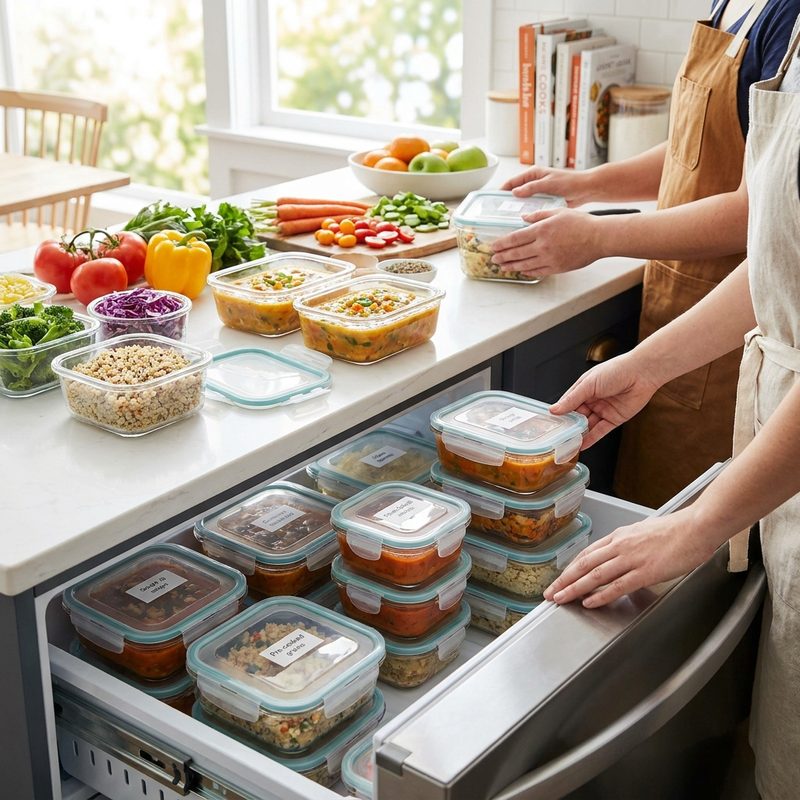
Air is the enemy of frozen food and causes freezer burn. Use vacuum sealers or heavy-duty freezer bags, squeezing out every bit of air possible. For liquid-based meals like soups, freeze them flat in bags to save space and enable faster thawing. Always label every container with the dish name, the date it was prepared, and specific reheating instructions to make dinner time seamless.
Key Takeaways
- ✓ <html><ul><li>Freeze meals in family-sized portions or individual servings to reduce waste and speed up thawing.</li><li>Flash freeze items like meatballs or burger patties on a tray before bagging them to prevent them from sticking together.</li><li>Use the FIFO Method (First In, First Out) by placing newer meals at the back of the freezer and older ones at the front.</li><li>Keep a freezer inventory list on the door so you know exactly what is available without having to dig through drawers.</li></ul></html>