Understanding the Origin of Leafy Greens
Leafy greens have been cultivated for thousands of years across diverse climates. From the wild cabbages of Western Europe that evolved into kale and collards to the ancient spinach varieties of Central Asia, these vegetables have been dietary staples for civilizations seeking high nutrient density and versatility. Understanding their moisture-rich cellular structure is key to keeping them fresh.
How to Choose the Best Greens
Freshness begins at the market. When selecting greens, look for vibrant, uniform color and a crisp, snappy texture in the stems and leaves. Avoid any bunches that show signs of yellowing, black spots, or a slimy texture, as these are indicators of enzymatic breakdown and bacterial growth. If buying pre-packaged greens, ensure there is no liquid pooling at the bottom of the container.
The Science of Storage: The Paper Towel Method
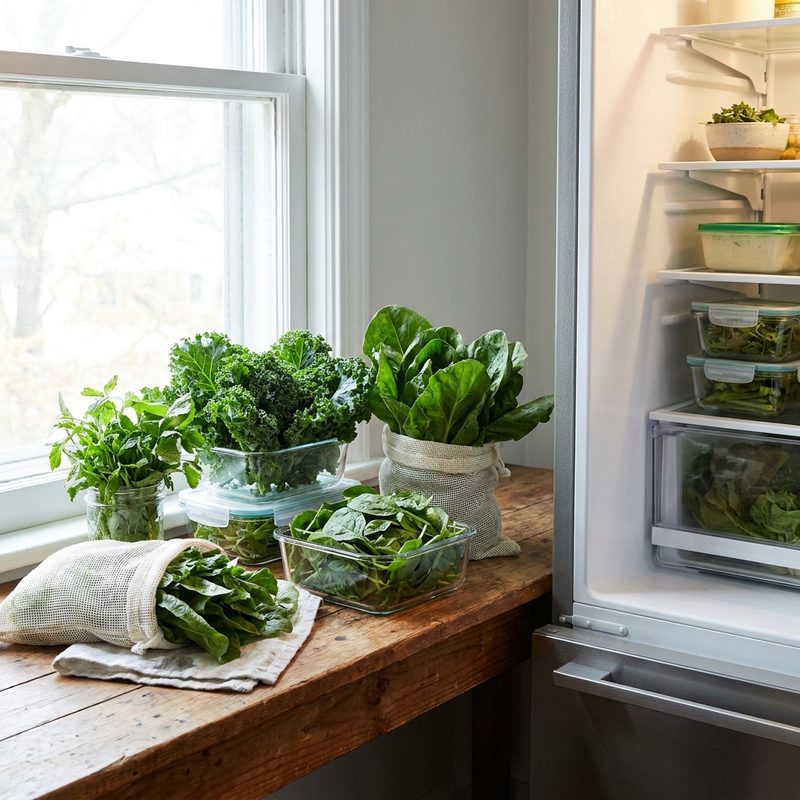
The secret to keeping greens fresh is balancing humidity and airflow. Too much moisture causes rot, while too little leads to wilting. The best method is to wash your greens in cold water, dry them thoroughly using a salad spinner, and then wrap them loosely in dry paper towels. The towels absorb excess moisture while maintaining a humid environment. Place the wrapped greens in a perforated plastic bag or a ventilated container in the crisper drawer of your refrigerator.
Substitutions and Swaps
If a recipe calls for a specific green you do not have, look for a substitute with a similar texture. Hardy greens like kale can be swapped for Swiss chard or collard greens. For tender salads, baby spinach, arugula, and mâche are often interchangeable, though their flavor profiles range from mild to peppery. For cooked applications, Escarole and Radicchio can offer a bitter, structural alternative to standard spinach.
Common Storage Mistakes to Avoid
One of the most frequent errors is storing greens near ethylene-producing fruits like apples, pears, or bananas, which accelerates the aging process and causes premature yellowing. Additionally, packing greens too tightly prevents proper air circulation, creating 'hot spots' of moisture that lead to rapid spoilage. Finally, never store greens in the coldest part of the fridge, as they can suffer from 'chill injury' which turns leaves translucent and mushy.
Key Takeaways
- ✓ <html><ul><li>Use a salad spinner to remove every drop of surface moisture after washing to prevent bacterial growth.</li><li>Revive slightly wilted greens by submerging them in a bowl of ice water for 15 to 30 minutes before use.</li><li>Line your storage container with paper towels and replace them if they become saturated with moisture.</li><li>Keep the crisper drawer set to 'high humidity' to ensure the leaves do not lose their internal water content.</li></ul></html>