1. Select the Proper Knife
The skin of a tomato is surprisingly tough and smooth, which can cause a dull chef's knife to slip. For the best results, use a very sharp chef's knife (8- to 10-inch blade, sharpened to a 15-20° edge) or a serrated utility knife (6- to 8-inch blade with medium-sized teeth). The teeth of a serrated knife easily grip the skin, allowing for clean cuts without applying excessive pressure that might crush the delicate interior. A dull knife will compress the tomato flesh, releasing juice prematurely and creating uneven, ragged edges. If you must use a straight-edged knife, hone it on a steel before each use and sharpen it on a whetstone (1000-6000 grit) every few weeks. The knife should slice through a ripe tomato without any downward force—if you have to saw or press, the blade is too dull. A tomato knife (a small, serrated blade about 5 inches long) is a good substitute for delicate work.
2. Wash and Prepare
Always start by rinsing your tomatoes under cool running water (60-70°F) for 10-15 seconds, rubbing the surface gently with your fingers to remove dirt and residues. Pat them dry with a clean kitchen towel—moisture on the skin makes the tomato slippery and increases the chance of the knife sliding. Place the tomato on its side on a stable, non-slip cutting board (dampen a paper towel under the board to prevent movement). For Roma or plum tomatoes, the natural shape is already stable; for round beefsteak or heirloom varieties, check that the tomato does not rock. If it does, trim a thin slice (1/8 inch) from the side opposite the stem to create a flat base. The cutting board should be wooden or plastic, not glass or marble, which will dull the blade and cause slipping.
3. Remove the Core
Using the tip of your knife, cut a small circle around the green stem scar (the core) at the top of the tomato. Angle the knife inward toward the center at about 45° to create a conical cutout about 1/2 inch deep. Remove the tough core and discard it—the core is fibrous and pale green, and leaving it in will create hard, bitter pieces in your dish. Alternatively, for speed, you can simply slice a thin disk (1/4 inch thick) off the top of the tomato to remove the stem area entirely. This method is faster but wastes a little more flesh. If the core is very large (common in beefsteak tomatoes), use a paring knife to cut a deeper cone. You should see a clean, white-ish ring where the core was removed; if any green remains, trim it out with the tip of the knife. For cherry or grape tomatoes, skip this step entirely—their cores are too small to matter.
4. Slicing into Planks
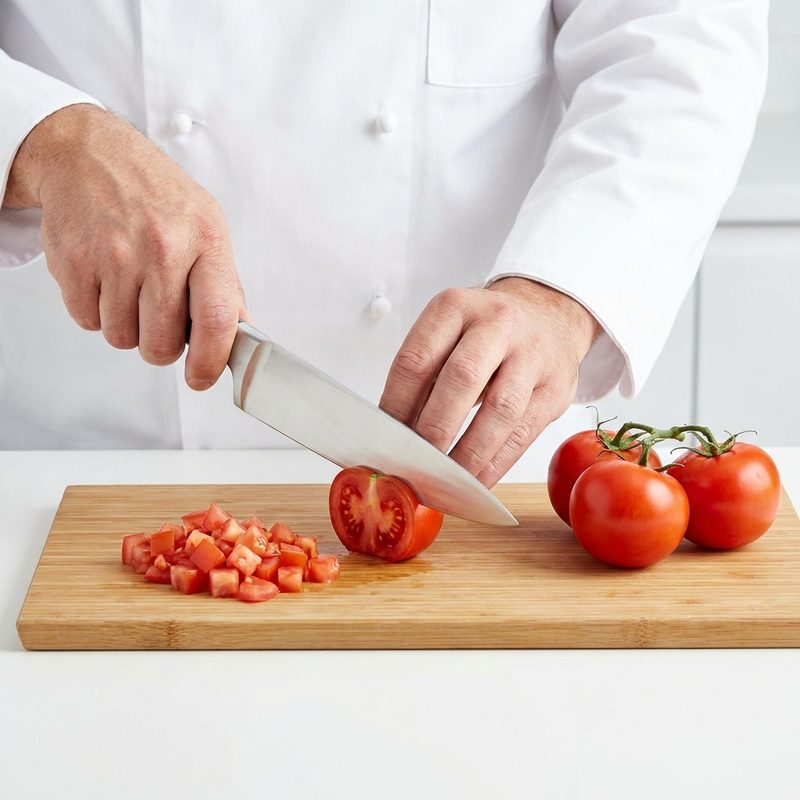
To dice the tomato, first slice it vertically into even 'planks' or rounds. If you want a standard dice, aim for 1/2-inch thickness. For a fine mince (for bruschetta or salsa), make the slices 1/4 inch apart. For a large dice (for stews or sauces), go for 3/4 inch. Hold the tomato steady with your non-dominant hand, fingers curled under (claw grip) to protect your fingertips. Use a smooth, single slicing motion—do not saw back and forth, which will tear the skin and crush the flesh. If the tomato is rolling, slice a small sliver (1/8 inch) off one side to create a flat, stable base before continuing. You should hear a clean, crisp sound as the blade cuts through the skin; a squishing sound means the tomato is overripe or the knife is too dull. For very ripe or soft tomatoes, chill them in the refrigerator for 15-20 minutes before cutting—this firms the flesh and reduces crushing.
5. Execute the Final Dice
Stack two or three planks at a time (no more than three, or they will slide) and cut them into long strips (matchsticks) of the same width as your desired dice. For a 1/2-inch dice, cut 1/2-inch-wide strips. For a fine mince, cut 1/8-inch strips. Finally, rotate these strips 90 degrees and cut across them at the same interval to create uniform cubes. The cubes should be roughly equal in size—uneven pieces will cook at different rates. For recipes like salsa where you want less liquid, you may choose to scoop out the seeds and watery pulp with a spoon before performing this final step. To do this, cut the tomato in half horizontally (through the equator), hold each half over a bowl, and gently squeeze or scoop out the gel and seeds with a small spoon or your finger. This removes about 1-2 tablespoons of liquid per medium tomato. If you skip this step, the dice will release juice quickly, making your dish watery. For sauces or cooked dishes, leave the seeds and pulp in—they add flavor and body. If the tomato is very juicy and you need dry dice for a salad, salt the diced pieces lightly (1/4 teaspoon per tomato) and let them drain in a colander for 10 minutes before using.
Key Takeaways
- ✓ <html><ul><li><strong>Maintain Knife Sharpness:</strong> A sharp blade is safer because it requires less force to pierce the skin, preventing the knife from sliding toward your fingers.</li><li><strong>Use the 'Claw Grip':</strong> Tuck your fingertips inward and use your knuckles to guide the blade, ensuring your fingers are never in the path of the edge.</li><li><strong>Choose the Right Variety:</strong> Roma or Plum tomatoes are ideal for chopping and dicing because they have thicker walls and fewer seeds than larger beefsteak varieties.</li><li><strong>Room Temperature:</strong> Chop tomatoes at room temperature for better flavor; cold tomatoes from the fridge can be more brittle and harder to cut cleanly.</li></ul></html>