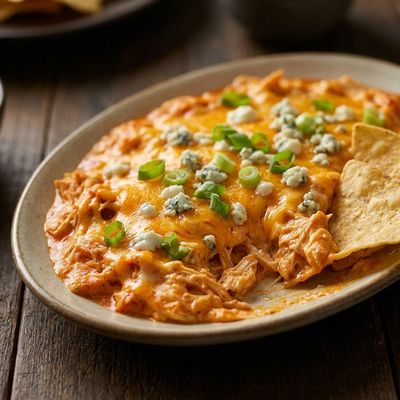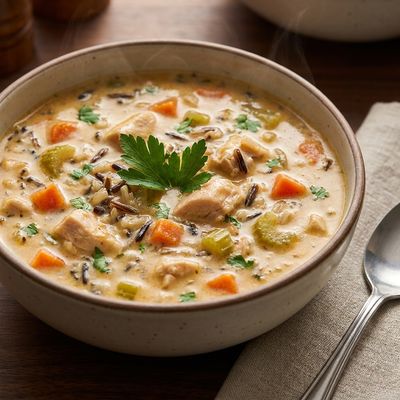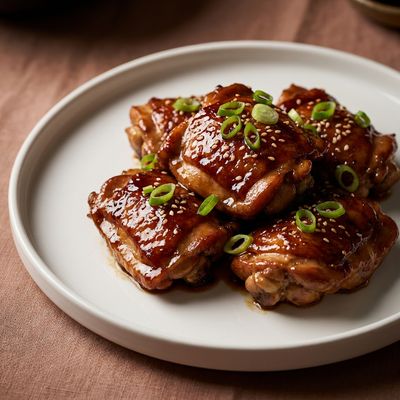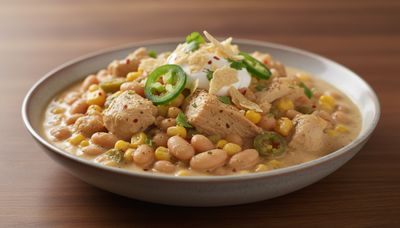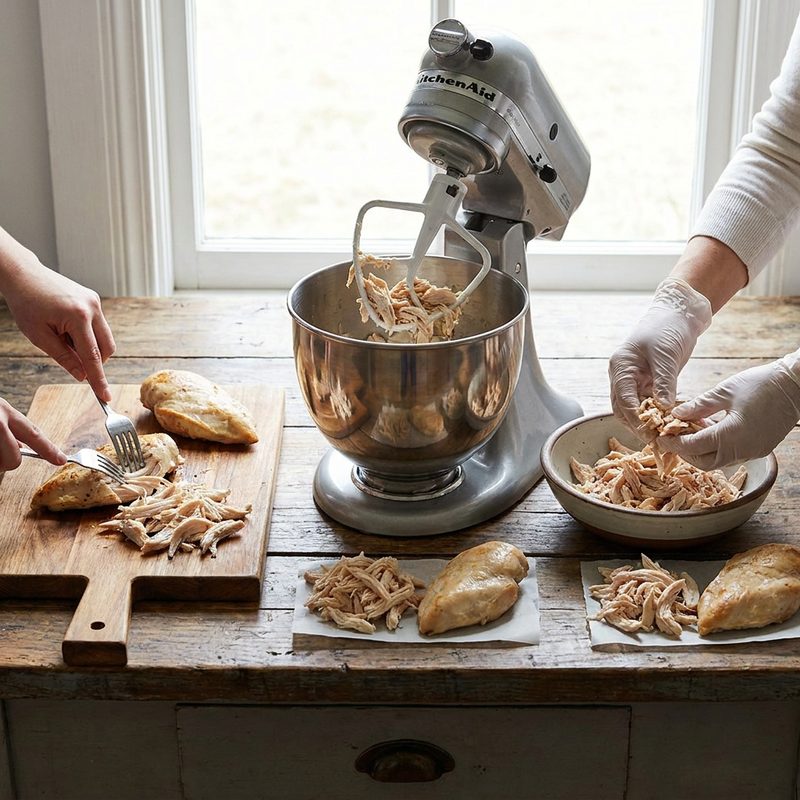
Step 1: Choose and Cook Your Chicken
Start with boneless, skinless chicken breasts or thighs. Thighs (about 6 ounces each) stay juicier and shred more forgivingly than lean breasts, which can turn stringy if overcooked. For the best results, chicken should be freshly cooked and still warm (140–150°F / 60–65°C), as it shreds much easier than cold meat. Common cooking methods include poaching in seasoned water (bring to a gentle simmer at 180°F / 82°C, never a rolling boil, or the meat toughens), slow cooking on low for 4–6 hours, or roasting at 375°F / 190°C for 25–30 minutes until the thickest part reaches 165°F (74°C). Let the chicken rest for 5 minutes after cooking; this allows juices to redistribute. If you accidentally overcook it (dry, tough fibers), shred while still very warm and immediately toss with 2–3 tablespoons of broth per pound to rehydrate.
Step 2: The Classic Two-Fork Method
Place the warm chicken on a cutting board or in a shallow bowl. Hold one fork steady in each hand, tines facing down at a 45-degree angle. Use one fork to anchor the meat firmly against the board while using the other fork to pull and scrape away pieces along the grain of the muscle fibers—you should feel the fibers separate with a slight tearing resistance. Work in 2-inch sections, rotating the chicken as needed. Continue until you achieve the desired thickness of shreds: for tacos aim for 1/4-inch strands, for soups go finer (1/8-inch). If the chicken starts to cool and becomes harder to shred, microwave it in 15-second bursts until it reaches 120°F / 49°C. Avoid pressing too hard with the anchoring fork or you’ll mash the meat into a paste.
Step 3: The Stand Mixer Hack (Best for Bulk)
If you are preparing a large quantity of chicken (2 pounds or more), place the warm, cooked pieces into the bowl of a stand mixer fitted with the paddle attachment. Break large chunks into 3-inch pieces first so the paddle can catch them evenly. Turn the mixer to the lowest speed (stir or speed 1) for 15 to 30 seconds. Watch closely—the sound will shift from a thumping to a softer tearing noise as the fibers separate. Stop once the chicken is shredded; any longer than 45 seconds and the friction will heat the meat, turning it into a paste. If you see dry, powdery bits, you’ve over-mixed; add 1 tablespoon of broth per pound and pulse 2–3 times to re-moisten. For smaller batches (under 1 pound), this method risks overworking the meat—stick to forks or a hand mixer.
Step 4: The Hand Mixer Method
For those without a stand mixer but wanting a faster alternative to forks, place the chicken in a deep mixing bowl (at least 3 quarts to avoid splashing). Use a standard hand mixer on low speed (speed 1 or 2), moving the beaters through the chicken pieces in a circular motion, starting from the center and working outward. The beaters will catch the fibers and pull them apart efficiently—you should see strands forming within 10–15 seconds. This method is excellent for minimizing cleanup, but be careful not to let the beaters hit the bowl’s sides (it can scratch metal bowls or chip ceramic). Stop every 10 seconds to check texture; aim for even, 1/4-inch shreds. If the chicken is too cold (below 100°F / 38°C), the beaters will struggle and may stall—warm it first. For very lean breasts, add 1–2 tablespoons of olive oil or melted butter to the bowl before mixing to prevent dry, clumpy shreds.
Step 5: Season and Store
Once shredded, toss the chicken with a splash of the cooking liquid or broth (2–3 tablespoons per pound) to keep it moist. Season with salt (1/2 teaspoon per pound), pepper (1/4 teaspoon), or your favorite spice blend—for Mexican-style dishes, try 1 teaspoon cumin and 1/2 teaspoon chili powder. If not using immediately, let the chicken cool to room temperature (about 30 minutes) before storing to avoid condensation that makes it soggy. Store in an airtight container in the refrigerator for up to four days or freeze for up to three months. To reheat, thaw overnight in the fridge, then warm in a skillet over medium heat with a splash of broth, stirring until it reaches 165°F / 74°C—microwaving can dry it out. If the shreds clump together after refrigeration, break them apart with a fork while reheating.
Key Takeaways
- ✓ <html><ul><li>Always shred the chicken while it is still warm; the proteins are more pliable and pull apart effortlessly compared to chilled meat.</li><li>Shred along the natural grain of the muscle to get long, clean strands rather than small, ragged bits.</li><li>Add a tablespoon of broth or cooking juices to the shredded meat to prevent it from drying out during storage.</li><li>For the most flavor, use chicken thighs, as their higher fat content results in a more succulent shredded texture.</li></ul></html>