Milk and Butter
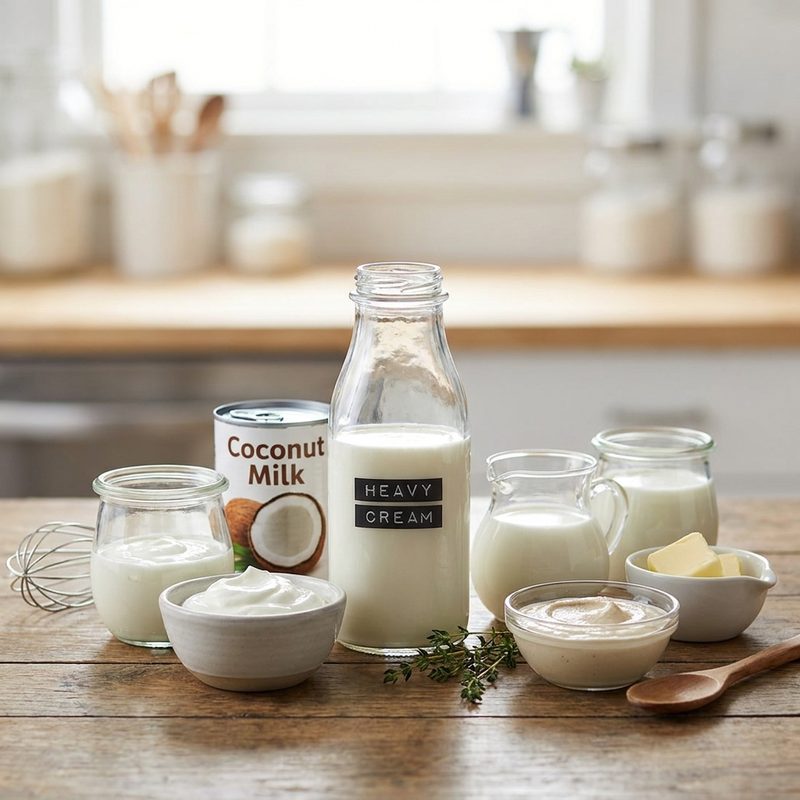
The most reliable dairy-based substitute for heavy cream in cooking and baking is a mixture of whole milk and unsalted butter. Since heavy cream is essentially milk with a higher fat content (about 36-40%), you can mimic this by whisking 1/4 cup of melted butter into 3/4 cup of whole milk. This works perfectly in most recipes, though it will not whip into stiff peaks like real heavy cream. For more detail, see our guide to choose a butter substitute.
Coconut Milk or Coconut Cream
For a vegan or dairy-free alternative, full-fat canned coconut milk or coconut cream is the gold standard. It provides a similar viscosity and fat content. This is the only plant-based substitute that can be chilled and whipped into a topping. Keep in mind that it will impart a subtle coconut flavor, making it ideal for curries, tropical desserts, and creamy soups.
Half-and-Half and Butter
If you have half-and-half in the fridge, you are already halfway to heavy cream. Since half-and-half is a blend of whole milk and cream, it lacks the full richness of heavy cream. To compensate, mix 7/8 cup of half-and-half with 1/8 cup of melted butter. This is excellent for savory sauces and gravies where a velvety mouthfeel is essential.
Cashew Cream
Cashew cream is a favorite among plant-based chefs for its neutral flavor and incredible thickness. To make it, soak raw cashews in water for several hours, then blend them with just enough fresh water to create a thick, smooth liquid. It acts as a powerful thickening agent in soups and pasta sauces like Alfredo.
Evaporated Milk
Evaporated milk is shelf-stable and has had about 60% of its water removed, making it creamier than standard milk. It can be used in a 1:1 ratio as a substitute for heavy cream in liquid-heavy recipes like chowders or custards. It is lower in fat, so it won't be as indulgent, but it provides a similar structural stability in baking.
Greek Yogurt or Sour Cream
For recipes that benefit from a bit of tang—such as stroganoff or mashed potatoes—Greek yogurt or sour cream can stand in for heavy cream. However, these are prone to curdling if boiled. To avoid this, stir them in at the very end of the cooking process over low heat or 'temper' them by mixing a little hot liquid into the yogurt before adding it to the pot.
Key Takeaways
- ✓ <html><ul><li><b>Match the Fat:</b> If a recipe relies on heavy cream for thickening, choose high-fat swaps like coconut cream or butter-milk mixtures.</li><li><b>Whipping Limitations:</b> Most substitutes (except coconut cream) will not hold air well enough to create whipped cream.</li><li><b>Avoid Curdling:</b> When using acidic substitutes like yogurt or lower-fat milks in hot soups, add them at the end of the cooking cycle and avoid boiling.</li><li><b>Neutrality Matters:</b> Choose cashew cream or milk/butter for neutral savory dishes, and save coconut milk for recipes where its flavor profile fits.</li></ul></html>