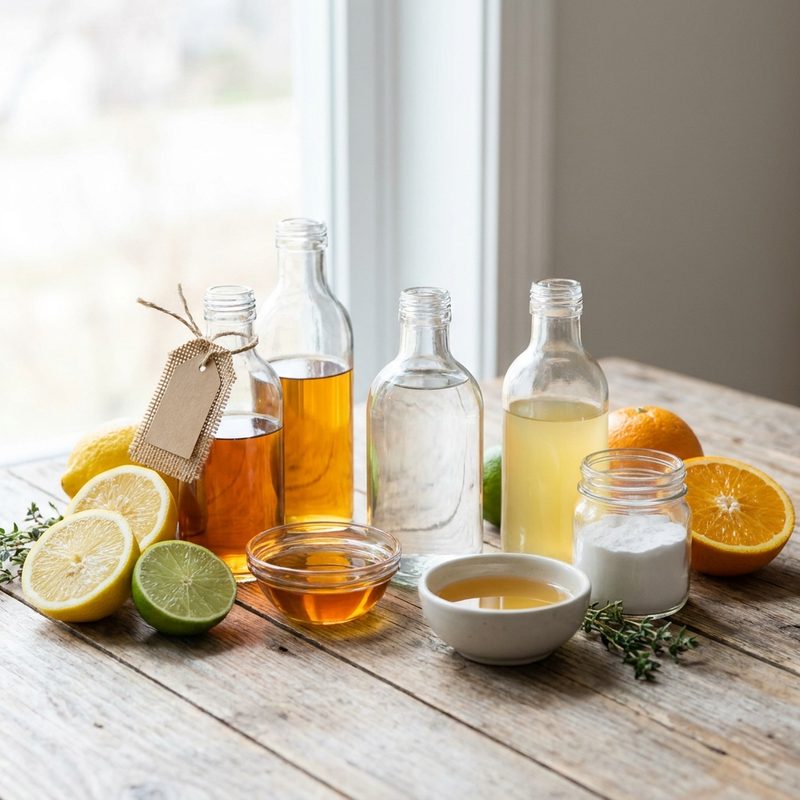
Citrus Alternatives: The 1:1 Ratio
The most direct substitute for lemon juice is lime juice. Because they share a similar pH level and citric acid profile, you can swap them in a 1:1 ratio for almost any application, from salad dressings to baking. Orange and grapefruit juice can also be used, though they are significantly sweeter and less acidic, meaning you may need to reduce other sugars in the recipe or add a touch of vinegar to boost the tartness. For more detail, see our guide to balance flavor with acid.
Vinegar for Savory Dishes
In savory cooking, vinegars are excellent substitutes for lemon juice. White wine vinegar or apple cider vinegar are the best choices due to their relatively mild flavor profiles. Use about half the amount of vinegar as you would lemon juice and taste as you go; vinegar has a more pungent, fermented edge compared to the bright, floral notes of fresh citrus.
Baking and Chemical Leavening
In baking, lemon juice often acts as the acid that reacts with baking soda to create lift. If a recipe calls for a tablespoon of lemon juice, you can substitute it with 1/2 teaspoon of cream of tartar or a tablespoon of white vinegar. For recipes like buttermilk pancakes, substituting regular milk with a splash of vinegar or cream of tartar can mimic the acidic reaction required for a fluffy texture.
Preservation and Canning Safety
When canning or preserving, acidity is a matter of safety, not just flavor. Bottled lemon juice is often preferred over fresh because its acidity level is standardized. If you must substitute, use bottled lime juice or citric acid powder. Avoid using vinegars unless the recipe specifically allows it, as most vinegars have only 5% acidity, which may not be enough to prevent bacterial growth in preserved goods.
Dry Substitutes and Concentrates
Citric acid powder is a powerful substitute for lemon juice in both flavor and preservation. A general rule is 1/4 teaspoon of citric acid dissolved in water equals about 1 tablespoon of lemon juice. For flavor alone, lemon zest is a fantastic way to add the 'essence' of lemon without adding liquid, though it will not provide the acidic reaction needed for leavening or preservation.
Key Takeaways
- ✓ <html><ul><li>Use lime juice as a 1:1 swap for the closest flavor match in cocktails and dressings.</li><li>For every 1 tablespoon of lemon juice, use 1/2 tablespoon of white wine vinegar to avoid over-powering the dish.</li><li>When using citric acid powder, remember that 1/4 teaspoon equals roughly 1 tablespoon of juice.</li><li>If you only need the lemon aroma and not the acid, use lemon zest or a drop of lemon extract instead.</li><li>Always use bottled lemon or lime juice for home canning to ensure consistent pH levels for safety.</li></ul></html>