Step 1: Choosing the Right Potato
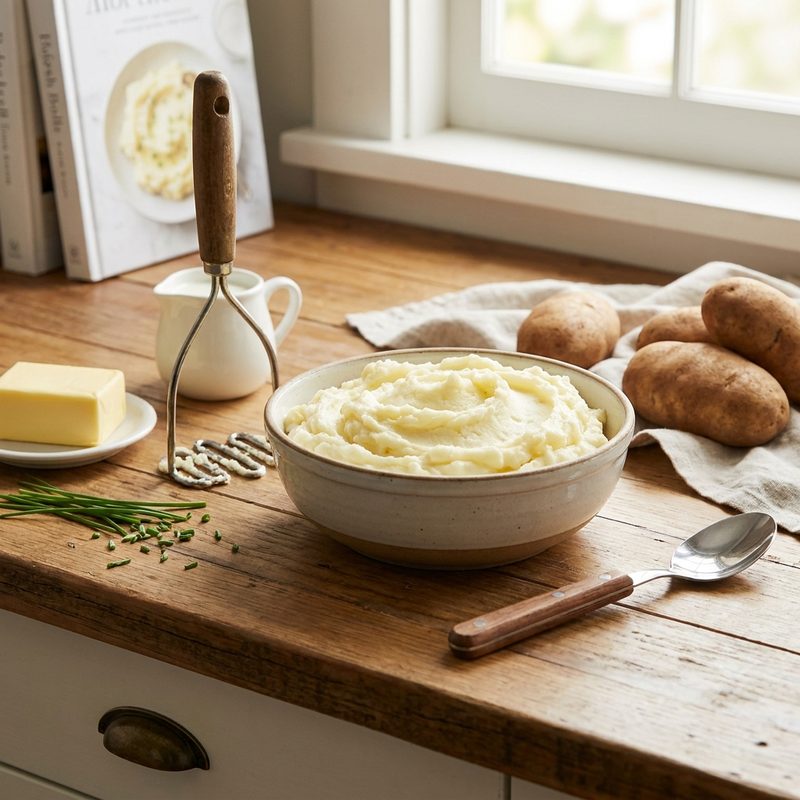
The secret to great mashed potatoes starts in the produce aisle. For a fluffy, light texture, choose high-starch Russet potatoes. For a buttery, creamy consistency, Yukon Golds are the gold standard. Many chefs prefer a 50/50 blend of both to get the best of both worlds.
Step 2: Prepping and Boiling
Peel your potatoes and cut them into uniform 1.5-inch chunks to ensure they cook evenly. Place them in a large pot and cover with cold water by at least an inch. Always start with cold water; starting with hot water causes the outside to overcook and turn mushy before the center is tender. Add a generous tablespoon of salt to the water to season the potatoes from the inside out.
Step 3: The Fork-Tender Test
Bring the water to a boil, then reduce to a simmer. Cook for 15 to 20 minutes. You know they are ready when a paring knife or fork slides into a potato chunk with zero resistance. If the potato resists, it needs more time.
Step 4: The Dry-Steam Method
Once cooked, drain the potatoes in a colander. Return the drained potatoes to the hot pot over very low heat for 1-2 minutes. Shake the pot gently to evaporate any remaining moisture. This 'drying' step is crucial because it ensures the potatoes will absorb the butter and cream rather than tasting watery.
Step 5: Mashing and Emulsifying
For the smoothest texture, use a potato ricer or a food mill. If you prefer a rustic mash, use a hand masher. Avoid using a food processor or blender, as the high speed breaks the starch granules and turns the potatoes into a gluey paste. Add your butter first to coat the starches, then gradually fold in warm milk or cream until you reach your desired consistency.
Key Takeaways
- ✓ <html><ul><li>Always warm your milk or cream before adding it to the potatoes to keep the dish hot and prevent a gummy texture.</li><li>Add cold butter cubes to the hot potatoes first; the fat coats the starch and results in a silkier mouthfeel.</li><li>Don't overwork the potatoes; stop mixing as soon as the liquid is incorporated to keep them light and airy.</li><li>Taste and season with kosher salt and white pepper at the very end to avoid discoloration.</li></ul></html>