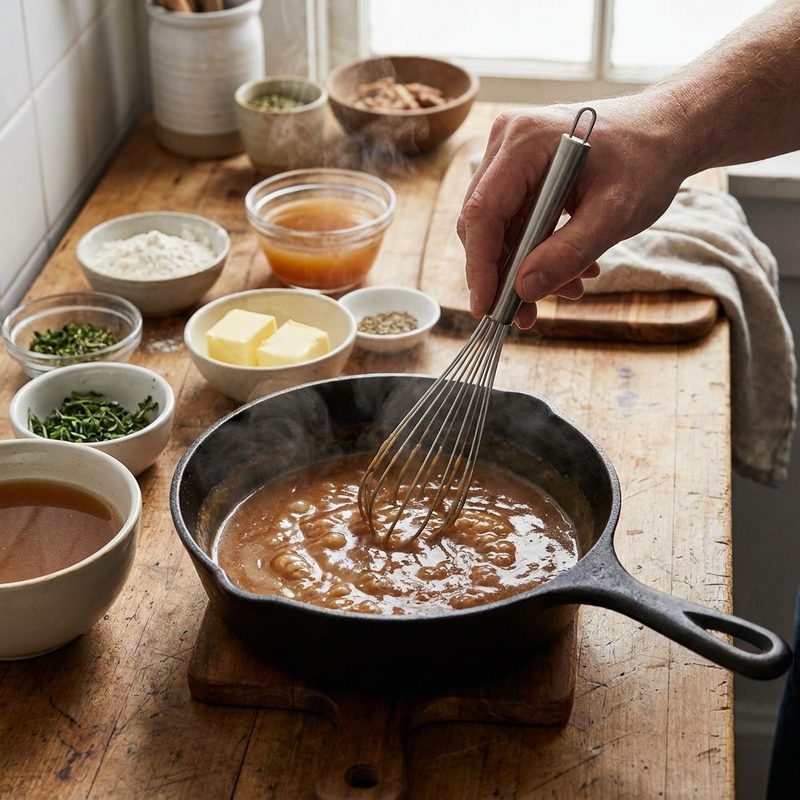
Step 1: Capture the Fond and Fat
After roasting meat, pour the liquids from the pan into a glass measuring cup or a fat separator. Let it sit for a few minutes until the fat rises to the top. The dark bits left in the pan are called the 'fond'—this is concentrated flavor. Keep about 2 to 4 tablespoons of the fat and discard the rest, but ensure you save all the dark juices underneath.
Step 2: Create the Roux
Place your roasting pan (if stovetop safe) or a saucepan over medium heat. Add the reserved fat back into the pan. Once shimmering, whisk in an equal amount of all-purpose flour. This creates a roux. Cook the roux for 1 to 2 minutes, whisking constantly, until it smells slightly nutty and loses its raw flour taste. For a darker gravy, cook the roux longer until it reaches a deep golden brown.
Step 3: Deglaze the Pan
If you have stuck-on bits in the roasting pan, pour in a splash of dry white wine, sherry, or a bit of your stock. Use a wooden spoon or whisk to scrape the bottom of the pan vigorously. This incorporates the fond into your base, ensuring maximum flavor and a rich color.
Step 4: Incorporate the Liquid
Slowly drizzle in your liquid—this can be a combination of the reserved pan juices and beef, chicken, or vegetable stock. The general ratio is 1 cup of liquid for every 2 tablespoons of flour used. Whisk constantly as you pour to prevent lumps from forming. The mixture will initially look like a thick paste before smoothing out into a liquid.
Step 5: Simmer and Season
Bring the gravy to a gentle simmer. Do not boil it violently. Allow it to cook for 5 to 10 minutes until it reaches your desired thickness. Finish by seasoning with kosher salt and freshly cracked black pepper. For extra depth, add a teaspoon of soy sauce or Worcestershire sauce.
Key Takeaways
- ✓ <html><ul><li><b>The Golden Ratio:</b> Use 2 tablespoons of fat and 2 tablespoons of flour for every 1 cup of liquid for a standard medium-thick gravy.</li><li><b>Temperature Control:</b> Adding cold stock to a hot roux often results in fewer lumps than adding hot stock to a hot roux.</li><li><b>The Strainer Hack:</b> If you end up with lumps despite your best efforts, pour the finished gravy through a fine-mesh sieve into your serving boat.</li><li><b>Silky Finish:</b> Whisk in a tablespoon of cold butter right before serving to give the gravy a professional, glossy sheen.</li></ul></html>