The Problem: The Compressed Flour Trap
Flour is highly compressible. When you dip a measuring cup directly into the bag, you are effectively packing the flour down. This 'scoop' method can result in up to 25% more flour than a recipe intends, leading to cookies that don't spread and cakes that are unpleasantly dry and dense.
The Solution: The Spoon-and-Level Method
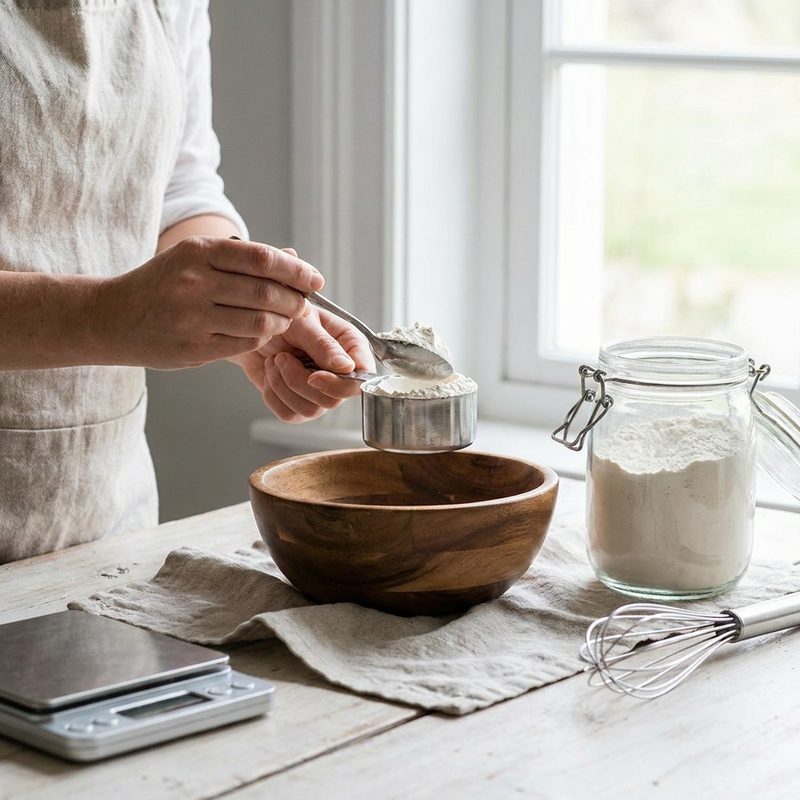
If you are using volume measurements, the 'spoon-and-level' technique is the only way to ensure accuracy. First, use a spoon to fluff the flour in its container or bag. Gently spoon the floured into your dry measuring cup until it heaps over the top. Finally, take the flat back of a knife and sweep it across the rim of the cup to level it off. Never tap the side of the cup or shake it down, as this will settle the flour and ruin the measurement.
The Professional Fix: Weighing Your Ingredients
The most reliable way to troubleshoot inconsistent baking is to switch from volume (cups) to mass (grams). A digital kitchen scale eliminates the variables of humidity and packing. Most professional bakers define one cup of all-purpose flour as 120 to 125 grams. By placing your bowl on a scale and taring it to zero, you can pour the exact amount needed without the mess of multiple measuring cups.
Identifying Sifted Flour Requirements
Pay close attention to the wording in your recipe. '1 cup flour, sifted' means you should measure the flour first and then sift it. However, '1 cup sifted flour' means you must sift a pile of flour first and then gently measure it. Because sifting aerates the flour, these two instructions result in significantly different amounts of ingredient.
Key Takeaways
- ✓ <html><ul><li>Always use 'dry' measuring cups (the ones you can level off) rather than glass liquid measuring pitchers.</li><li>Store your flour in an airtight container to prevent it from absorbing moisture, which changes its weight.</li><li>If your dough feels too sticky even after correct measuring, remember that humidity can affect flour; add only one tablespoon of extra flour at a time.</li><li>Never pack flour into the cup like you would with brown sugar unless the recipe specifically says 'packed'.</li></ul></html>