Understanding Gluten-Free Flour Substitutions
Gluten is the protein found in wheat that provides structure and elasticity to baked goods. When you remove it, you must compensate with alternative proteins and starches. The key to success is matching the flour's characteristics to the recipe's requirements, as no single flour is a perfect 1:1 replacement for all wheat applications.
Almond Flour for Richness and Moisture
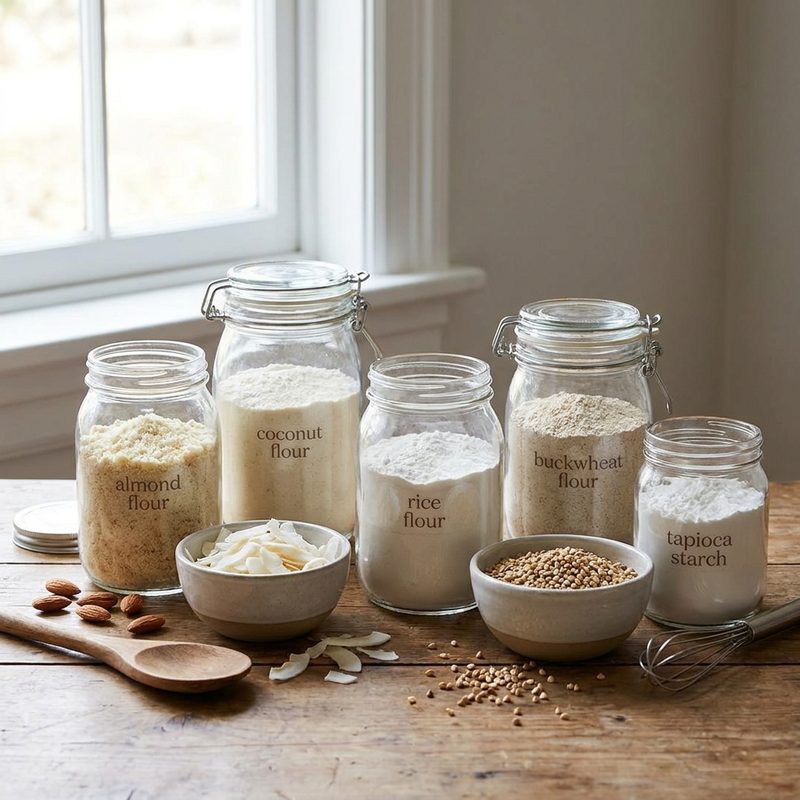
Almond flour is made from blanched, ground almonds and is high in fat and protein. It is excellent for cookies, cakes, and muffins where a tender, moist crumb is desired. Because it lacks structure, you may need to add an extra egg or use it in combination with a sturdier flour like rice flour to prevent the baked good from being too fragile.
Rice Flour and Starches for Lightness
White and brown rice flours are staples in gluten-free baking. Brown rice flour offers a slightly nutty flavor, while white rice flour is very neutral. To avoid a gritty texture, always look for 'super-fine' grinds. These are often blended with potato starch or tapioca starch to mimic the lightness of wheat flour in cakes, pastries, and delicate sponges.
Oat Flour for Hearty Textures
Certified gluten-free oat flour adds a wholesome flavor and a soft, chewy texture. It is particularly effective in pancakes, waffles, and quick breads. Note that oat flour absorbs more liquid than wheat flour, so you may need to increase the hydration in your recipes slightly to ensure your final product isn't too dry.
Coconut Flour: The High-Absorbent Option
Coconut flour is unique because it is exceptionally high in fiber and absorbs a massive amount of liquid. You cannot swap it 1:1 for wheat flour; typically, you use about 1/4 to 1/3 cup of coconut flour for every 1 cup of wheat flour, along with additional eggs or liquid to prevent the recipe from becoming crumbly and dry.
The Power of All-Purpose Gluten-Free Blends
For beginners, commercial 1:1 gluten-free flour blends are a great starting point. These often contain a scientific mix of rice flour, starches, and xanthan gum (a binding agent). They are designed to be swapped directly into standard recipes, though they work best in non-yeasted items like cookies and muffins rather than complex breads.
Key Takeaways
- ✓ <html><ul><li>Always weigh your flour in grams rather than using measuring cups to ensure accuracy, as gluten-free flours have different densities.</li><li>Allow your gluten-free batter to rest for 30 minutes before baking to help the flours hydrate and prevent a gritty mouthfeel.</li><li>Use a binder like xanthan gum, guar gum, or psyllium husk to replace the 'stretch' and structure that gluten usually provides.</li><li>Store nut-based flours in the refrigerator or freezer to prevent the oils from going rancid over time.</li></ul></html>