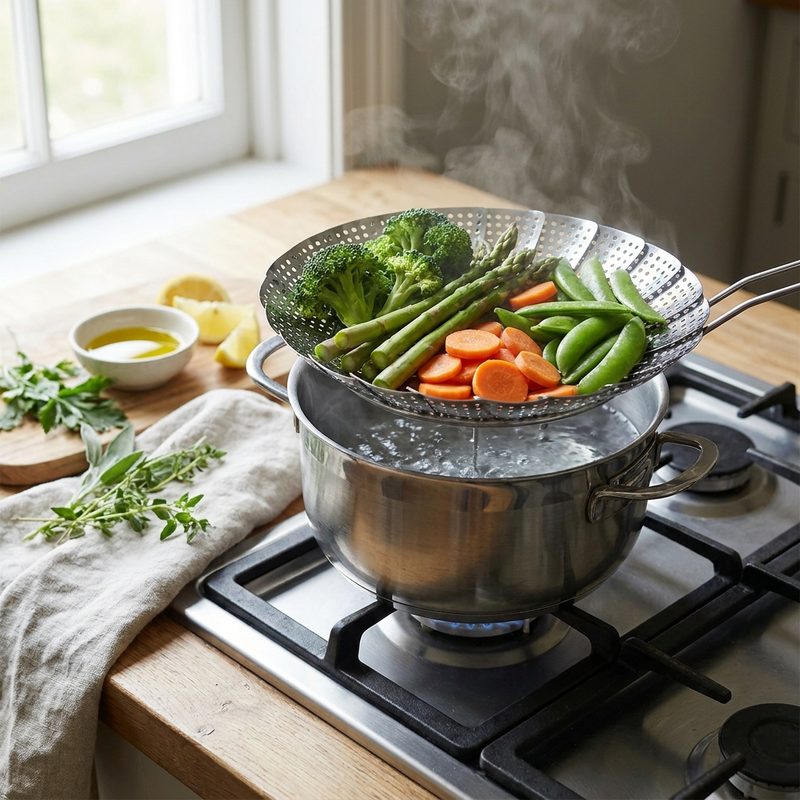
Step 1: Prep Your Vegetables
Start by washing your vegetables thoroughly under cold water. To ensure even cooking, cut your vegetables into uniform sizes; for example, keep broccoli florets roughly the same diameter and slice carrots into consistent rounds. This prevents some pieces from becoming mushy while others remain raw.
Step 2: Set Up the Steamer
Fill a large pot with about 1 to 2 inches of water, ensuring the water level remains below the bottom of your steamer basket. Bring the water to a boil over medium-high heat. Once boiling, place your prepared vegetables into the steamer basket and carefully set the basket into the pot.
Step 3: The Steaming Process
Cover the pot with a tight-fitting lid to trap the steam. Reduce the heat slightly to maintain a steady simmer. The steam will circulate around the vegetables, cooking them gently. Refer to a timing chart for specific vegetables: leafy greens usually take 2-3 minutes, while denser root vegetables like carrots may take 8-10 minutes.
Step 4: Check for Doneness
Use a paring knife or a fork to test the texture. You are looking for 'fork-tender,' meaning the tool slides in easily but the vegetable still has a slight snap. The colors should be vibrant; if they start to look dull or olive-drab, they are likely overcooked.
Step 5: Season and Serve
Carefully remove the steamer basket using oven mitts or tongs. Transfer the vegetables to a serving bowl. Enhance the flavor immediately with a pinch of sea salt, a crack of black pepper, a squeeze of fresh lemon juice, or a drizzle of high-quality olive oil while they are still hot.
Key Takeaways
- ✓ <html><ul><li><strong>Don't Overcrowd:</strong> Arrange vegetables in a single layer or a loose pile to allow steam to circulate freely for even cooking.</li><li><strong>Infuse with Flavor:</strong> Add aromatics like garlic cloves, ginger slices, or fresh herbs to the boiling water to subtly perfume the vegetables.</li><li><strong>Shock for Prep:</strong> If you are cooking vegetables for a cold salad or meal prep, immediately plunge them into an ice-water bath after steaming to stop the cooking process and lock in color.</li><li><strong>Keep the Lid On:</strong> Avoid lifting the lid frequently, as this releases the built-up steam and significantly increases the cooking time.</li></ul></html>