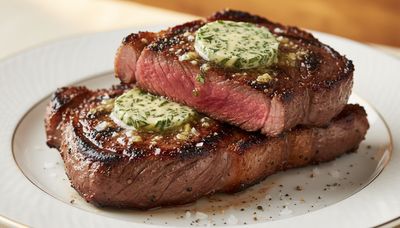
Step 1: Choose the Right Cut
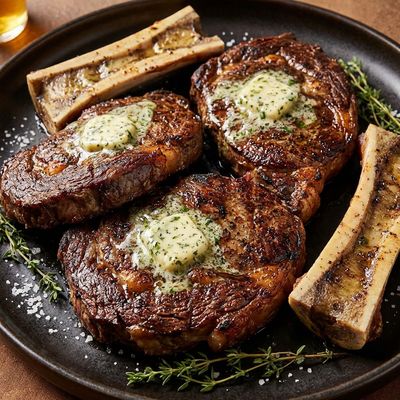
Success starts at the butcher counter. For grilling, look for steaks with significant marbling (the white flecks of intramuscular fat), such as Ribeye, New York Strip, or Porterhouse. These cuts remain juicy under high heat. Aim for a thickness of at least 1.5 inches to ensure a proper sear without overcooking the center.
Step 2: Temper and Dry the Meat
Remove your steaks from the refrigerator 30 to 45 minutes before grilling to bring them closer to room temperature. This ensures more even cooking throughout the meat. Most importantly, use paper towels to pat the surface completely dry; moisture on the exterior creates steam, which prevents the development of a dark, flavorful crust.
Step 3: Season Generously
Seasoning should be simple but aggressive. Coat the steak with a thin layer of high-smoke-point oil (like grapeseed or avocado oil) and apply a generous amount of Kosher salt and freshly cracked black pepper. For the best crust, salt the steak either 40 minutes before grilling or immediately before it hits the grates.
Step 4: Prepare a Two-Zone Fire
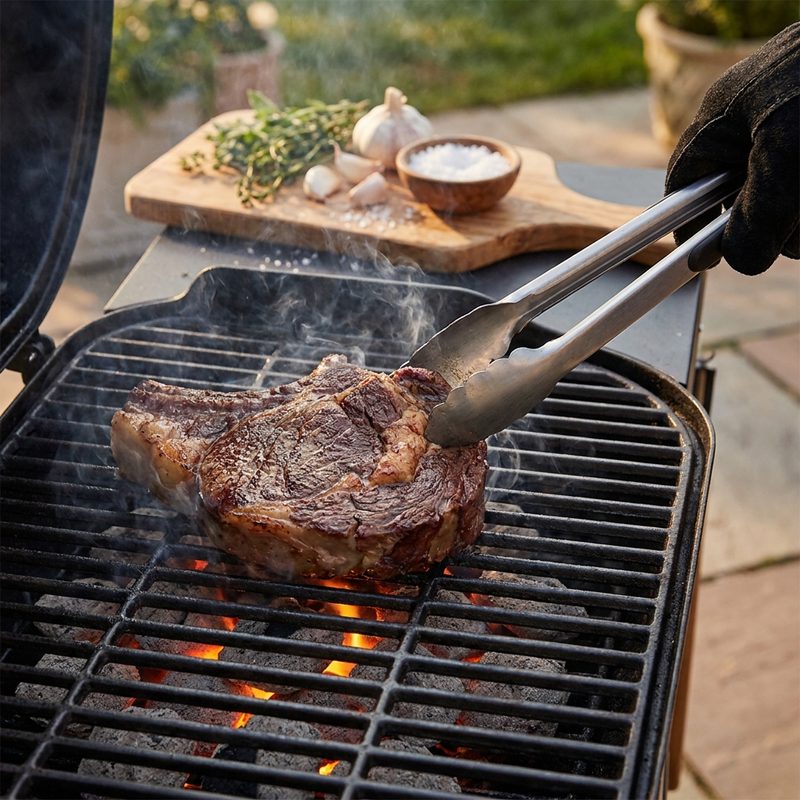
Set up your grill with two zones: a high-heat zone for searing and a lower-heat zone for gentle finishing. If using charcoal, pile coals on one side; for gas, leave one burner off. Clean your grates thoroughly with a wire brush and lightly oil them with a folded paper towel to prevent sticking.
Step 5: The Sear and Finish
Place the steaks directly over the high-heat zone. Sear for 2-3 minutes per side until a deep brown crust (the Maillard reaction) forms. If the steak is thick, move it to the cooler side of the grill and close the lid to finish cooking until it reaches your desired internal temperature.
Step 6: The Essential Rest
Never cut into a steak immediately after removing it from the grill. Transfer it to a cutting board or warm plate and let it rest for 5 to 10 minutes. This allows the muscle fibers to relax and reabsorb the juices, ensuring the liquid stays in the meat rather than on the board.
Key Takeaways
- ✓ <html><ul><li>Always use an instant-read digital thermometer for precision; do not rely on the "finger poke" test.</li><li>Pull the steak off the grill 5 degrees before your target temperature, as "carry-over cooking" will continue to raise the internal temp during the rest.</li><li>Clean and oil your grill grates while they are hot to create a natural non-stick surface.</li><li>For professional crosshatch grill marks, rotate the steak 90 degrees halfway through the searing process on each side.</li></ul></html>