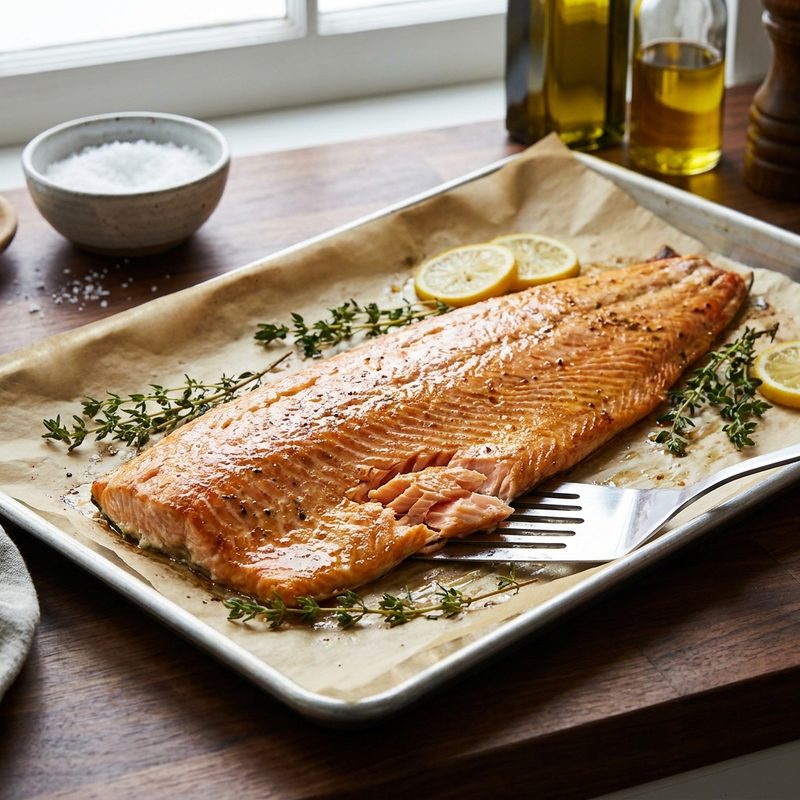
1. Preparation and Room Temperature
Before you begin, remove the salmon from the refrigerator about 15-20 minutes before baking. Bringing the fish closer to room temperature ensures even cooking throughout the fillet. Use paper towels to pat the salmon completely dry; removing surface moisture helps the seasoning stick and prevents the fish from steaming instead of roasting.
2. Seasoning and Fat
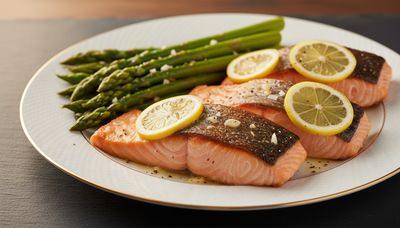
Place the salmon on a parchment-lined baking sheet. Brush the fillets generously with olive oil or melted butter to provide moisture and flavor. Season simply with kosher salt and freshly cracked black pepper. For added depth, consider aromatics like sliced lemons, fresh dill, or a light dusting of garlic powder.
3. The Baking Process
Preheat your oven to 400°F (200°C). This high temperature allows the salmon to cook quickly, preserving its juices. Place the baking sheet on the center rack. For a standard 1-inch thick fillet, bake for 12 to 15 minutes. If you are baking a whole side of salmon, you may need to extend the time to 15-20 minutes.
4. Testing for Doneness
The most reliable way to check doneness is with an instant-read thermometer; the internal temperature should reach 125°F-130°F for medium (it will rise toward the USDA recommended 145°F as it rests). Alternatively, use a fork to gently press the thickest part of the fish. If it flakes easily along the natural fat lines and has changed from translucent to opaque, it is ready.
Key Takeaways
- ✓ <html><ul><li>Leave the skin on during baking to protect the delicate flesh from the heat of the pan.</li><li>Always bake salmon skin-side down for the best texture and easier serving.</li><li>If you see white stuff (albumin) seeping out, you are overcooking the fish; reduce your cooking time next time.</li><li>Let the salmon rest for 3-5 minutes after removing it from the oven to allow the juices to redistribute.</li></ul></html>