The Importance of Accuracy
A thermometer that is off by even five degrees can be the difference between a medium-rare roast and one that is overdone. Calibration ensures that your equipment is providing a true reading, which is critical for both culinary excellence and food safety. Whether you use a digital probe or an analog dial, regular checks are a hallmark of a professional kitchen.
The Ice Bath Method
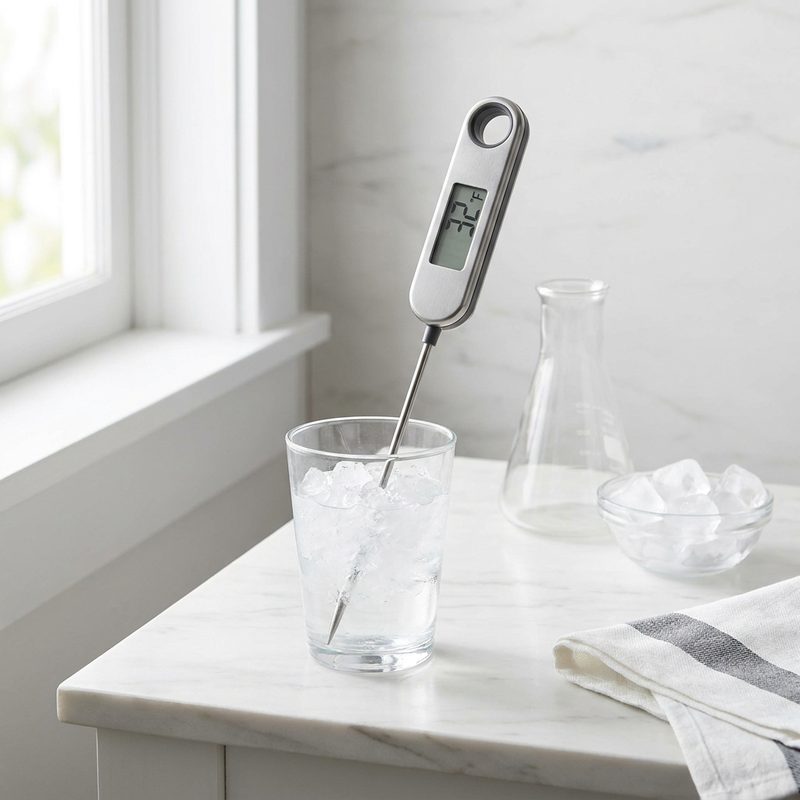
The most reliable way to calibrate is the ice bath method because it is not affected by altitude. Fill a large glass with crushed ice and add just enough cold water to fill the gaps. Stir the mixture and let it sit for two minutes to reach a stable temperature. Insert the thermometer probe at least two inches into the center of the slush, ensuring it does not touch the sides or bottom of the glass. After 30 seconds, the reading should be exactly 32°F (0°C).
Adjusting Your Device
If your reading is off, you must adjust it. For digital thermometers, look for a 'CAL' button that you can hold down to reset the reading to 32°F while the probe is submerged. For analog dial thermometers, there is usually a small hex nut located directly behind the dial face. Use a small wrench or the built-in tool on the thermometer's sheath to turn the nut until the needle points exactly to the 32°F mark.
What Matters When Buying New
If your current device won't hold a calibration or fluctuates wildly, it may be time for an upgrade. Look for a thermometer with a response time of under 3 seconds and a thin 'reduced tip' probe, which minimizes juices escaping from the meat. High-quality models offer waterproof ratings (IP67) and backlit displays for outdoor grilling at night. For more detail, see our guide to safely thaw meat and poultry.
Care and Longevity
Proper maintenance prevents the need for frequent calibration. Never submerge the digital housing of a non-waterproof thermometer in water. Clean the probe with warm soapy water or an alcohol wipe after every use. Always store your thermometer in its protective sheath to prevent the sensor from being damaged by other heavy tools in your kitchen drawer.
Key Takeaways
- ✓ <html><ul><li>Always use crushed ice rather than cubes to ensure the most consistent water temperature throughout the glass.</li><li>Avoid touching the bottom or sides of the container with the probe tip, as this will result in an inaccurate reading.</li><li>If you live at a high altitude, avoid the boiling water method, as the boiling point drops significantly above sea level.</li><li>Calibrate your thermometer immediately if you drop it on a hard surface, as the internal sensor may have shifted.</li></ul></html>