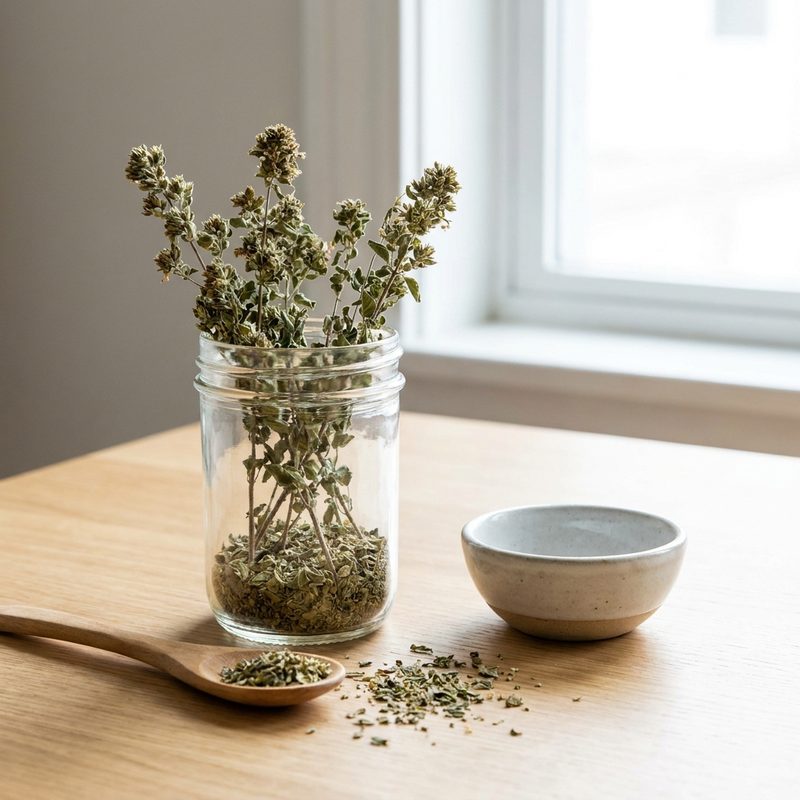
What Dried Oregano Is
Dried oregano is the dehydrated leaves of the Origanum vulgare plant, a member of the mint family. Native to warm-temperate regions of Europe and the Mediterranean, the leaves are harvested just before flowering, then air-dried or gently heated to preserve their volatile oils. The drying process intensifies the herb's flavour, concentrating the thymol and carvacrol compounds that give it a slightly pungent, earthy character. While fresh oregano is milder, dried oregano is more potent and can stand up to long cooking times, making it a go-to for sauces, stews, and roasts.
How to Choose Dried Oregano
When buying dried oregano, look for a vibrant green colour with no yellow or brown patches – dull colour often means old stock. The leaves should be mostly whole or coarsely crumbled, not a fine dust, as larger pieces retain more essential oils. Give the jar a sniff: it should smell strongly of oregano, with a warm, slightly piney aroma. Check the packaging date; for the best flavour, use within one year of production. Avoid jars with visible stems or seeds, which can be bitter.
How to Use Dried Oregano in Cooking
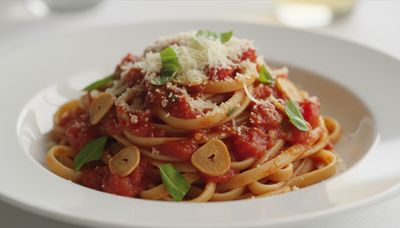
Dried oregano is best added early in cooking to allow its flavours to bloom. Use 1 teaspoon of dried oregano in place of 1 tablespoon of fresh. For tomato sauces, add 1–2 teaspoons per 400g can of tomatoes. In marinades for meat or vegetables, combine 1 teaspoon dried oregano with 2 tablespoons olive oil, a pinch of salt, and black pepper. For salad dressings, crush the oregano between your fingers before whisking to release the oils. It also works well in dry rubs – mix 1 tablespoon dried oregano with 1 teaspoon garlic powder and ½ teaspoon black pepper for a simple steak seasoning. Add dried oregano to simmering stews at the start, but for quicker dishes like pasta sauces, let it cook at least 15 minutes to soften the texture.
Substitutes for Dried Oregano
Three reliable swaps exist for dried oregano. First, dried marjoram: it is milder and sweeter, so use a 1:1 ratio (1 teaspoon dried marjoram for 1 teaspoon dried oregano) and add at the same stage. Second, dried thyme: more earthy and less pungent, substitute with a 1:1 ratio but expect a slightly different flavour profile – thyme works best in Mediterranean dishes. Third, dried basil: use half the amount (½ teaspoon dried basil for 1 teaspoon dried oregano) because basil is more aromatic; it will taste less sharp but still herbaceous. If you only have fresh oregano, triple the amount and add it at the end of cooking.
How to Store Dried Oregano
Store dried oregano in an airtight container, away from direct sunlight, heat, and humidity – a dark cupboard at room temperature (around 20°C) is ideal. Properly stored, it retains peak flavour for 6 to 12 months. Do not refrigerate or freeze dried oregano, as moisture from condensation can cause clumping and mould. For longer storage, keep the jar in a cool, dark pantry. After two years, the flavour will fade noticeably, so it is best to buy in small quantities and replace yearly. If the oregano smells musty or looks pale, discard it.
Common Mistakes
Three frequent errors home cooks make with dried oregano: First, using old oregano that has lost its colour and aroma – always check the jar before adding. Fix this by smelling the herb; if it does not smell strong, buy a new batch. Second, adding dried oregano too late in cooking – because dried leaves need time to rehydrate and release flavour, add them at the start of simmering dishes. Third, using the same amount as fresh oregano – dried herb is more concentrated, so use about one-third of the fresh amount (e.g., 1 teaspoon dried for 1 tablespoon fresh), otherwise your dish will taste overwhelming.
Key Takeaways
- ✓ <ul><li>Crush dried oregano between your fingers before adding to release its essential oils and boost flavour.</li><li>Toast dried oregano in a dry pan over medium heat for 30 seconds to deepen its aroma before adding liquids.</li><li>Store dried oregano away from the stove; heat and steam degrade the leaves quickly.</li><li>Write the purchase date on the jar with a marker to track freshness – replace after 1 year.</li></ul>