Step 1: Rinsing the Grains
The most critical step in achieving fluffy rice is removing excess surface starch. Place your dry jasmine rice in a fine-mesh strainer or a large bowl. Rinse under cold running water, agitating the grains gently with your fingers. Continue this process until the water runs completely clear; cloudy water indicates remaining starch that will cause the rice to become gummy. For 1 cup of dry rice, this typically takes 2–4 minutes of rinsing. If using a bowl, pour off the cloudy water and refill 3–5 times, swirling the rice each time. When the water is clear, let the rice drain in the strainer for 1–2 minutes. If you skip rinsing, the cooked rice will be sticky and clump together, especially with jasmine rice which has a high starch content.
Step 2: The Optional Soak
While jasmine rice can be cooked immediately after rinsing, soaking the grains for 15 to 20 minutes can result in a more even texture. If you choose to soak, drain the rice thoroughly before adding your measured cooking water. This step is particularly helpful if you are using an older crop of rice which may be drier. To soak, place the rinsed and drained rice in a bowl, cover with cold water by 1 inch, and let sit at room temperature for exactly 15–20 minutes. Do not exceed 30 minutes, or the grains may become too soft and break during cooking. After soaking, drain the rice in a fine-mesh strainer for 2 minutes, shaking occasionally to remove excess water. The soaked rice will appear slightly translucent and feel firmer when pinched. If you skip soaking, the rice will still cook fine, but the texture may be slightly less uniform, especially if the rice is over 6 months old.
Step 3: Measuring the Water Ratio
For the stovetop absorption method (which effectively steams the rice in a sealed pot), use a ratio of 1 cup of jasmine rice to 1.25 or 1.5 cups of water. Use 1.25 cups for a firmer, 'al dente' grain and 1.5 cups for a softer, more traditional texture. Place the rice and water into a heavy-bottomed saucepan. For best results, use a pot with a tight-fitting lid, such as a 2-quart saucepan for 1–2 cups of rice. Measure the rice using a dry measuring cup, leveling it off. For the water, use a liquid measuring cup for accuracy. If you use too much water (e.g., 2 cups per 1 cup rice), the rice will be mushy and porridge-like. Too little water (e.g., 1 cup per 1 cup rice) will leave the grains undercooked and hard in the center. For a subtle flavor boost, substitute 1 tablespoon of the water with unsalted chicken or vegetable broth, but do not exceed that amount or the rice may become salty.
Step 4: The Steaming Process
Bring the water to a gentle boil over medium-high heat. As soon as it reaches a boil, stir once to ensure no grains are sticking to the bottom, then reduce the heat to the lowest possible setting. Cover the pot with a tight-fitting lid. Simmer for 15 minutes. It is vital that you do not lift the lid during this time, as the trapped steam is what cooks the rice. You should hear a gentle simmering sound, not a vigorous boil. If the sound stops or you see steam escaping from under the lid, the heat is too low; increase it slightly. If the water boils over, the heat is too high. After 15 minutes, the rice should have absorbed all the water. To check without lifting the lid, tilt the pot slightly: if you hear no sloshing, it's done. If you lift the lid too early, steam escapes and the rice will be undercooked and crunchy.
Step 5: The Carry-over Cook and Fluff
After 15 minutes, remove the pot from the heat but keep the lid on. Let the rice sit undisturbed for 10 minutes. This 'carry-over' steaming allows the moisture to redistribute evenly through the grains. During this time, the residual heat continues to cook the rice gently, and any remaining moisture is absorbed. Do not peek or stir. After 10 minutes, uncover and use a rice paddle or fork to gently fluff the rice, lifting from the bottom to release steam and separate the grains. Fluff in a folding motion, not a stirring motion, to avoid breaking the grains. If the rice is too wet, leave the lid off for 1–2 minutes to let excess steam escape. If it's too dry, sprinkle 1–2 teaspoons of water over the top and re-cover for 2 minutes before fluffing again. Properly cooked jasmine rice should be fluffy, with each grain separate and slightly glossy. If the rice is gummy, you rinsed insufficiently or used too much water. If it's crunchy, you used too little water or lifted the lid during simmering. Serve immediately, as the rice will continue to dry out if left uncovered.
Key Takeaways
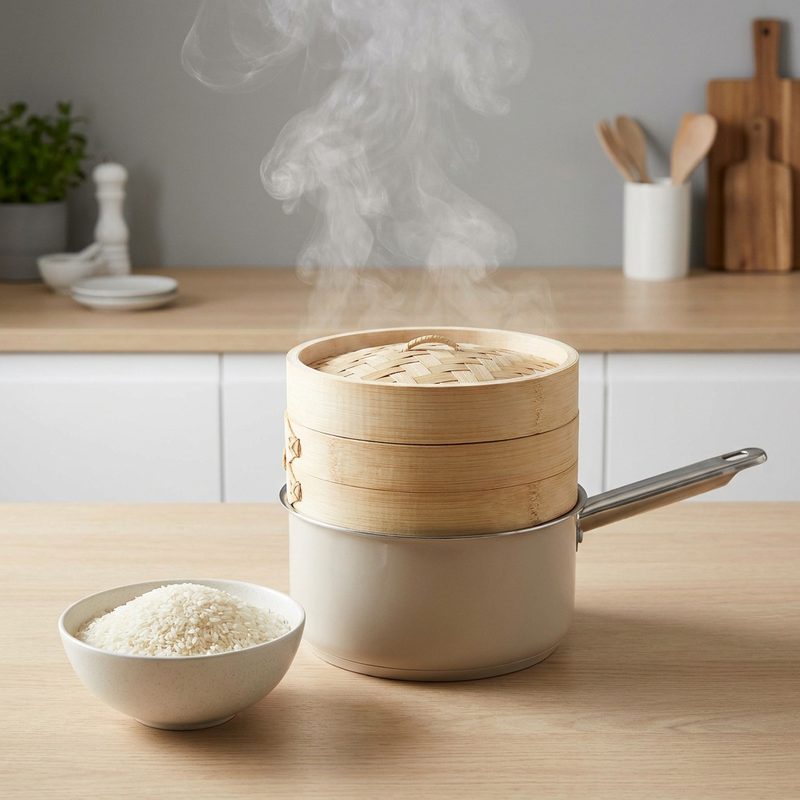
- ✓ <html><ul><li>Always use a heavy-bottomed pot to prevent the bottom layer of rice from scorching.</li><li>If using a traditional bamboo steamer, line the basket with cheesecloth or parchment paper and steam over boiling water for 20-25 minutes.</li><li>Add a single pandan leaf or a small knob of smashed ginger to the water for an even more aromatic experience.</li><li>Avoid over-stirring the rice while it cooks, as this breaks the grains and releases starch, leading to a mushy consistency.</li></ul></html>