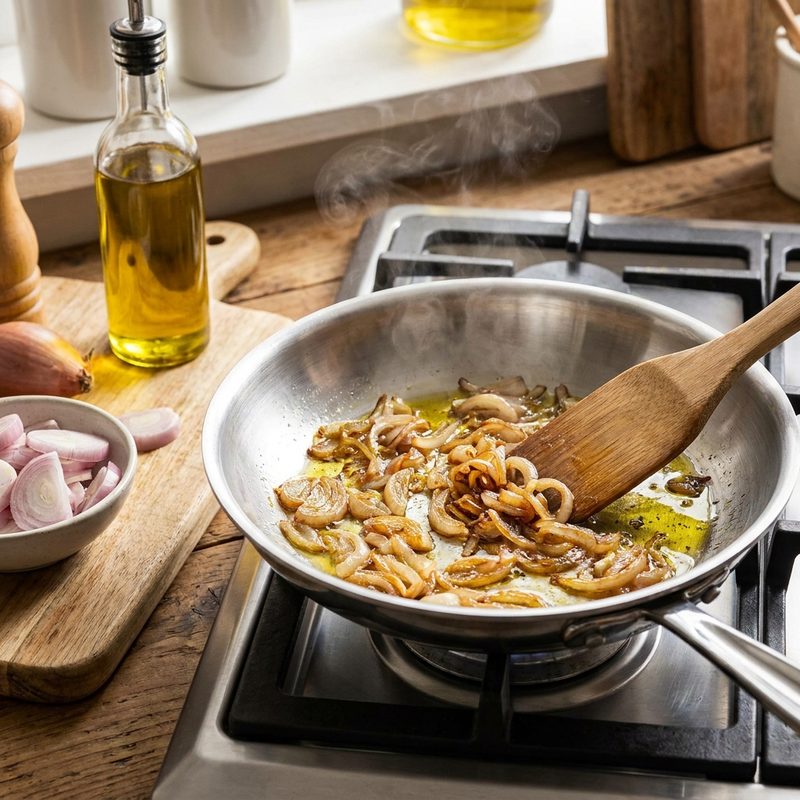
Step 1: Prep and Slice the Shallots
Start by trimming the root and stem ends of the shallot, then peel away the papery outer skin and the first thin layer if it feels tough. For a typical recipe, use 2 to 3 medium shallots (about 60 to 90 grams total). Slice the shallots crosswise into thin rings, aiming for 2 to 3 millimeter thickness, or finely mince them, depending on your recipe's requirements. Ensuring uniform thickness is essential for even cooking; uneven slices will lead to some pieces burning while others remain raw. If the shallot is large, halve it lengthwise first to create a flat surface for stable slicing. For mincing, make parallel cuts lengthwise, then crosswise cuts, keeping the tip of the knife on the cutting board for control.
Step 2: Choose and Heat Your Fat
Place a 10-inch skillet or saute pan over medium-low heat. Add 1 to 2 tablespoons of fat—olive oil, grapeseed oil, or unsalted butter all work well. Butter provides a richer flavor and aids in browning due to its milk solids, while oil allows for a slightly higher cooking temperature without the risk of burning. For a combination, use half butter and half oil to raise the smoke point. Wait until the oil is shimmering (about 275°F to 300°F) or the butter has melted and stopped foaming. If the butter browns immediately, the heat is too high; reduce it and start over. A drop of water flicked into the pan should sizzle gently, not violently.
Step 3: Add Shallots to the Pan
Once the fat is ready, add the prepared shallots. Spread them into an even layer so they all make contact with the pan's surface. You should hear a very gentle sizzle; if the sizzle is loud and aggressive, the heat is too high and should be lowered immediately. If the pan is too crowded, the shallots will steam instead of saute, so cook in batches if necessary. The shallots should glisten with fat but not swim in it. If they look dry, add another teaspoon of oil or butter.
Step 4: Stir and Monitor
Because shallots have a higher sugar content than standard onions, they are prone to burning. Stir them every 30 to 45 seconds with a wooden spoon or heat-resistant spatula, scraping the bottom to prevent sticking. Cook for 2 to 4 minutes if you want them translucent and soft—they should look glossy and slightly wilted, with no browning. For a deeper, caramelized flavor profile, continue for 8 to 10 minutes, stirring more frequently as they darken. The shallots will shrink by about half and turn a uniform golden brown. If they start to brown unevenly or dark spots appear, reduce the heat immediately and add a teaspoon of water to cool the pan. If they stick to the pan, deglaze as in Step 5.
Step 5: Deglaze and Season
If you notice bits of shallot sticking to the pan (the fond), add a splash of water, wine, or broth—about 2 to 3 tablespoons—and scrape with a wooden spoon to release them. This also stops the cooking process and prevents burning. Finish by seasoning with a pinch of salt (about 1/8 teaspoon) and a few grinds of black pepper. Remove from the heat immediately once they reach your desired level of golden-brown color. If they are too dark, they will taste bitter; discard and start over. For a sweeter result, add a teaspoon of balsamic vinegar or a pinch of sugar during the last minute of cooking. Use immediately or store in an airtight container in the refrigerator for up to 3 days.
Key Takeaways
- ✓ <html><ul><li>Avoid overcrowding the pan; shallots need space to release moisture and brown rather than steam.</li><li>Use a heavy-bottomed skillet to prevent hot spots that can cause localized burning.</li><li>If you are using both butter and oil, the oil will help raise the smoke point of the butter, giving you the best of both worlds.</li><li>Wait to add salt until the end of the cooking process if you want a quicker brown, as salt draws out moisture.</li></ul></html>