Step 1: Reserve the Liquid Gold
Before you even think about pouring your noodles into a colander, take a measuring cup or ladle and scoop out about one cup of the boiling pasta water. This starchy, salty liquid is known as 'liquid gold' in the culinary world; it is the secret ingredient that helps emulsify your sauce and bind it perfectly to the noodles. For best results, use a 1-cup glass measuring cup or a heatproof ladle. Aim to scoop from the surface where the water is most starchy, not from the bottom where sediment settles. If you forget to reserve the water before draining, you can scoop a cup from the pot just as you begin to pour, but work quickly to avoid losing too much. The water should be cloudy and slightly thickened from the starch; if it looks clear, your pasta may have been undercooked or the water volume was too high. Store the reserved water in a small bowl or mug near the stove, covered with a plate to keep it hot. Do not add cold water to the pot to cool it down, as this will dilute the starch. If you need more than one cup, reserve two cups—especially for thick sauces like carbonara or cacio e pepe. The water should be at a rolling boil when you scoop it; if it has stopped boiling, the starch may have settled. Use it within 5 minutes, as it cools quickly and loses its emulsifying power. If the water is too salty (more than 2 tablespoons of salt per 4 quarts of water), reserve only 1/2 cup and supplement with unsalted pasta water from a second batch. The ideal salinity is about 1.5% salt by weight, which tastes like sea water. If you accidentally pour all the water down the drain, you can dissolve 1 teaspoon of cornstarch in 1/2 cup of warm water as a makeshift substitute, but the flavor will be less complex.
Step 2: Position the Colander
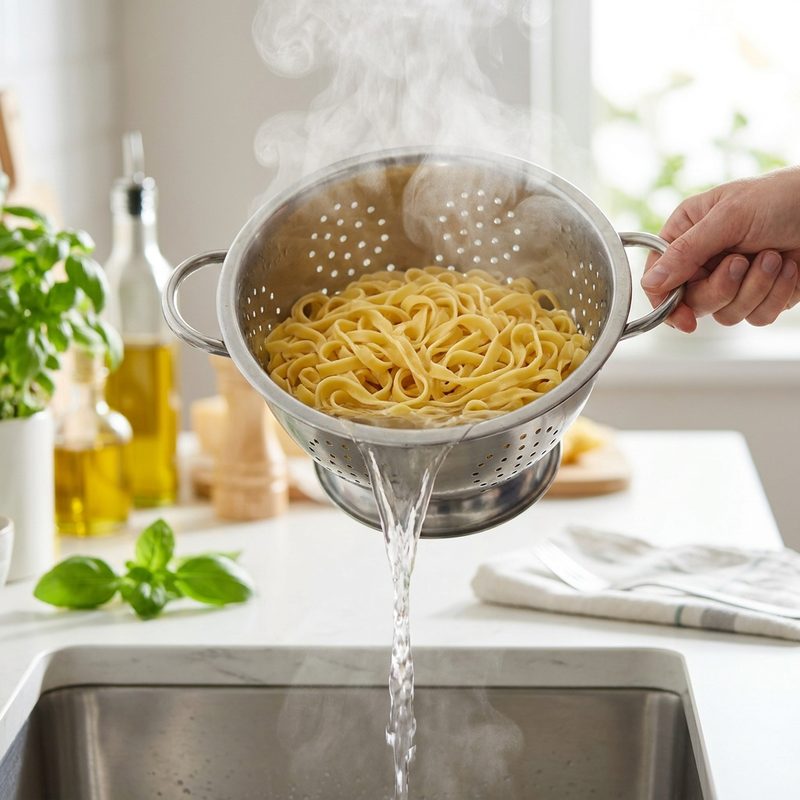
Place a heat-resistant colander inside your kitchen sink. Ensure the sink is clean and clear of any dishes to avoid splashes or contamination. If you are using a sink-mounted colander, make sure it is securely fastened so it doesn't slip under the weight of the boiling water and pasta. Choose a colander with fine holes (about 1/8 inch in diameter) to prevent small pasta shapes like orzo or ditalini from escaping. For long pasta, a colander with larger holes (1/4 inch) is fine, but avoid one with slots that can trap noodles. The colander should sit at least 2 inches above the bottom of the sink to allow water to drain freely; if it sits flat, water may pool and rehydrate the noodles. If your colander is too small, place it in a large bowl or use a second colander nested inside. For a double sink, position the colander over the larger basin to avoid overflow. If the colander is wobbly, place a damp kitchen towel under it to stabilize. Never use a plastic colander that is not rated for boiling water; it can warp or melt. Test the colander by pouring a cup of hot water through it before adding the pasta. If the water backs up, the holes are clogged; rinse the colander with hot water and a brush. For sink-mounted colanders, check that the locking mechanism is engaged by giving it a gentle tug. If it moves, reposition it or use a separate colander. The colander should be at waist height to avoid straining your back; adjust the sink rack if needed. If you are draining multiple batches, rinse the colander with hot water between uses to remove starch buildup that can cause sticking.
Step 3: The Pouring Technique
Carefully carry the pot of noodles to the sink. Tilt the pot away from your face to avoid the initial steam burn. Pour the contents into the center of the colander slowly. Allow the water to drain naturally through the holes. Avoid shaking the colander violently; a gentle toss is all you need to remove excess water while keeping the noodles hydrated. Hold the pot with both hands using oven mitts, gripping the handle with one hand and supporting the bottom with the other. Tilt the pot at a 45-degree angle initially, then increase to 60 degrees as the water level drops. Pour in a steady stream, not all at once, to prevent splashing. The water should flow through the colander in less than 10 seconds; if it takes longer, the colander holes are too small or the pasta is too dense. As you pour, keep your face at least 12 inches away from the steam. If steam burns your arm, immediately run cold water over the area for 10 minutes. After the water has drained, give the colander a single gentle shake from side to side (not up and down) to release excess water. Do not shake more than twice, as this can cause the noodles to stick together. For long pasta, use tongs to lift and separate the noodles after draining, then toss them gently. If the noodles look dry or clumpy, sprinkle 1-2 tablespoons of reserved pasta water over them and toss again. The noodles should be glossy and slightly slippery, not matte or tacky. If you see starch foam on the surface, it means the water was too starchy; rinse the noodles briefly with hot water (not cold) to remove excess starch, then proceed. Do not rinse with cold water unless you are making a cold pasta salad, as it removes the starch that helps sauce cling. If the colander overflows, stop pouring immediately and let the water drain before continuing. If pasta falls into the sink, discard it—do not return it to the colander, as it may be contaminated. After draining, let the colander sit for 30 seconds to allow residual steam to escape, then transfer the noodles to the sauce within 1 minute to prevent cooling.
Step 4: Alternative Method - The Spider Strainer
For delicate noodles or long pasta like spaghetti and linguine, consider using a spider strainer or tongs to lift the noodles directly from the boiling water into your waiting sauce. This method is often preferred by chefs because it naturally carries over just the right amount of starchy water and prevents the noodles from clumping together in a colander. Use a spider strainer with a 6-inch diameter and fine mesh (about 1/16 inch holes) for small pasta, or a larger one (8-inch) for long strands. For spaghetti, use tongs with silicone tips to grip the noodles without breaking them. Submerge the spider or tongs into the boiling water at a 30-degree angle to avoid splashing. Lift the noodles in small bundles—about 1/4 of the total pasta at a time—to prevent overcrowding. Let the water drain from the spider for 3-5 seconds over the pot before transferring to the sauce. The noodles should be dripping but not soaking wet; if they are too dry, dip them back into the boiling water for 2 seconds. For long pasta, twirl the noodles around the tongs in a circular motion to create a nest, then lift and place directly into the sauce pan. The sauce should be simmering gently (about 190°F) when you add the noodles; if it is too hot, the noodles will overcook; if too cool, they will not absorb the sauce. After adding the noodles, toss them with the sauce using the tongs for 30-60 seconds, allowing the starchy water to emulsify. If the sauce is too thick, add 1-2 tablespoons of reserved pasta water and toss again. The noodles should be coated evenly, with no dry spots. This method works best for fresh pasta, which cooks in 2-3 minutes, and for gluten-free noodles that are prone to breaking. If the noodles stick to the spider, rinse it with hot water between batches. For angel hair or capellini, use a slotted spoon instead of a spider to avoid tangling. If you do not have a spider, use a fine-mesh sieve with a handle, but work in smaller batches to avoid overflow. The key is to transfer the noodles quickly—within 10 seconds of lifting—to prevent them from cooling and clumping. If the noodles are undercooked, return them to the boiling water for 30 seconds and test again. If they are overcooked, toss them with cold water to stop the cooking, then reheat in the sauce.
Step 5: The Lid Method
If you don't have a colander, you can use the pot lid. Shift the lid slightly to create a small crescent-shaped gap. Holding the lid firmly with oven mitts, tilt the pot over the sink to pour out the water while keeping the noodles trapped inside. Be extremely cautious with this method as steam can easily burn your hands. Use a lid that fits snugly on the pot, preferably with a heat-resistant handle. If the lid has a steam vent, cover it with a folded kitchen towel to prevent steam from escaping. Before tilting, ensure the lid is centered and the gap is no wider than 1/2 inch—large enough for water to flow but small enough to hold back pasta. Hold the lid with your non-dominant hand using an oven mitt that covers your wrist, and grip the pot handle with your dominant hand. Tilt the pot slowly to a 45-degree angle, then increase to 60 degrees as the water drains. The water should flow out in a steady stream, not a gush; if it gushes, the gap is too large and pasta may escape. If pasta starts to slip through, immediately tilt the pot back to horizontal and adjust the lid. For long pasta, use a lid with a small hole (like a pasta pot lid) or hold the lid at a 90-degree angle to create a smaller gap. The process should take 15-20 seconds for a full pot; if it takes longer, the gap is too small. After the water has drained, keep the lid in place and shake the pot gently from side to side to remove excess water. Do not remove the lid immediately, as residual steam can burn your face. Wait 10 seconds, then carefully lift the lid away from your face, tilting it to let steam escape sideways. If the noodles are stuck to the lid, use a spatula to gently pry them loose. This method works best for short pasta like penne or fusilli; for long pasta, the lid method can cause tangling. If you burn your hand, run it under cold water for 10 minutes and apply aloe vera. Never use a glass lid, as it can shatter from thermal shock. If the lid is too loose, hold it in place with a kitchen towel wrapped around the handle. After draining, transfer the noodles to a bowl or sauce pan immediately to prevent them from sticking to the pot. If the pot is too heavy to tilt safely, use a ladle to remove the water in batches before tilting. The lid method is a last resort; if you have a colander, use it instead.
Key Takeaways
- ✓ <html><ul><li>Never rinse your noodles with cold water unless you are making a cold pasta salad; rinsing removes the starch that helps sauce stick.</li><li>Drain the noodles when they are 'al dente' (firm to the bite) as they will continue to cook slightly once combined with hot sauce.</li><li>If you aren't saucing the noodles immediately, toss them with a teaspoon of olive oil to prevent them from sticking together.</li><li>Always use a colander with feet or a base so the drained water doesn't back up and touch the noodles.</li></ul></html>