Choosing Your Board: End Grain vs. Edge Grain
Before maintenance begins, understand what you have. Edge grain boards are made from strips of wood laid side-by-side; they are durable and affordable. End grain boards, recognizable by their checkerboard pattern, are superior for your knives as the wood fibers separate and 'heal' around the blade. Both require the same maintenance routine to prevent cracking and warping.
Daily Cleaning Protocol
Never submerge a wooden board in water or put it in the dishwasher. After each use, scrub the surface with warm, soapy water and a soft sponge. Rinse quickly and wipe away excess moisture immediately with a clean towel. Drying is the most critical step; stand the board vertically to allow air to circulate around both sides, preventing uneven drying that leads to warping.
Deodorizing and Stain Removal
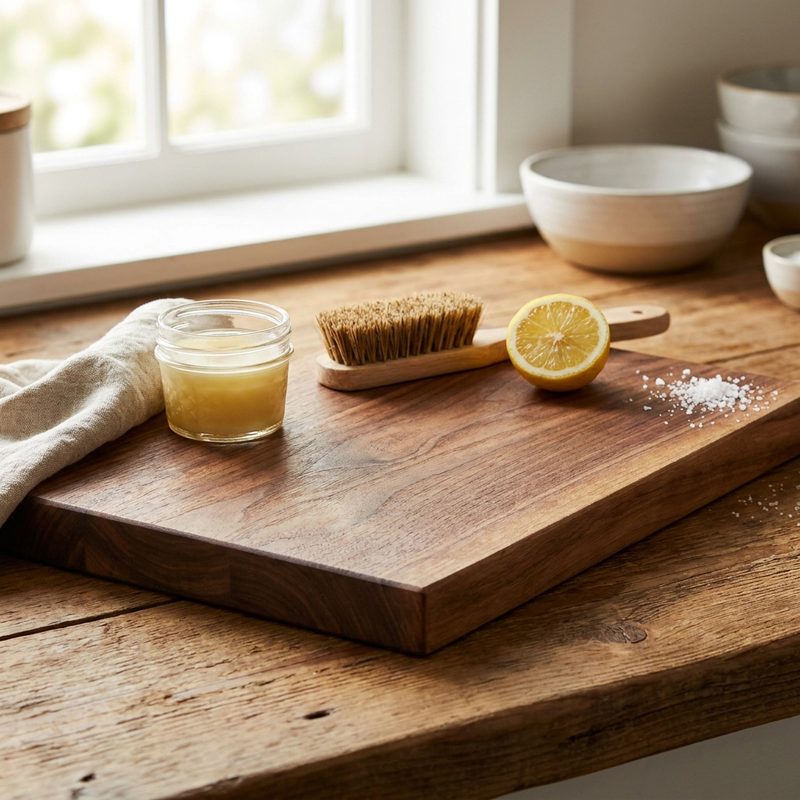
For boards that have been in contact with pungent ingredients like garlic or onions, sprinkle a generous amount of coarse sea salt over the surface. Cut a lemon in half and use the fleshy side to scrub the salt into the wood in a circular motion. The acidity kills bacteria while the salt acts as an abrasive to lift stains. Let it sit for five minutes before rinsing and drying.
Seasoning with Oil and Wax
To keep wood hydrated and create a moisture barrier, you must oil your board monthly. Use only food-grade mineral oil or a specialized board cream containing beeswax. Avoid vegetable or olive oils, as they will go rancid over time. Apply a generous layer of oil to a dry board, let it soak in overnight, and buff away any excess the next morning with a lint-free cloth.
Deep Maintenance: Sanding
If your board develops deep grooves or a fuzzy texture (raised grain), it can be restored. Use fine-grit sandpaper (around 220 grit) to sand the surface until smooth. Always sand in the direction of the grain. Once smooth, wash away the dust, dry completely, and apply several coats of mineral oil to reseal the newly exposed wood fibers.
Key Takeaways
- ✓ <html><ul><li>Always use food-grade mineral oil; never use culinary oils like olive or canola as they spoil.</li><li>Store your board vertically on its edge to ensure even airflow and prevent warping.</li><li>Have dedicated boards for different tasks: one for raw proteins and another for produce and bread.</li><li>If the wood looks 'thirsty' or dull, it is past time for a coat of oil.</li><li>Avoid harsh chemicals like bleach, which can dry out and break down wood fibers.</li></ul></html>