The Origin and Anatomy of the Leek
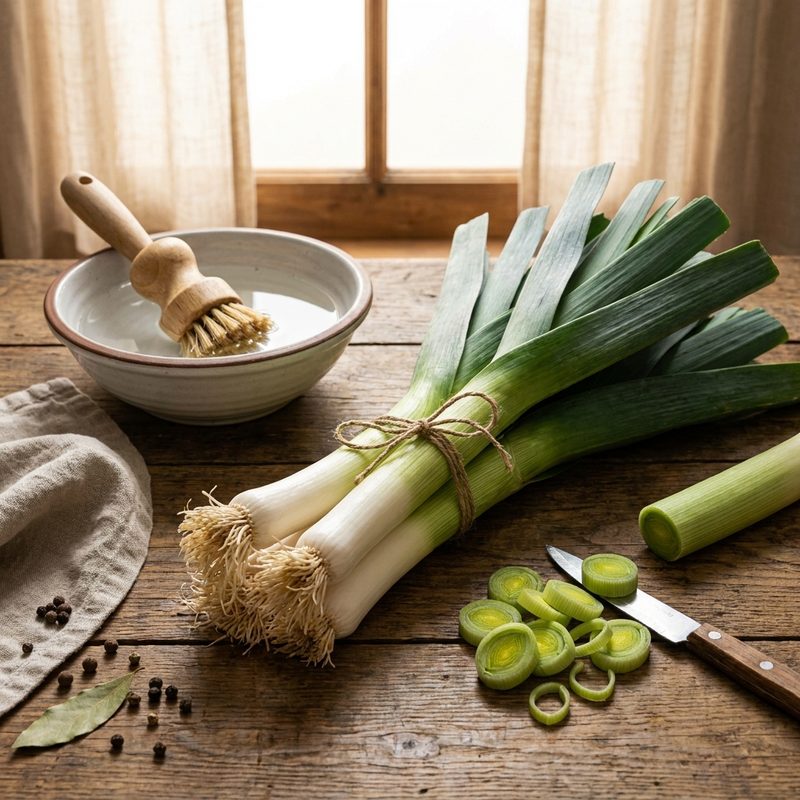
Leeks belong to the Allium family, making them cousins to onions, garlic, and shallots. Originating in the Mediterranean and the Middle East, they have been a staple in European kitchens for centuries. Unlike onions which form a tight bulb, leeks grow in a cylindrical stalk of overlapping leaves. Farmers often pile soil around the stalks as they grow—a process called blanching—to keep the bottom portions white and tender. This growth method, however, is exactly why soil and sand get trapped deep between the layers.
How to Choose and Store Your Leeks
When shopping, look for leeks with a firm, bright white base and dark, vibrant green tops. Avoid any that are withered, yellowed, or have cracked outer skins. Generally, smaller or medium-sized leeks are more tender than the very large, woody ones. To store, keep them unwashed and untrimmed in a loose plastic bag in your refrigerator's crisper drawer; they will remain fresh for up to two weeks.
Why Washing is Mandatory
Washing leeks isn't just about surface cleanliness; it's about food safety and texture. Because soil is pushed up into the layers during growth, a leek that looks clean on the outside is almost certainly hiding grit on the inside. Failing to wash them thoroughly can ruin a delicate sauce or soup with a crunch of sand. Since leeks grow in sandy soil, the residue is often fine and difficult to spot until it is too late.
The Best Way to Wash Leeks (The Bowl Method)
The most effective way to clean leeks is to slice them first. Trim the root end and the tough dark green tops. Slice the white and light green parts into rounds or half-moons. Place the sliced leeks into a large bowl filled with cold water. Use your hands to agitate them, breaking apart the layers. The leeks will float to the top while the heavy sand and dirt sink to the bottom. Carefully lift the leeks out of the water with a slotted spoon or your hands, leaving the sediment behind. Rinse the bowl and repeat if the water was particularly dirty.
Common Mistakes and Substitutes
A common mistake is discarding too much of the leek; while the dark green tops are too fibrous for a quick sauté, they are excellent for flavoring stocks. Another error is washing them before storage, which introduces moisture and leads to rot. If you cannot find leeks, the best substitutes are shallots for a refined flavor, or the white parts of green onions for a similar visual and texture, though you may need a larger quantity.
Key Takeaways
- ✓ <ul><li>Always lift the leeks out of the water rather than pouring them into a colander, which would pour the dirt back over the clean vegetables.</li><li>Dry your cleaned leeks thoroughly with a kitchen towel or salad spinner before sautéing to ensure they brown instead of steaming.</li><li>Save the dark green tops in a freezer bag for your next batch of homemade vegetable or chicken stock.</li><li>For roasting whole leeks, slit them lengthwise starting from the middle up to the green end, then rinse under running water while fanning the layers.</li></ul>