Why We Blind Bake
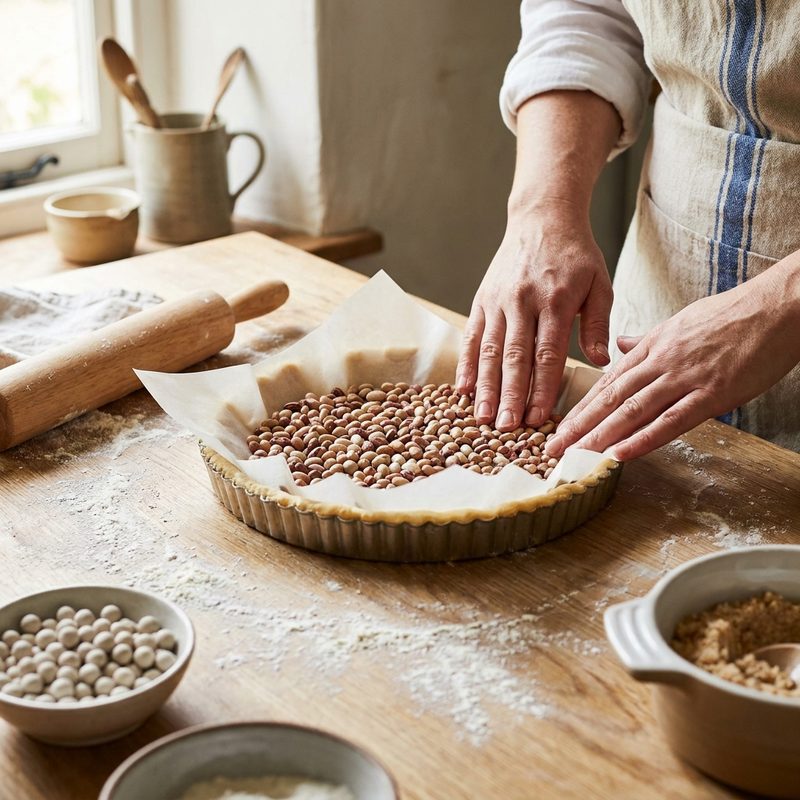
Blind baking, or pre-baking, is necessary for custard, cream, or fruit pies where the filling would make the dough soggy before it has a chance to crisp up. It involves baking the crust without filling, usually weighted down, to set the structure and ensure the bottom is fully cooked.
Problem: The Crust Shrunk or Slumped
Shrinking is usually the result of two things: overworking the gluten or not chilling the dough long enough. When you stretch dough to fit a pan, the gluten acts like a rubber band, pulling back as it hits the heat. To fix this, never pull or stretch the dough; instead, lift the edges and let it drop into the corners. Most importantly, let the shaped crust rest in the freezer for at least 30 minutes before baking to relax the gluten and solidify the fats.
Problem: The Bottom is Bubbled and Uneven
Bubbling occurs when steam or air gets trapped between the dough and the pan. To prevent this, use a technique called 'docking'—pricking the bottom of the crust with a fork. However, if you are filling the pie with a very liquid custard, wait to dock the crust until after the weights are removed during the second stage of baking to prevent leaks. Filling your weights all the way to the rim also provides the physical pressure needed to keep the dough flat.
Problem: The 'Soggy Bottom' Syndrome
A soggy bottom happens when the crust isn't baked long enough or when moisture from the filling seeps into the pastry. To fix this, use the two-stage baking method. Bake the crust with weights until the edges are set, then remove the weights and bake for an additional 5-10 minutes until the bottom is matte and golden. For an extra moisture barrier, brush the bottom of the hot crust with a thin layer of beaten egg white during the last 2 minutes of baking.
Problem: Burned Edges
Because the edges of the crust are thinner and exposed to more heat, they often brown faster than the bottom. If you notice the edges getting too dark before the base is done, simply cover the rim with a pie shield or a ring of aluminum foil to reflect the heat and allow the center to finish cooking.
Key Takeaways
- ✓ <html><ul><li>Always use enough weights; fill the parchment paper to the very top rim of the pie plate to support the sides.</li><li>Granulated sugar makes an excellent pie weight because it is heavy and distributes weight more evenly than beans.</li><li>Metal pie pans conduct heat faster than glass or ceramic, resulting in a crispier bottom crust.</li><li>Let the crust cool completely before adding cold fillings like pastry cream to maintain its structural integrity.</li></ul></html>