Understanding the Science of Seasoning
Seasoning isn't just oil sitting on top of metal; it is a process called polymerization. When fats are heated to their smoke point in the presence of iron and oxygen, they transform from a liquid into a hard, plastic-like film that bonds to the metal. This layer protects the iron from rust and provides the slick surface we associate with a well-maintained skillet.
Choosing Your Oil and Equipment
To get started, you need a high-quality oil with a high smoke point. Grapeseed oil is a favorite among professionals for its neutral flavor and durability. Flaxseed oil is often cited for its hard finish, though it can be prone to flaking if applied too thickly. Beyond oil, you will need a clean lint-free cloth or paper towels, an oven, and some aluminum foil to catch any drips.
The Seasoning Process
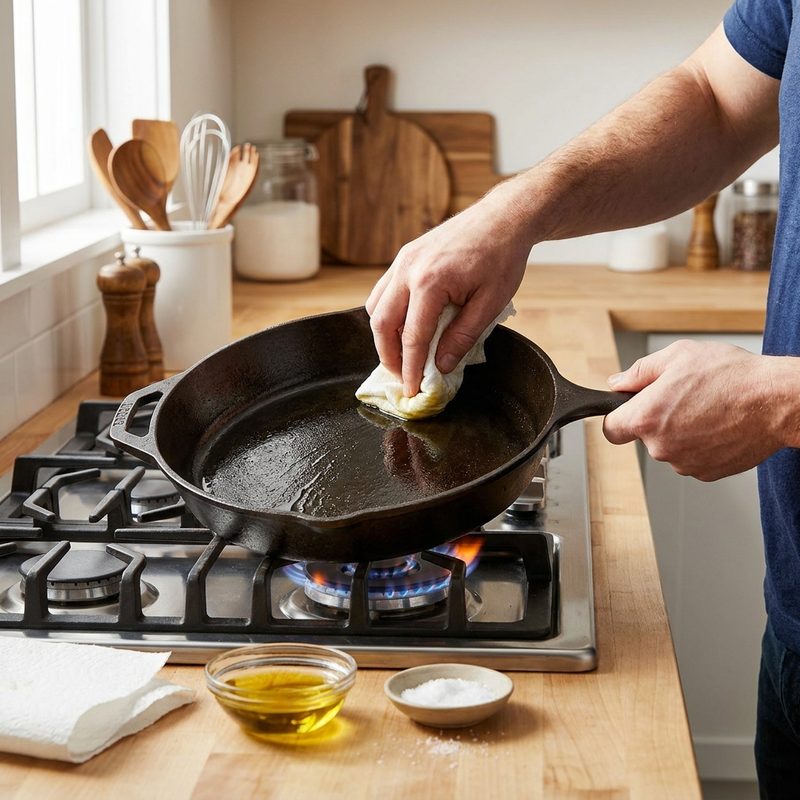
Start by scrubbing your skillet with warm water and a tiny bit of mild soap to remove any dust or factory coatings. Dry it thoroughly on the stovetop over low heat—moisture is the enemy of seasoning. Once bone-dry and slightly warm, apply a very thin layer of oil to the entire surface, including the handle and the bottom. Use a fresh cloth to buff away as much oil as possible; the pan should look matte, not greasy. Place the skillet upside down in an oven preheated to 450°F (232°C) for one hour. Turn off the oven and let the pan cool completely inside before removing.
Routine Care and Maintenance
After each use, clean your skillet using a stiff brush and hot water. Contrary to popular myth, a small amount of mild dish soap will not strip a well-seasoned pan. If food is stuck, use a chainmail scrubber or a coarse salt paste. Always dry the pan immediately on a warm burner and apply a microscopic layer of oil before storing it in a dry place.
Key Takeaways
- ✓ <html><ul><li>Always apply oil in thin, multiple layers rather than one thick layer to avoid a sticky finish.</li><li>Never air-dry your cast iron; always use heat to ensure every drop of moisture evaporates.</li><li>Avoid cooking highly acidic foods like tomato sauce or vinegar for long periods in a newly seasoned pan.</li><li>If your seasoning starts to look dull or grey, perform a quick 'mini-seasoning' by rubbing it with oil and heating it on the stove until it lightly smokes.</li></ul></html>