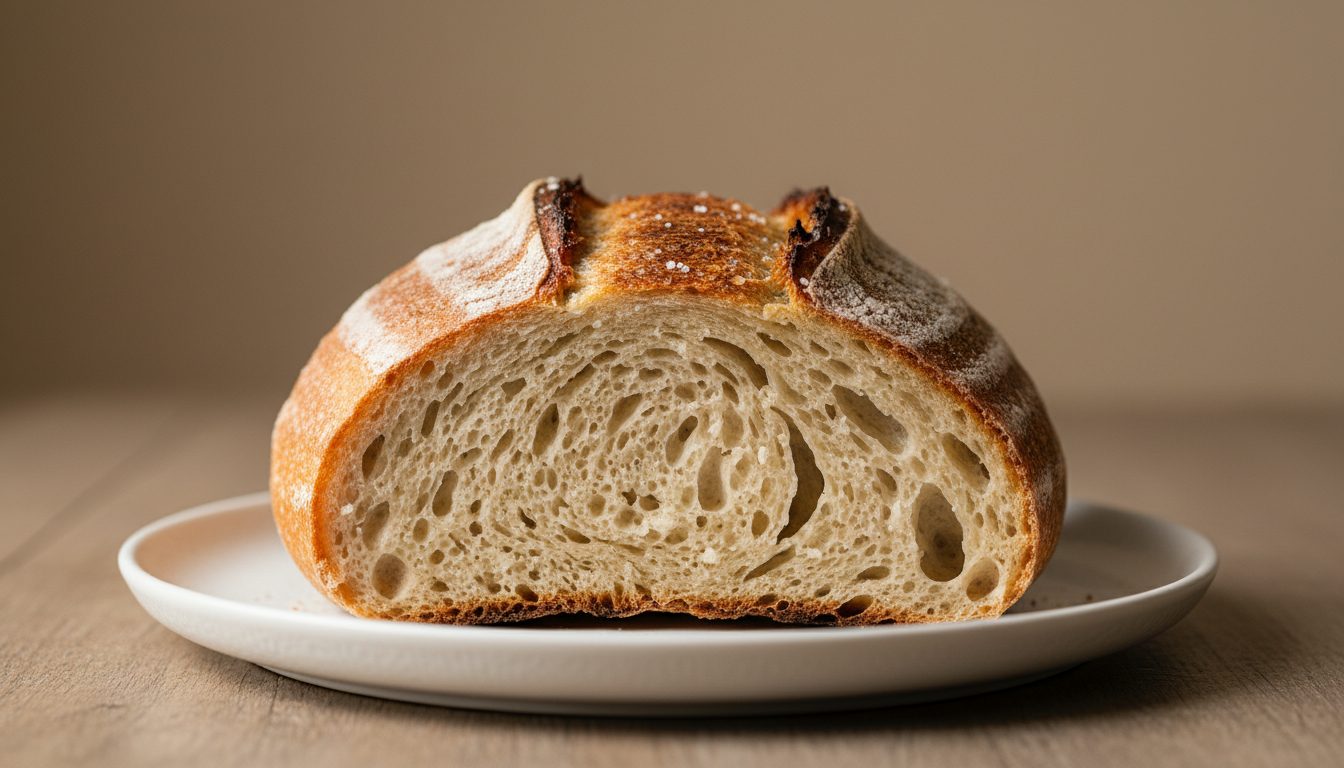
Recipe Details
"Experience the satisfaction of baking a rustic, artisanal sourdough loaf with a perfectly crackly crust and a tangy, open crumb. This recipe guides you through the timeless process of natural fermentation to create a bakery-quality masterpiece in your own kitchen."
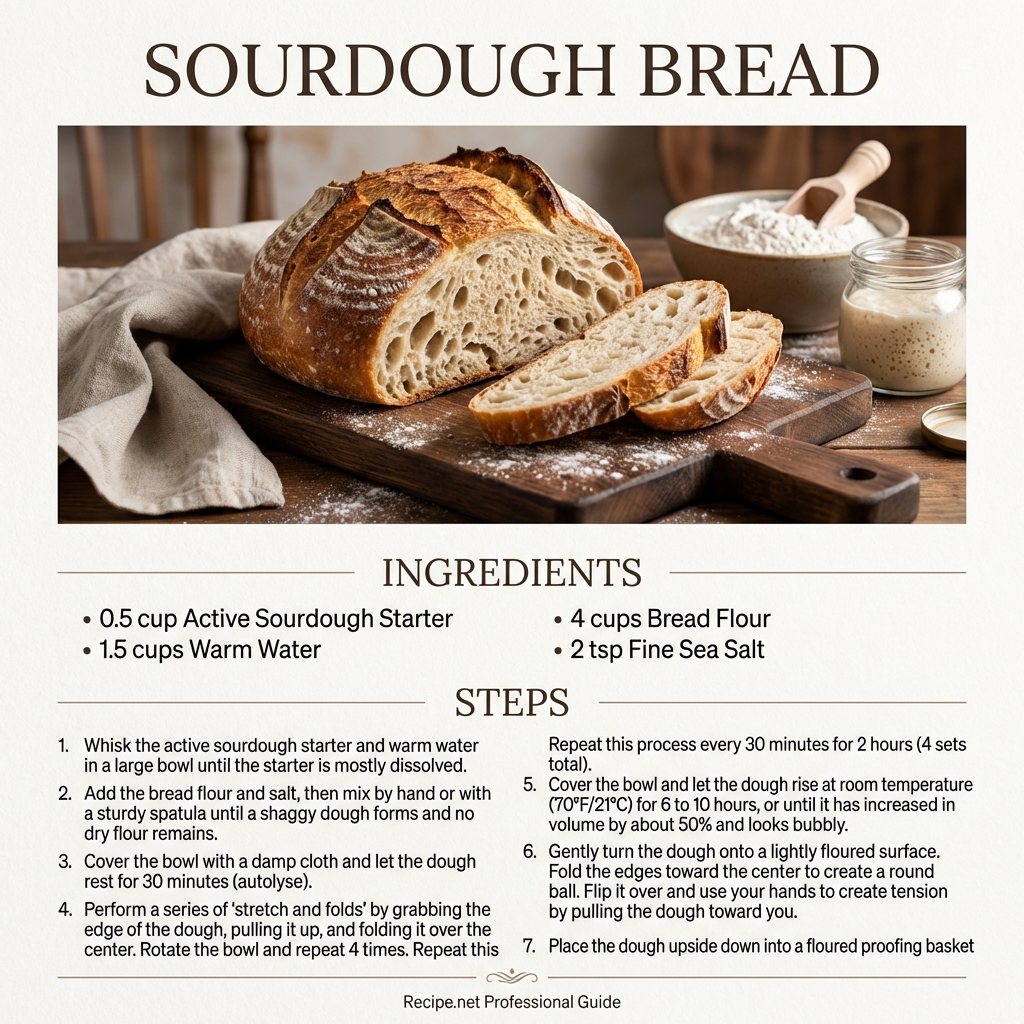
Ingredients
| Qty | Item |
|---|---|
| 0.5 cup | Active Sourdough Starter |
| 1.5 cups | Warm Water |
| 4 cups | Bread Flour |
| 2 tsp | Fine Sea Salt |
How to Make Sourdough Bread
Whisk the active sourdough starter and warm water in a large bowl until the starter is mostly dissolved.
Add the bread flour and salt, then mix by hand or with a sturdy spatula until a shaggy dough forms and no dry flour remains.
Cover the bowl with a damp cloth and let the dough rest for 30 minutes (autolyse).
Perform a series of 'stretch and folds' by grabbing the edge of the dough, pulling it up, and folding it over the center. Rotate the bowl and repeat 4 times. Repeat this process every 30 minutes for 2 hours (4 sets total).
Cover the bowl and let the dough rise at room temperature (70°F/21°C) for 6 to 10 hours, or until it has increased in volume by about 50% and looks bubbly.
Gently turn the dough onto a lightly floured surface. Fold the edges toward the center to create a round ball. Flip it over and use your hands to create tension by pulling the dough toward you.
Place the dough upside down into a floured proofing basket (banneton). Cover and let it rise in the refrigerator for 12 to 15 hours for a slow cold ferment.
Preheat your oven to 450°F (230°C) with a Dutch oven inside for at least 45 minutes.
Carefully flip the dough onto a piece of parchment paper. Score the top with a sharp blade or lame to allow for expansion.
Place the dough (with parchment) into the hot Dutch oven. Cover with the lid and bake for 20 minutes.
Remove the lid and bake for an additional 20 to 25 minutes until the crust is deep golden brown.
Let the bread cool completely on a wire rack for at least 2 hours before slicing.
Tips for Best Results
-
·
Ensure your starter is 'active'—it should double in size within 4-6 hours of feeding before you use it.
-
·
Use a Dutch oven to trap steam, which is essential for that signature thin, crispy sourdough crust.
-
·
Perform a 'float test' by dropping a teaspoon of starter into water; if it floats, it is ready to bake.
-
·
Do not skip the cooling process; the bread continues to cook and set its structure while cooling.
Frequently Asked Questions
Why didn't my sourdough bread rise?
Can I use all-purpose flour instead of bread flour?
How do I store sourdough bread?
What if I don't have a proofing basket?
Video Tutorials



What to Cook Next





Next Recipe
Slow Cooker Vegetable Lasagna
This rustic slow cooker vegetable lasagna is a comforting masterpiece featuring layers of tender pasta, rich marinara, and a medley of fresh garden vegetables. Perfectly melted cheeses bind everything together for a hands-off meal that tastes like it spent all day in a traditional Italian oven.
Similar Recipes to Try
French Baguette
205 min
Homestyle Baked Macaroni and Cheese with Breadcrumb Topping
50 min
Classic Deviled Eggs
30 min
Chocolate Chip Cookies
30 min
Crispy Roast Duck with Orange Glaze
150 min
Sausage and Sage Sourdough Stuffing
80 min
Fudgy Brownies
40 min
Lobster Thermidor
70 min
Musaengchae Korean Radish Salad
15 min
Dobos Torte with Caramel Top
135 minComments
(0)Sign in to leave a comment.
You Might Like




Ad Space Available
Be the first to leave a comment.