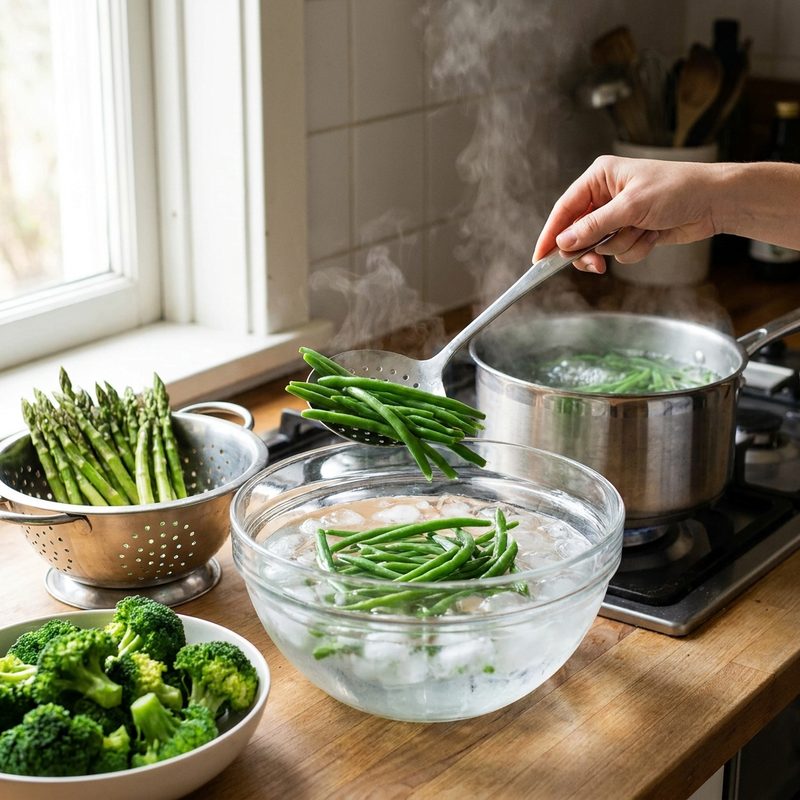
Step 1: Prepare Your Equipment and Ice Bath
Begin by bringing a large pot of water to a rolling boil. While the water heats, prepare an "ice bath" by filling a large bowl with cold water and a generous amount of ice. This bath must be ready before the vegetables hit the boiling water, as the transition must be immediate.
Step 2: Season the Boiling Water
Once the water reaches a vigorous boil, add a heavy pinch of salt. Salted water not only seasons the vegetables but also helps to further lock in the green color of chlorophyll-rich vegetables like broccoli, asparagus, and green beans.
Step 3: Blanching the Vegetables
Carefully drop your prepared vegetables into the boiling water. Work in batches to ensure the water temperature does not drop too significantly. Cook the vegetables until they are just tender-crisp and have reached their most vibrant color. This usually takes between 60 seconds and 5 minutes depending on the density of the vegetable. For more detail, see our guide to blanch vegetables for freezing.
Step 4: Shocking to Stop the Cook
Use a slotted spoon or spider strainer to immediately transfer the vegetables from the boiling water directly into the prepared ice bath. Stir them gently in the ice water to ensure they are fully chilled. This "shocks" the vegetable, instantly halting the internal cooking process that would otherwise lead to a mushy texture and dull color.
Step 5: Drain and Dry Thoroughly
Once the vegetables are completely cold to the touch, remove them from the ice bath. Drain them in a colander and pat them dry with a clean kitchen towel. Removing excess moisture is vital if you intend to store the vegetables or finish them in a pan with butter or oil.
Key Takeaways
- ✓ <ul><li>Use a ratio of at least one gallon of water per pound of vegetables to maintain a steady boil.</li><li>The water should be salty enough to taste like the ocean; this prevents minerals from leaching out of the food.</li><li>Always test a piece of the vegetable for doneness toward the end of the suggested blanching time.</li><li>If you are preparing vegetables for freezing, blanching is a mandatory step to deactivate enzymes that cause spoilage.</li></ul>