Mapo Pork Ribs
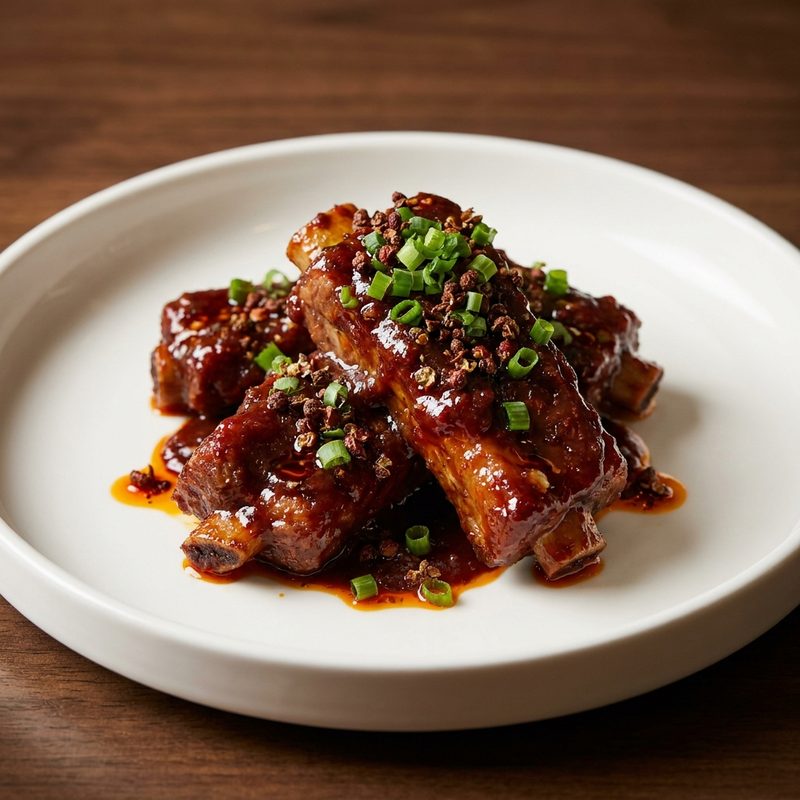
These Mapo Pork Ribs offer a bold, fiery twist on the traditional Sichuan classic by swapping tofu for succulent, melt-in-your-mouth pork ribs. Smothered in a rich, numbing Doubanjiang sauce and topped with fragrant Sichuan peppercorns, this dish is a flavor explosion that pairs perfectly with steamed rice.
Prep
20m
Cook
60m
Serves
4
Ingredients
| Qty | Ingredient |
|---|---|
| 800 g 800 g | Baby back pork ribs, cut into individual ribs |
| 3 tbsp 45 ml | Pixian Doubanjiang (chili bean paste) |
| 1 tbsp 15 g | Fermented black beans (douchi) |
| 1 tbsp 15 g | Ginger, minced |
| 4 cloves 4 cloves | Garlic, minced |
| 1 tsp 5 g | Ground Sichuan peppercorns |
| 2 tbsp 30 ml | Shaoxing wine |
| 2 cups 480 ml | Chicken stock |
| 1 tsp 5 g | Sugar |
| 2 stalks 2 stalks | Scallions, chopped |
| 2 tbsp 30 ml | Cornstarch slurry (1 part cornstarch, 2 parts water) |
How to Make Mapo Pork Ribs
Step 1. Place the pork ribs in a pot of cold water and bring to a boil. Simmer for 5 minutes to remove impurities, then drain and rinse the ribs under cold water.
Step 2. Heat 2 tablespoons of oil in a wok or large heavy-bottomed pan over medium-high heat. Sear the ribs until they are lightly browned on all sides.
Step 3. Reduce the heat to medium. Push the ribs to the side of the pan and add the minced ginger, garlic, and Doubanjiang. Stir-fry for 1 minute until the oil becomes bright red and fragrant.
Step 4. Add the fermented black beans and half of the ground Sichuan peppercorns, stirring to combine with the ribs.
Step 5. Pour in the Shaoxing wine to deglaze the pan, then add the chicken stock and sugar. Bring the mixture to a boil.
Step 6. Cover the pan and reduce heat to low. Simmer for 45 to 50 minutes, or until the pork ribs are tender and the meat starts to pull away from the bone.
Step 7. Remove the lid and increase the heat to medium-high. Slowly stir in the cornstarch slurry and cook until the sauce thickens into a glossy glaze that coats the ribs.
Step 8. Transfer to a serving platter. Garnish with chopped scallions and the remaining Sichuan peppercorns for an extra numbing kick.
Chef's Tips
-
·
Use authentic Pixian Doubanjiang for the deepest umami and traditional Sichuan color.
-
·
Toasting your Sichuan peppercorns in a dry pan before grinding them will significantly enhance their aroma.
-
·
If you prefer a wetter dish to serve over rice, do not reduce the sauce too much before adding the slurry.
-
·
Blanching the ribs first is an essential step for a clean, professional-looking sauce.


Be the first to leave a comment.