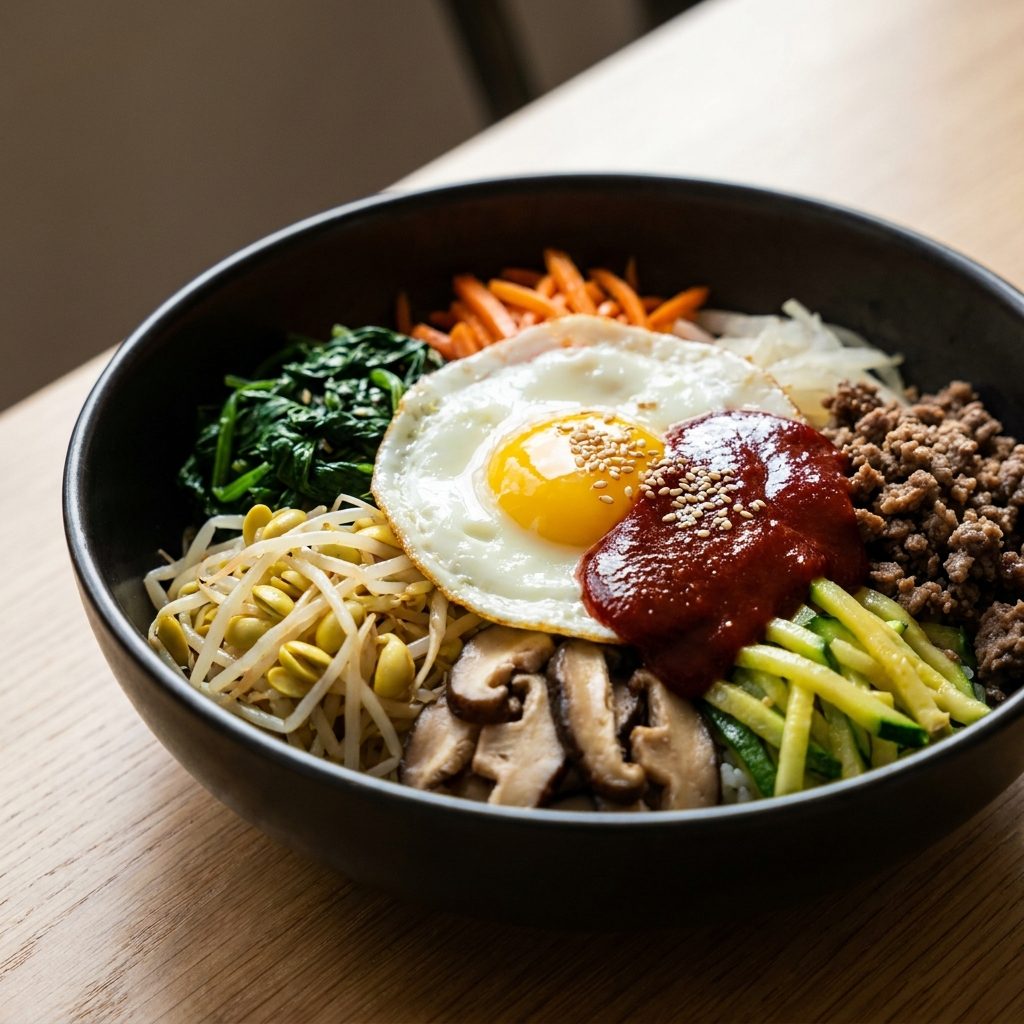
Recipe Details
"Experience a vibrant symphony of textures and flavors with this quintessential Korean rice bowl. Meticulously seasoned vegetables, savory protein, and a fried egg are brought together by a bold, spicy gochujang sauce for a complete and satisfying meal."
Ingredients
| Qty | Item |
|---|---|
| 4 cups | Short-grain white rice, cooked |
| 250 g | Lean ground beef |
| 200 g | Fresh spinach |
| 200 g | Soybean sprouts |
| 1 piece | Medium carrot, julienned |
| 100 g | Shiitake mushrooms, sliced |
| 1 small | Zucchini, julienned |
| 4 large | Eggs |
| 3 tbsp | Gochujang (Korean chili paste) |
| 2 tbsp | Toasted sesame oil |
| 2 tsp | Minced garlic |
How to Make Bibimbap with Seasoned Vegetables and Gochujang
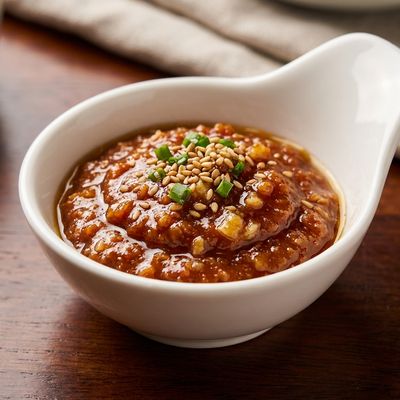
Prepare the gochujang sauce by mixing 3 tbsp gochujang, 1 tbsp sesame oil, 1 tbsp sugar, 1 tbsp water, and 1 tsp sesame seeds in a small bowl; set aside.
Blanch the spinach and soybean sprouts in boiling water for 1 minute separately, then rinse in cold water. Squeeze out excess liquid and season each with 1 tsp sesame oil, a pinch of salt, and a dash of minced garlic.
Sauté the julienned carrots, zucchini, and shiitake mushrooms separately in a lightly oiled pan over medium-high heat with a pinch of salt until tender-crisp.
Cook the ground beef in the same pan with 1 tbsp soy sauce, 1 tsp minced garlic, and 1 tsp sugar until browned and fully cooked.
Fry the eggs in a non-stick pan, keeping the yolks sunny-side up.
Assemble the bowls: place 1 cup of warm rice in the center of each bowl. Arrange the seasoned vegetables and beef in separate sections on top of the rice.
Place a fried egg in the center and serve with a generous dollop of the prepared gochujang sauce. Mix everything thoroughly before eating.
Tips for Best Results
-
·
For the most authentic experience, use short-grain Korean rice which has the perfect sticky texture.
-
·
If you have a stone bowl (dolsot), heat it on the stove with a teaspoon of sesame oil before adding rice to get a crispy bottom crust.
-
·
Sauté each vegetable individually to maintain their unique colors and flavors.
Frequently Asked Questions
Is Bibimbap served hot or cold?
Can I make this recipe vegetarian?
How spicy is the gochujang sauce?
What does Bibimbap mean?
What to Cook Next
Next Recipe
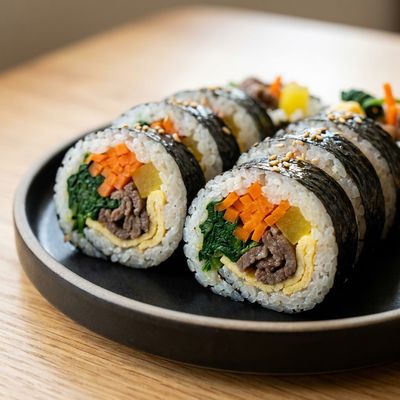
Gimbap Korean Seaweed Rice Rolls
Gimbap is the quintessential Korean picnic food, featuring a colorful array of seasoned vegetables, savory proteins, and fluffy rice wrapped in crisp roasted seaweed. Each bite offers a harmonious balance of textures and flavors, making it a delicious and portable meal for any occasion.
Similar Recipes to Try
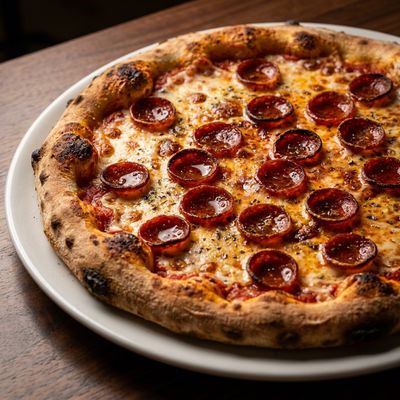
Buffalo Style Pizza with Cup and Char Pepperoni
135 min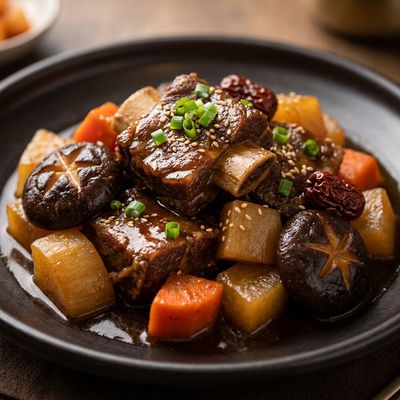
Galbijjim Braised Beef Short Ribs
135 min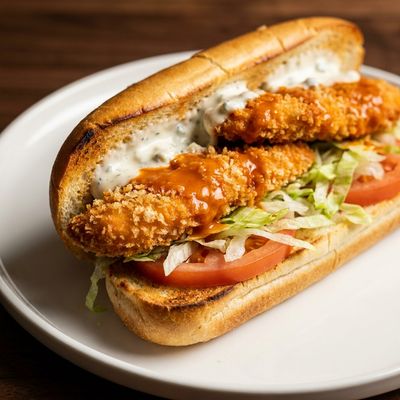
Chicken Finger Sub with Blue Cheese
35 min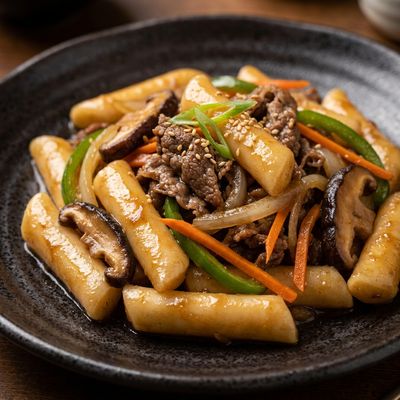
Gungjung Tteokbokki Royal Court Rice Cakes
35 min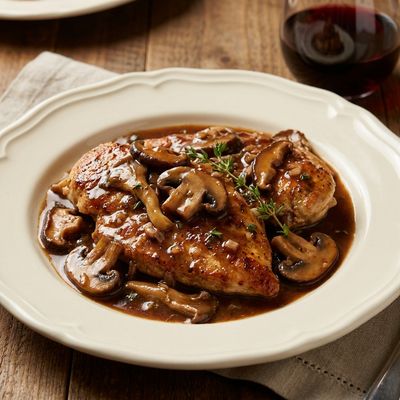
Chicken Marsala with Wild Mushrooms
45 min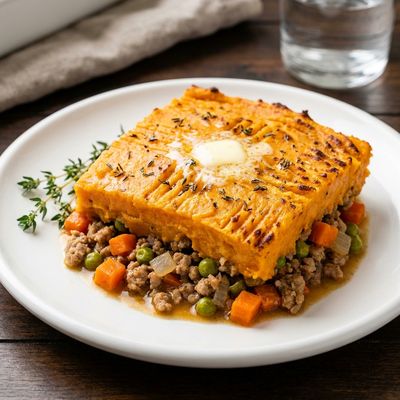
Ground Turkey and Sweet Potato Shepherd's Pie
45 min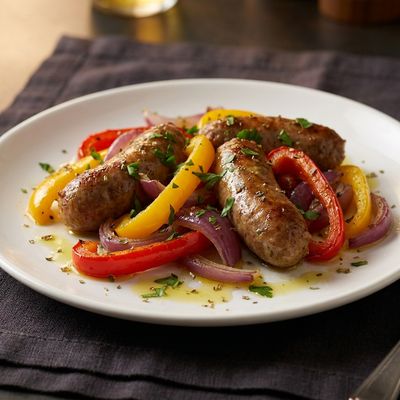
Sheet Pan Sausage and Peppers with Red Onion
45 min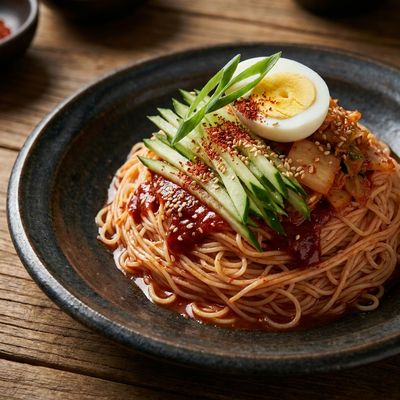
Bibim Guksu Cold Spicy Noodles
25 min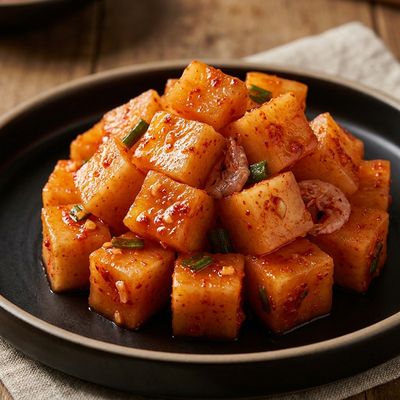
Kkakdugi Radish Kimchi
60 min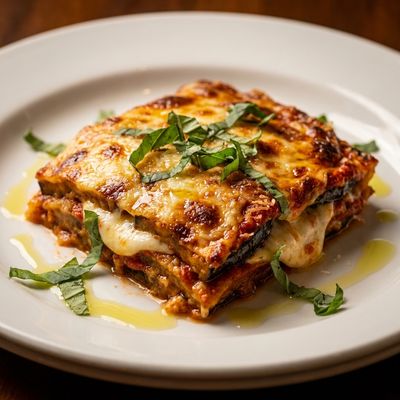
Italian Eggplant Parmigiana (Melanzane alla Parmigiana)
90 minComments
(0)Sign in to leave a comment.
You Might Like
Ad Space Available
Be the first to leave a comment.