The Science of the Surface
Unlike non-stick pans coated with Teflon, stainless steel is naturally porous. At a microscopic level, the surface is filled with tiny hills and valleys. When the metal is heated, these pores expand and contract. If you add food to a pan that hasn't reached the correct temperature, the proteins or sugars get trapped in these expanding pores, causing the food to bond to the metal as it cooks.
The Leidenfrost Effect
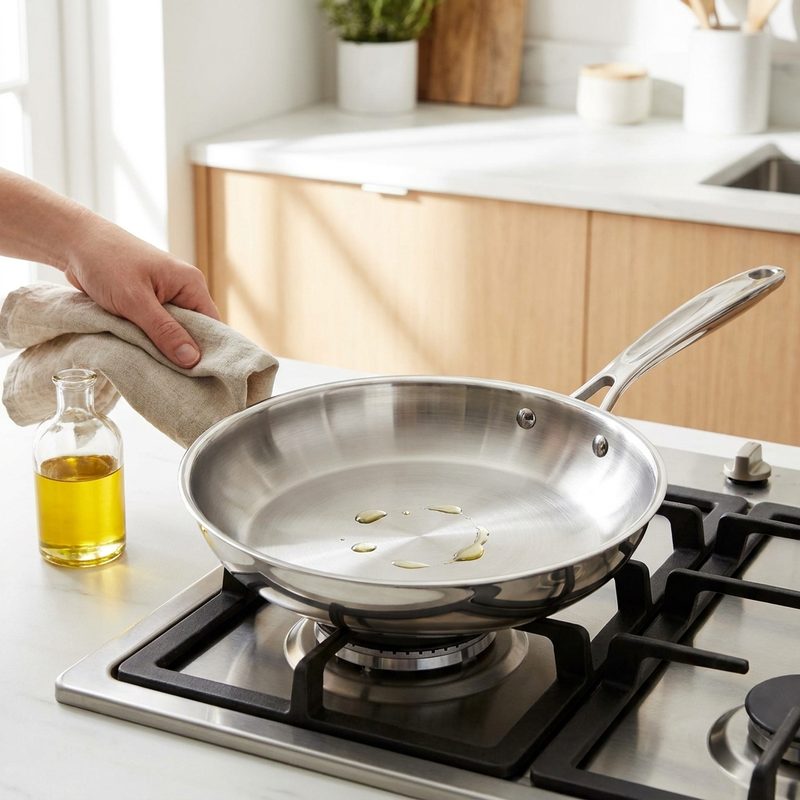
The secret to a non-stick experience on steel is the Leidenfrost effect. This occurs when a liquid comes into contact with a surface significantly hotter than its boiling point, creating a thin layer of protective vapor that allows the liquid (or food) to hover above the surface rather than touching it directly. To achieve this, you must preheat your pan on medium heat for 2-3 minutes before adding any fat or ingredients.
Choosing and Adding the Right Fat
Once the pan is properly preheated, add a fat with a high smoke point, such as grapeseed, avocado, or canola oil. The oil serves to fill the microscopic pores of the steel, creating a physical barrier. The oil should shimmer and move fluidly across the surface like water. If the oil begins to smoke excessively, the pan is too hot; remove it from the heat for a moment before proceeding.
Patience and the Maillard Reaction
One of the most common mistakes is trying to move or flip food too soon. As protein cooks, it undergoes the Maillard reaction, which creates a caramelized crust. Once this crust is fully formed, the food will naturally 'release' from the pan. If you feel resistance when trying to lift a piece of chicken or a steak, it usually means the chemical bond hasn't finished breaking. Give it another 30 to 60 seconds.
Cleaning for Performance
To maintain your pan's performance, avoid using abrasive steel wool which can create deep scratches where food can hide. Instead, use a specialized cleanser like Bar Keepers Friend to remove polymerized oil (the sticky brown residue) and mineral deposits. Keeping the surface smooth and polished is essential for ensuring the Leidenfrost effect works efficiently during your next meal.
Key Takeaways
- ✓ <html><ul><li>Perform the 'Water Drop Test': A drop of water should bead up and roll around the pan like a marble when the surface is at the perfect temperature.</li><li>Always pat your proteins dry with a paper towel; surface moisture creates steam, which interferes with the searing process and causes sticking.</li><li>Allow cold ingredients to sit at room temperature for 10-15 minutes before cooking to prevent the pan's temperature from crashing.</li><li>Deglaze the pan with wine, broth, or water while it is still hot to lift 'fond' (stuck-on bits) easily for a delicious sauce and easy cleanup.</li></ul></html>