Under-Baking the Center
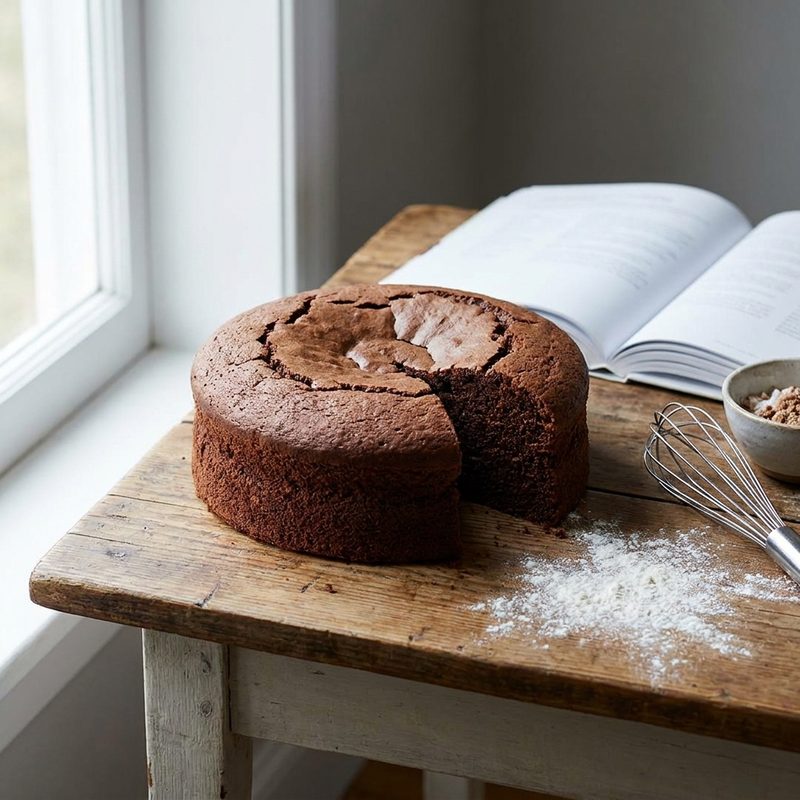
The most frequent culprit for a sunken cake is simply taking it out of the oven too soon. The structure of a cake is built by proteins in eggs and gluten in flour that set as they heat up. If the center hasn't reached the correct temperature (usually around 205°F or 96°C), the structure remains fluid and will collapse under its own weight once the steam pressure drops outside the oven.
Too Much Leavening Agent
Adding too much baking powder or baking soda can cause a cake to rise too quickly. When this happens, the air bubbles produced by the chemical reaction become too large and the cake's internal structure cannot support them. These bubbles eventually pop, causing the cake to deflate and sink in the middle before the flour and eggs have a chance to set.
Opening the Oven Door Too Early
Cakes are incredibly sensitive to temperature fluctuations during the first 60% to 75% of the baking time. If you open the oven door to check on your cake too early, a rush of cool air enters, causing the steam inside the cake's air pockets to condense and the temperature to drop. This sudden change can cause the fragile structure to collapse permanently.
Over-Creaming the Butter and Sugar
While creaming butter and sugar is essential for a light texture, overdoing it can incorporate too much air into the batter. While the cake is in the oven, this excess air expands rapidly, stretching the gluten structure beyond its limit. When the cake begins to cool, it lacks the structural density to hold its shape, leading to a dip in the middle.
Using Expired Leavening Agents
If your baking powder or baking soda is old, it may not provide enough lift. However, it can also lead to an uneven rise where the cake starts to lift and then fails halfway through the process. Always test your leavening agents for potency before starting a recipe by mixing a little baking powder with hot water (it should bubble vigorously).
Key Takeaways
- ✓ <html><ul><li>Always use an oven thermometer to ensure your oven is actually at the temperature the dial suggests.</li><li>Avoid over-mixing once you add the flour, as this can lead to a tough but also unstable structure.</li><li>Keep the oven door closed until at least 75% of the suggested baking time has passed.</li><li>Weigh your ingredients with a digital scale rather than using measuring cups for better accuracy.</li><li>Make sure your cold ingredients, like eggs and butter, are at room temperature unless the recipe specifies otherwise.</li></ul></html>