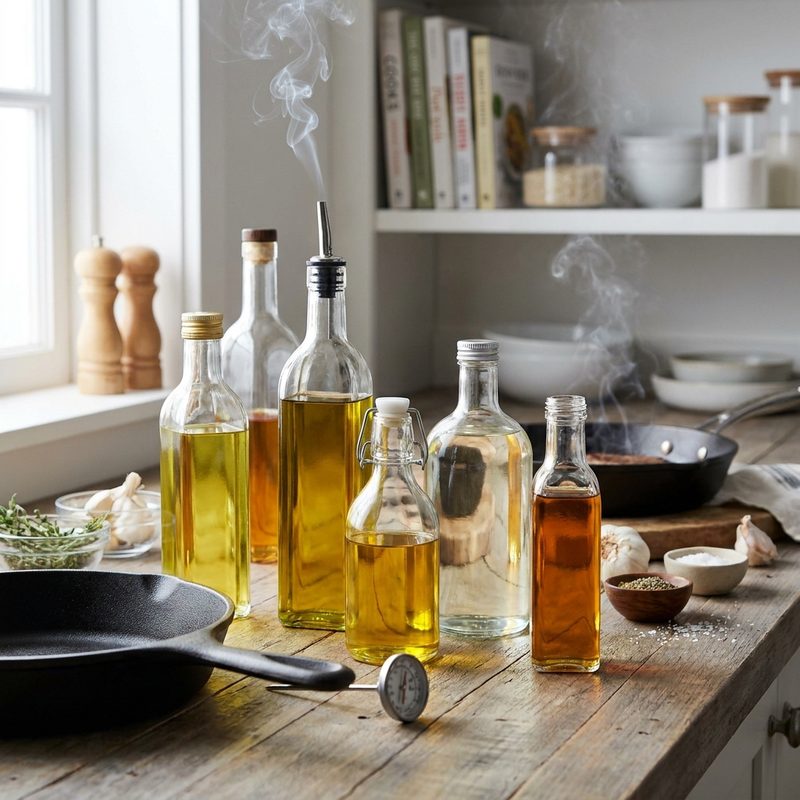
Understanding the Smoke Point
The smoke point of an oil is the temperature at which it stops shimmering and starts to produce a steady stream of smoke. When oil reaches its smoke point, the fat begins to break down, releasing a substance called acrolein that gives food a burnt, bitter taste and can release harmful free radicals. To cook effectively, you must match the oil's smoke point to the heat of your cooking method.
Step 1: Identify Your Cooking Method
Before reaching for a bottle, determine how much heat you will be using. High-heat methods like searing, stir-frying, and deep-frying require temperatures between 400°F and 450°F. Medium-heat methods like sautéing and baking usually fall between 325°F and 375°F. Low-heat methods, such as making sauces or finishing a dish, stay below 300°F.
Step 2: Selecting the Right Oil for High Heat
For high-heat cooking, choose refined oils. The refining process removes impurities and free fatty acids, which raises the smoke point. Avocado oil (520°F), refined peanut oil (450°F), and safflower oil (510°F) are excellent choices for searing steaks or deep-frying. These oils have neutral flavors that won't interfere with the taste of your ingredients.
Step 3: Choosing Oils for Medium Heat and Sautéing
Medium-heat cooking allows for more flavorful oils. Extra virgin olive oil (EVOO) has a smoke point around 375°F to 405°F, making it suitable for most stovetop sautéing. Grapeseed oil and canola oil are also versatile options for everyday roasting and baking where temperatures don't exceed 400°F.
Step 4: Using Finishing Oils and Low-Heat Fats
Unrefined oils like toasted sesame oil, walnut oil, and high-quality flaxseed oil have very low smoke points and should never be used for frying. Instead, use these as 'finishing oils' to drizzle over a completed dish to add aroma and depth. Similarly, butter has a low smoke point (350°F) due to its milk solids; if you want to cook with butter at higher temperatures, consider using ghee (clarified butter), which can handle up to 485°F.
Key Takeaways
- ✓ <html><ul><li>Always store your oils in a cool, dark place to prevent oxidation and rancidity.</li><li>If your oil starts to smoke in the pan, remove it from the heat immediately, discard the oil carefully, and wipe the pan clean before starting over.</li><li>Refined oils generally have a longer shelf life and a more neutral flavor than unrefined or 'cold-pressed' oils.</li><li>Avoid mixing different types of oils with different smoke points for deep frying, as the mixture will only be as stable as the oil with the lowest smoke point.</li></ul></html>