Origins and Varieties
The avocado (Persea americana) is native to South Central Mexico and has been a staple in Mesoamerican diets for millennia. While there are hundreds of varieties, the Hass avocado is the most common in global markets due to its high oil content and creamy texture. Understanding the variety helps; for instance, Hass avocados change color as they ripen, while Reed or Fuerte avocados stay green even when fully mature.
The Visual Inspection: Color Matters
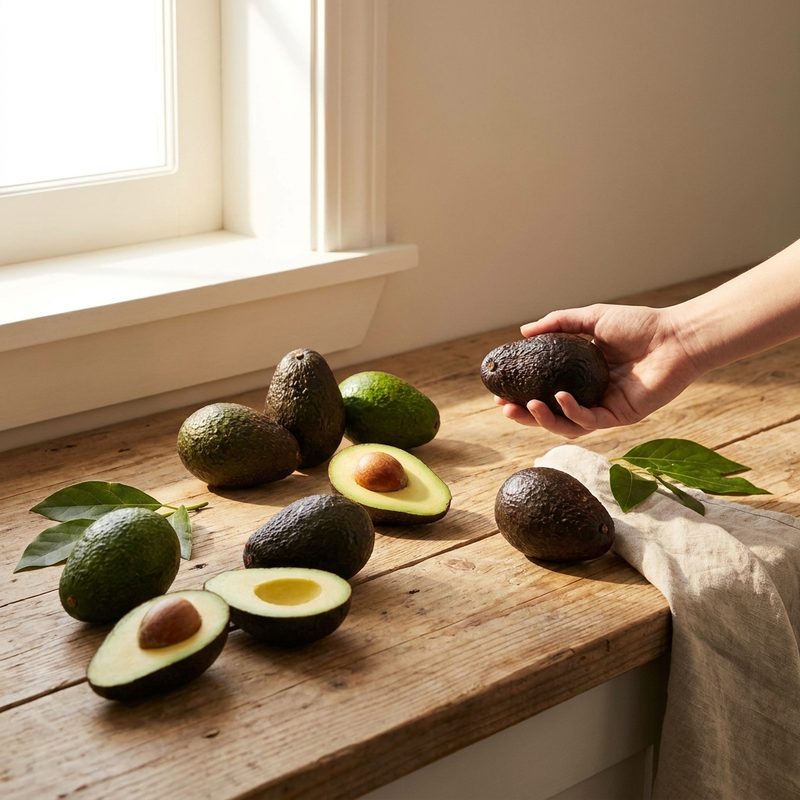
For Hass avocados, color is your first indicator. A bright green skin usually means the fruit is rock hard and at least 3-5 days away from being edible. You are looking for a deep, forest green that is nearly black. If the skin is a very light green or has large brown patches, it may be underripe or damaged, respectively.
The Gentle Squeeze Test
Avoid using your fingertips, as this causes localized bruising. Instead, place the avocado in the palm of your hand and squeeze gently using your whole hand. A perfectly ripe avocado will yield to firm but gentle pressure without feeling mushy. If it feels like a rock, it is underripe; if it feels hollow or overly soft, it is likely overripe and brown inside.
The Stem Trick
If you are still unsure, look at the small stem cap at the top of the fruit. Gently flick it off with your fingernail. If the area underneath is bright green, the avocado is ready to eat. If it is brown, the fruit is likely overripe. If the stem won't come off at all, the avocado is not yet ripe.
Common Mistakes to Avoid
One of the biggest mistakes is buying a 'ripe' avocado for an event several days away. Avocados have a very narrow window of perfection. Another error is storing underripe avocados in the refrigerator; the cold temperature halts the ripening process, often resulting in a rubbery texture that never softens properly.
Substitutes and Swaps
If you cannot find a ripe avocado, you can substitute other creamy ingredients depending on the recipe. For spreads, try hummus or mashed green peas with a splash of lime. For salads, goat cheese or silken tofu can provide a similar fatty mouthfeel. In baking, Greek yogurt or applesauce can often replace avocado as a fat source.
Key Takeaways
- ✓ <html><ul><li>Speed up ripening by placing the avocado in a brown paper bag with a banana or apple.</li><li>Once an avocado reaches peak ripeness, move it to the refrigerator to extend its life by 2-3 days.</li><li>To prevent browning on a cut avocado, leave the pit in and squeeze fresh lemon juice over the flesh before wrapping tightly in plastic.</li><li>If you have too many ripe avocados, mash them with a little lime juice and freeze in an airtight bag for smoothies or future guacamole.</li></ul></html>