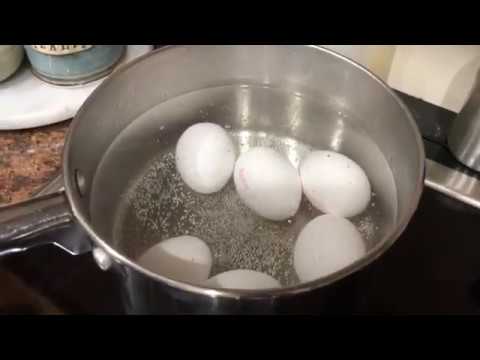
Step 1. Fill a large saucepan with enough water to cover the eggs by at least an inch and bring it to a rolling boil over high heat.
Step 2. Carefully lower the cold eggs into the boiling water using a slotted spoon to prevent cracking.
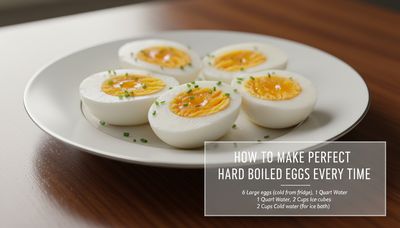
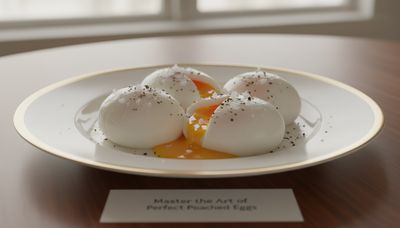
Step 3. Reduce the heat slightly to maintain a gentle simmer and set a timer: 6 minutes for soft-boiled (liquid yolk), 8 minutes for medium-boiled (jammy yolk), or 12 minutes for hard-boiled (firm yolk).
Step 4. While the eggs are cooking, prepare an ice bath by filling a large bowl with cold water and plenty of ice.
Step 5. Once the timer sounds, immediately transfer the eggs from the boiling water to the ice bath using the slotted spoon.
Step 6. Let the eggs chill in the ice bath for at least 5 to 10 minutes to stop the cooking process and make them easier to peel.
Step 7. Gently crack the egg shells all over by tapping them on a hard surface, then peel under cool running water or while submerged in the ice bath.
For more detail, see our guide to make scrambled eggs. For more detail, see our guide to marinate eggs. For more detail, see our guide to fry eggs.
Key Takeaways
-
✓
Use older eggs if possible; as eggs age, the internal pH rises, causing the membrane to adhere less tightly to the shell, making them easier to peel.
-
✓
Always use the 'hot start' method (adding eggs to already boiling water) for more consistent timing and better shell separation.
-
✓
To prevent the eggs from bumping into each other and cracking, ensure they are in a single layer at the bottom of the pot.
-
✓
Shocking the eggs in ice water is the most important step to prevent the unsightly green ring around the yolk caused by overcooking.